

Jonathan Growcott’s “happy place” is bouncing across the African savanna in a 4×4 vehicle. As a large-carnivore biologist, he tracks predators in the wild. It’s tough work; these animals can be hard to find.
Common methods often involve driving for hours in search of footprints or droppings. Some researchers set up camera traps in hopes of snapping photos of passing animals.
Growcott felt these still missed something. Maybe scientists could do more than just look for signs of critters. Perhaps they could listen for them, too.
“Species like lions, leopards and hyenas produce some of the most recognizable sounds in the animal kingdom,” notes Growcott. What’s more: “These sounds travel many kilometers [miles].”
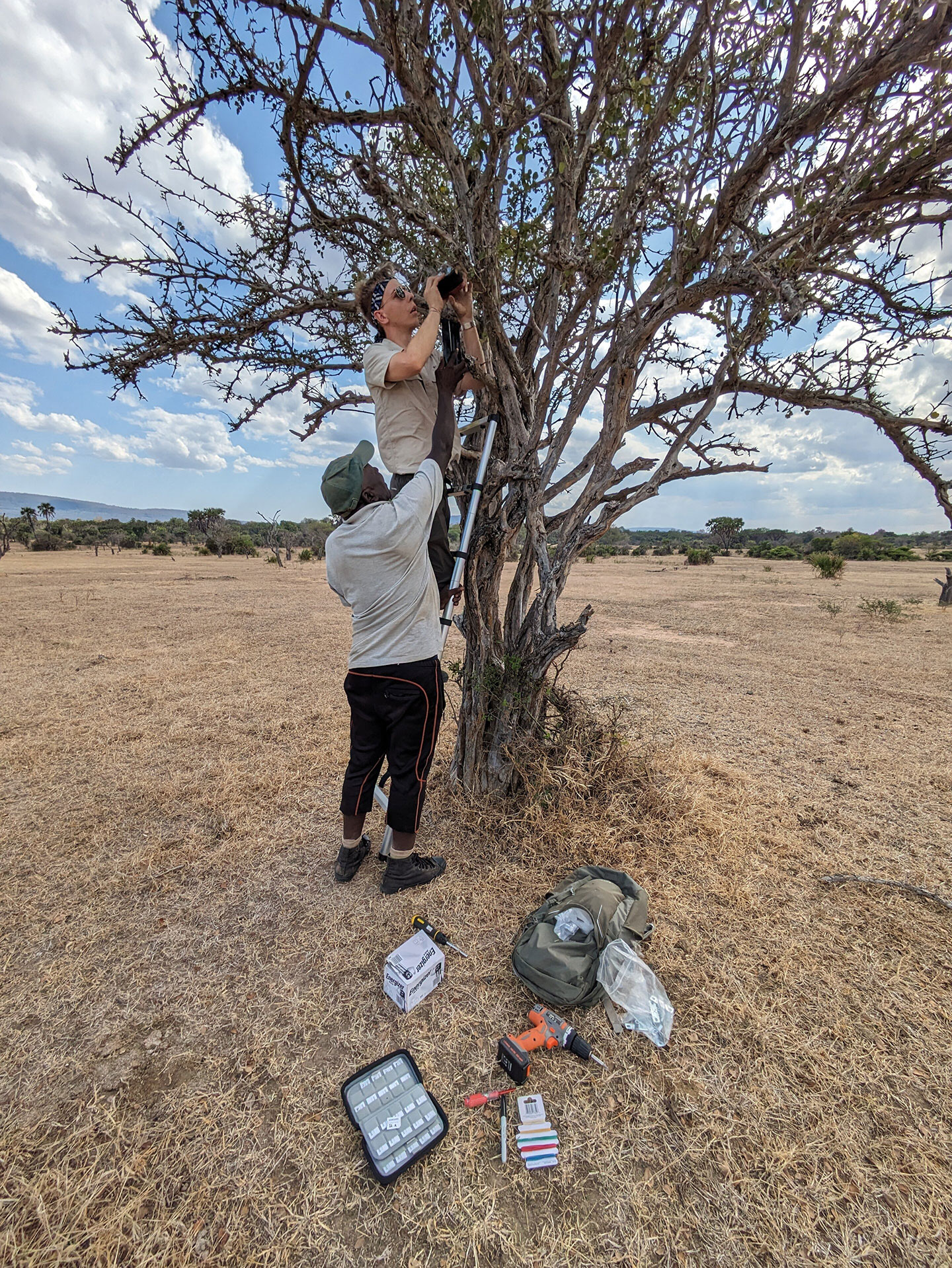 Jonathan Growcott and colleagues set up 50 pairs of camera traps and microphones in East Africa in Nyerere National Park. Combining these two technologies allowed the team to pair photographs with unique roars to identify individual leopards.Charlotte Searle
And these critters are far from the only sound-makers. Birds, mammals and insects are, too. So are reptiles, amphibians, fish — even crustaceans. Some call out to find mates or defend territories. Others use calls to scare off predators. Sounds help many creatures sense their environment and check in with each other. This cacophony of chirps, squeaks, rattles and roars can aid scientists, too — if they know what to listen for.
Across the globe, more and more researchers are studying how living things make, transmit and receive sounds. Audio recorders can be strapped to a tree or set on the ocean floor. Once placed, the devices capture these bioacoustic data without disturbing wildlife. This can make them especially useful in conservation efforts.
By eavesdropping on neighborhood chatter, researchers can find out which species are out there and what they’re up to. They can estimate the size of populations to keep tabs on how critters are doing. Knowing where animals are can also help limit their conflict with people. For all these reasons, bioacoustics can be a powerful tool in the fight to save endangered species.
Hear me roar!
Growcott ran the first large-scale bioacoustics survey of African carnivores. At the time, he was a PhD student at the University of Exeter in England. He and his team worked in East Africa at the Nyerere National Park in Tanzania. They deployed 50 acoustic recorders across 450 square kilometers (175 square miles).
He focused on leopards first. These solitary cats are secretive and nocturnal. Such habits make monitoring their numbers challenging. So Growcott worked to identify the animals by sound.
He set up acoustic recorders next to camera traps. This allowed him to match individual leopards to their roars. With these data, a computer model was able to distinguish between leopards based on their roars with 93 percent accuracy. This revealed that each leopard’s roar is unique enough to identify it.
Could the same be true for other big cats?
When Growcott turned to lions, he noticed patterns. Some of their roars were loud, long and complex. Others sounded shorter and simpler. He wondered whether lions used different types of roars.
Using artificial intelligence (AI), he analyzed those roars. It showed lions produce two distinct types. There’s the familiar, full-throated roar you may have heard at a zoo or in a movie. Then there’s a shorter, lower-pitched one. He called this previously unknown one an “intermediary” roar.
But what Growcott really wanted was to identify individual lions by their roars. For this, he created an AI tool that he calls “Shazam for lions.” It analyzes just the full-throated roars — because they contain the most sound information. AI, he found, could identify a specific lion by its roar with more than 95 percent accuracy. That’s better than human experts can do!
Linking cats to their roars could help researchers count and track the big cats. That, in turn, could help them gauge the size of their populations while also monitoring the range of individual animals. Conservationists and others need such data to protect wildlife and people.
This work highlights how much we have to learn about even well-known sounds, such as a lion’s roar, Growcott notes.
“At some point, we may better understand why animals make the sounds they do,” he adds. “Trying to work out what animals mean when they make noises is something that has fascinated people for a long time. I think it will continue to fascinate us for a long time to come.”’
Sounds of the forest
Sound is especially useful when animals are rare or hard to see.
The last 74 Cao-vit gibbons on Earth live in a remote part of Southeast Asia. They’re in a patch of mountainous rainforest in northern Vietnam. Their species was thought to be extinct until 2002. That’s when scientists discovered this small population. These critically endangered apes spend their lives in treetops. That makes them almost impossible to observe by eye.
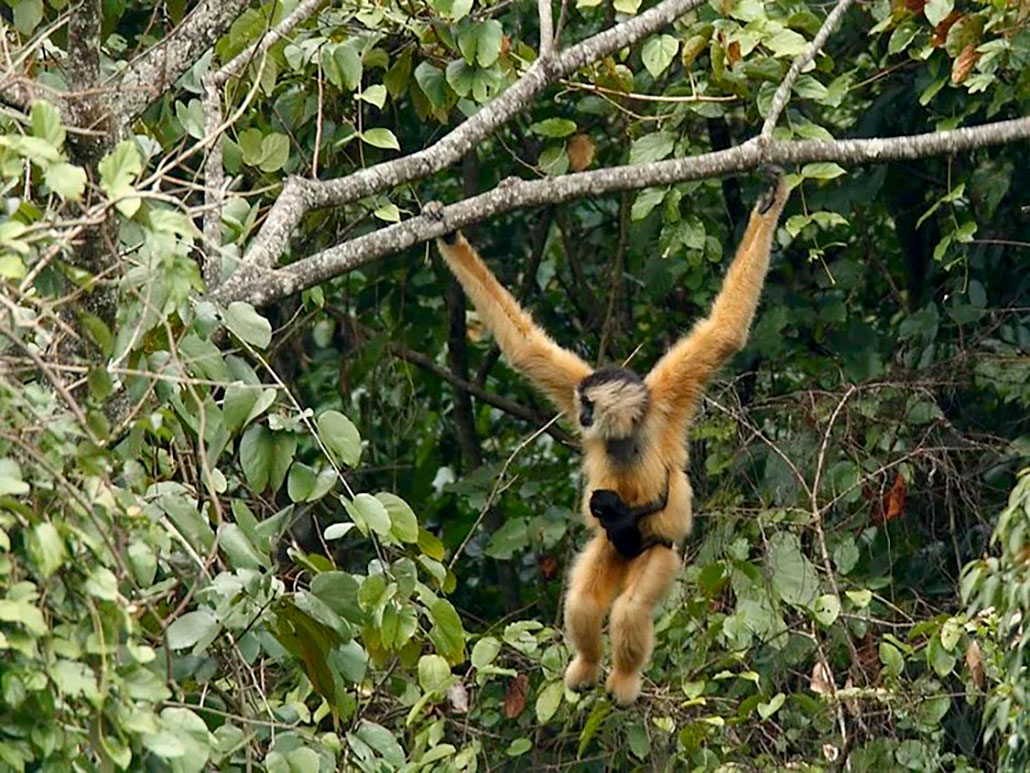 Cao-vit gibbons spend their lives high in treetops within only one tiny patch of a remote Vietnam jungle. This female gibbon is seen carrying a one-month-old baby.Bioacoustics Research Group
Fortunately, Cao-vit gibbons like to make themselves heard. Mated pairs sing loud, melodic duets. They’re music to Angela Dassow’s ears.
“It is a privilege to hear one of the rarest primates on the planet giving their morning duet calls,” she says. These “are kind of eerie,” she notes, “but also beautiful to wake up to.”
Dassow is a biologist at Carthage College in Kenosha, Wisc. For the past five years, she’s studied Cao-vit gibbons with partners in Vietnam. To locate the animals, the team uses specially designed acoustic recorders. Dassow places around 20 of them throughout a region. That way, a single gibbon call reaches different recorders at slightly different times. By comparing those times, computers can pinpoint where the sound came from.
“Our recording units don’t just tell us if an animal is present,” says Dassow. “They give us a GPS location of where that animal is, without putting a radio collar on it.”
Dassow tracks gibbon movements by those calls and monitors their population. This soundscape also tells her about the social lives of these apes. Her team shares what it learns with local rangers, who use the info to help protect gibbons and manage their forest home.
Angela Dassow and colleagues filmed a documentary about their efforts to reduce conflict between people and tigers in Nepal. This clip shows the impact that their acoustic tiger-detection system has on the local community.Dassow is using bioacoustics in another Asian forest to lessen conflicts between people and Bengal tigers.
Over the past 10 years, conservation programs have increased the number of these tigers in Nepal. That’s great news for this endangered species. But it also has led to more encounters between people and these top predators. This is especially true in rural areas, where the lives of people depend on the forest around them.
To help people coexist with the big cats, Dassow developed an acoustic alarm system. It alerts villagers to the presence of approaching tigers.
For this, she had to get a bit creative. “Tigers tend to be quiet. Very rarely do you hear them vocalize,” Dassow notes. “But there are a lot of chital deer in the area, and they are a prey source for tigers. As you might expect, these deer are excellent at detecting when a tiger is near.”
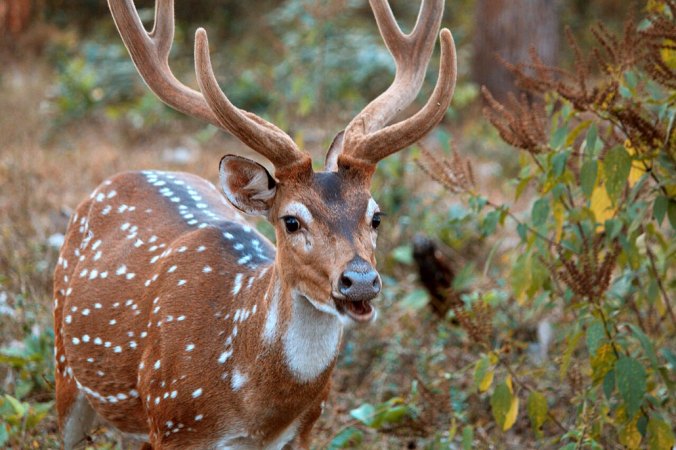 Chital deer are important prey of Bengal tigers in India and Nepal. They make a distinctive alarm call when they spot a tiger or other predator. It sounds like the bark of a small dog or a sharp coughing.Sovietonion321/Wikimedia Commons (CC BY 4.0)
When chital (CHEE-tul) deer notice a tiger, they start barking out an alarm call. Recorders in the forest detect these and alert local villagers. This system warns people to nearing tigers in real time. Villagers can then take extra precautions. They might avoid areas where a tiger has been spotted or travel in groups when moving through the forest.
Do you have a science question? We can help!
Submit your question here, and we might answer it an upcoming issue of Science News Explores
Underwater acoustics
Researchers have long listened to sounds made by aquatic animals. Those sounds may now help people share the ocean safely with them.
Ana Širović is a marine ecologist at the Norwegian University of Science and Technology in Trondheim. She’s part of the international team behind Whale Safe. It’s a powerful tool for preventing ships from colliding with endangered whales.
Ship collisions often kill large whales. Research shows that reducing a ship’s speed is one way to limit this. But ships need to know when and where to slow down to avoid whale strikes.
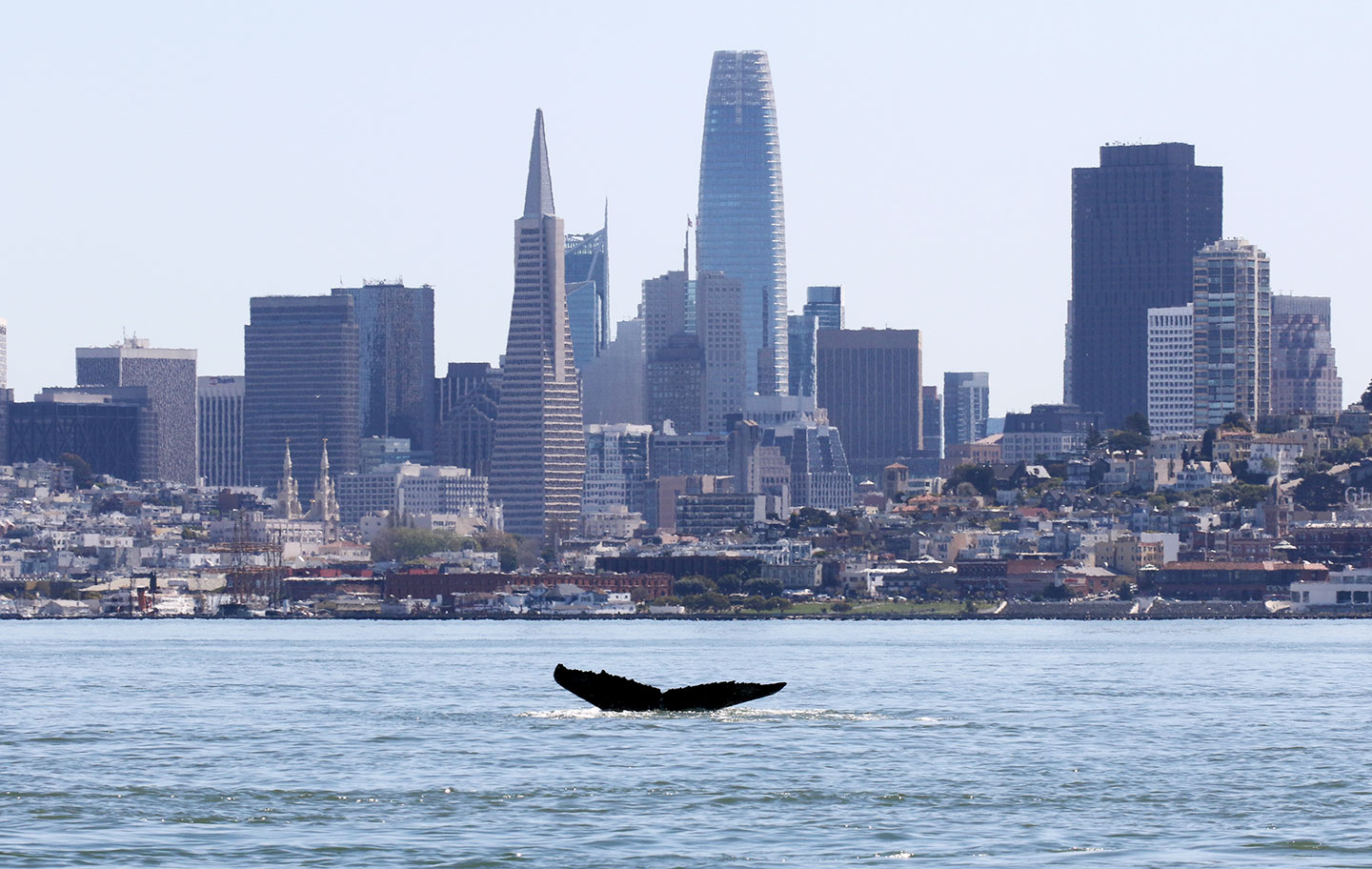 San Francisco Bay is near several major shipping ports. It’s also an important feeding ground and migratory route for whales. Scientists estimate that more than 80 blue, humpback and fin whales are killed each year in ship collisions along the U.S. west coast.Bekah Lane/The Marine Mammal Center
That’s where Whale Safe comes in. It maps in nearly real time the locations of large cargo ships as well as blue, fin and humpback whales. To do this, Whale Safe uses data from three sources. The first is a system that monitors whale calls. The second is a mobile app through which community scientists record whale sightings. The third is a model that monitors certain ocean conditions.
Data from all these sources are combined to rate how likely it is that whales are near. Ships can use these ratings to understand where they should slow down.
Whale Safe was first used in California’s Santa Barbara Channel. This is near several major shipping ports. It’s also an important feeding ground and migratory route for large whales. Whale Safe has since expanded to San Francisco Bay. The second busiest port in California, it’s another hot spot for whale strikes.
Each year, collisions with large ships kill dozens of whales in these regions. Even a small reduction in speed saves lives. A shipping vessel that slows down from 15 knots to 10 knots cuts in half its risk of striking a whale.
Part of what makes her job fun, Širović says, is listening to parts of the ocean no human has ever heard before. When she leaves acoustic recorders on the sea floor, they often pick up unexpected or unknown sounds.
“The ocean is a vast portion of the planet, but there is still so much of it that’s not explored,” she says. “I enjoy learning new information and figuring out what to do with it. My job is part adventure, part puzzle solving and part new discoveries.”
Scientists from Woods Hole Oceanographic Institution in Massachusetts and The Norwegian University of Science and Technology in northern Europe deploy an acoustic buoy in the Santa Barbara Channel. The buoy contains an underwater microphone and a tiny computer to detect the calls of whales. Benioff Ocean Science LaboratorySound science
Acoustic recordings can capture a lot of data. Analyzing these used to be slow and difficult. Researchers had to listen carefully for certain sounds.
Today’s acoustic recorders can be left unattended for weeks, months or even years. They can collect and store huge amounts of data — sometimes, more than someone could listen to in their entire lifetime! What’s a researcher to do?
Seeing sound
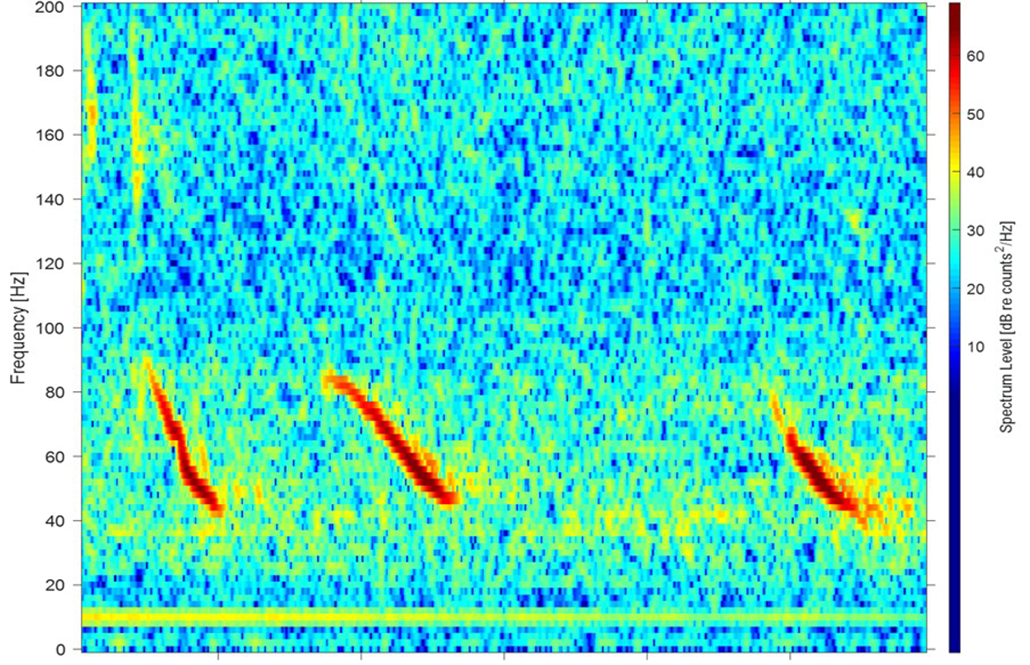 Scientists often transform audio files into images called spectrograms. This spectrogram shows blue whale calls. Horizontal axis shows time; vertical axis shows frequency. Low frequencies (low-pitched sounds) are at the bottom, high frequencies at the top. Colors represent energy or volume at a given time and frequency. Reds and oranges indicate a more intense signal; blues and greens indicate silence.J. H. Rasmussen
Over the past decade, AI technology has evolved and transformed how scientists analyze recorded sounds. Now, AI algorithms can do much of the work. They can sort through recordings to identify sounds. And they process data more quickly and accurately than humans can.
Jeppe Have Rasmussen is a biologist at the University of Copenhagen in Denmark. He specializes in applying AI to animal bioacoustics. AI algorithms are usually not trained to analyze sounds themselves, he points out. Instead, the sound data must first be transformed into some visual form.
“AI is really good at detecting and classifying objects in images,” he says. “So, we convert the recorded sound file into a spectrogram.” This is more like an image, Rasmussen explains. It shows sound frequency on a vertical axis; time is shown on the horizontal axis.
AI models, he says, can then be trained on these spectrograms to identify the calls of specific species.
Rasmussen is using this approach to learn more about endangered species.
Saving the Hawaiian monk seals
 Colleen Reichmuth
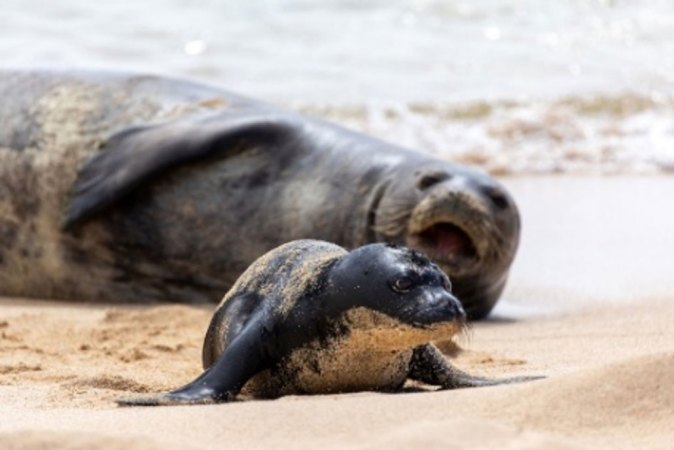
Hawaiian monk seals are one of the most endangered marine mammals in the world. They live in the warm, subtropical waters around the Hawaiian Islands and spend about two-thirds of their time at sea.
“There are only 1,600 Hawaiian monk seals left in the entire world,” he says. “If we can track where they are, we can better determine where to focus on protecting them. Listening for their underwater calls is a very good way.”
Recently, a team of researchers identified six types of underwater calls made by these seals. They include moans, croaks and whoops. Rasmussen is now using AI to automatically detect these calls. His team hopes to figure out where the monk seals spend their time. Then, conservationists can prioritize those sites for protection.
Rasmussen also is exploring other ways to use AI in bioacoustics. For instance, it can help evaluate the welfare of captive animals. In one recent study, his tools could tell whether a pig sound came from a stressed animal or a happy one.
“The combination of bioacoustics and AI is one window we can use to look into the minds of animals,” he says.
Such techniques, Rasmussen says, will help science “discover that there is much more information hidden in animal communication.”




 Bengali (Bangladesh) ·
  English (United States) ·