

What You Should Know
Scottsdale, Arizona-based AI healthcare company XpertDox announced a $20M Series A investment round led by Savant Growth with funding from investment partner Kennet Partners. XpertDox’s flagship XpertCoding platform automates medical coding by converting unstructured clinical documentation inside electronic health records (EHRs) into compliant, auditable coded billing data. Over the trailing 12 months, XpertDox doubled its annual revenue while achieving 126% net revenue retention and 95% gross customer retention across more than 40 healthcare organizations. XpertCoding autonomously codes more than 91% of incoming claims without human intervention, returns coded encounters in under 24 hours, and maintains coding-related denial rates below 2%.Neuro-Symbolic Architecture: Moving Beyond General-Purpose Language Models
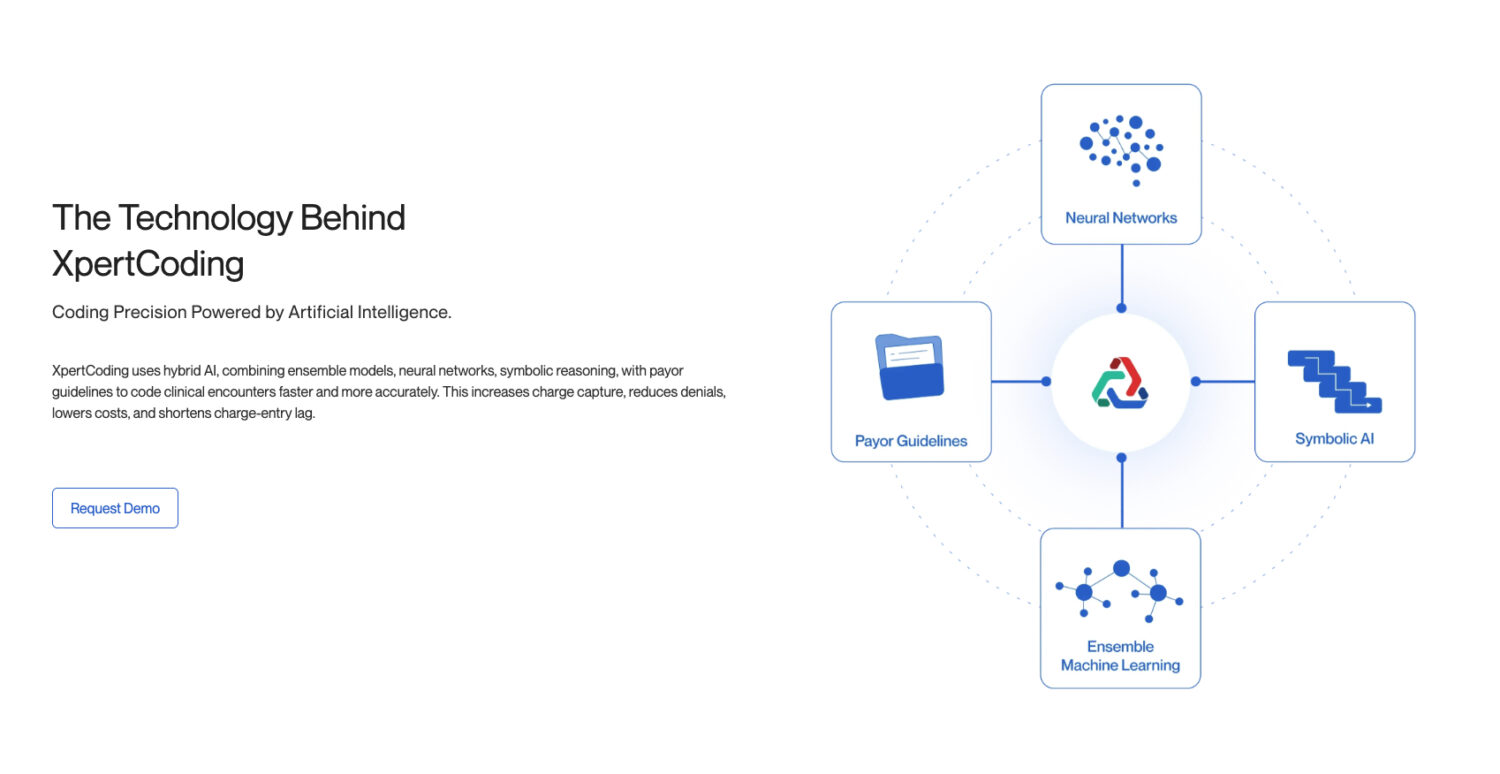
Founded in 2015 by physician-scientists Sameer Ather, MD, PhD, and Bhupesh Panwar, MD, XpertDox architected XpertCoding specifically to avoid the clinical hallucination and compliance risks associated with general-purpose large language models. Rather than relying solely on generative text prediction, the platform combines neural networks and ensemble machine learning models with deterministic Symbolic AI and payer-specific billing rules. This hybrid neuro-symbolic architecture parses unstructured clinical notes inside the electronic health record and translates them into auditable, specialty-specific CPT and ICD-10 codes.
In live production environments, XpertCoding autonomously codes more than 91 percent of incoming claims without human intervention, returning finalized claims in under 24 hours while maintaining coding-related denial rates below two percent. Beyond automated claim generation, the system identifies clinical documentation gaps in real time, flagging missing specificity so coding specialists can shift away from routine chart processing toward proactive physician education and complex case auditing.
FQHC Validation and Financial Retention Metrics
XpertDox’s commercial momentum reflects strong unit economics and rapid enterprise expansion. Over the trailing 12 months, the company doubled its annual revenue while achieving 95 percent gross customer retention and 126 percent net revenue retention as existing clients expanded claim volumes across additional clinical specialties. Currently processing millions of claims annually, the company is scaling its cloud infrastructure to support tens of millions of encounters.
The platform has found particular traction among Federally Qualified Health Centers, which manage complex, multi-disciplinary encounters spanning primary care, behavioral health, dental, and women’s health under strict federal compliance and narrow reimbursement margins. Serving seven major community health centers across six states, XpertDox has delivered measurable operational gains. At Texas-based Lone Star Circle of Care, deploying XpertCoding reduced manual coding effort by 94 percent, improved overall charge capture by 10 percent, and compressed average claims turnaround times to under 24 hours.
“Healthcare organizations need coding that is accurate, fast and defensible, and they need it today,” said Sameer Ather, MD, PhD, co-founder and CEO of XpertDox. “XpertCoding delivers that by turning clinical documentation into reliable, consistent data. Nowhere does that matter more than in community health centers, which deliver primary care, behavioral health, dental and women’s health under one roof on the thinnest margins in American medicine. This investment helps us bring XpertCoding to more of those organizations, gets them live faster, and keeps improving the results they see.”





 Bengali (Bangladesh) ·
 English (United States) ·