

For those who want to experience a total solar eclipse, the next two years present the best kind of problem. On Aug. 2, 2027, the so-called "eclipse of the century" will sweep across southern Spain, North Africa and the Middle East, bringing more than six minutes of totality to parts of Egypt. Then, on July 22, 2028, another exceptionally long total solar eclipse will cross Australia, putting the remote Outback and Sydney Harbor in the path of the moon's dark central shadow before it reaches New Zealand's beautiful South Island.
Both eclipses will be spectacular, and both will require careful planning, yet they promise very different experiences. The 2027 event combines over six minutes of totality with some of the very best weather prospects possible, while 2028 offers over five minutes of totality above some of the world's most famous wildernesses and cityscapes.
Eclipse chasing requires careful planning and dedication, but also significant funds. If you can only choose one, which should it be?
2027 total solar eclipse: pros and cons
A map of the 2027 total solar eclipse path. (Image credit: Michael Zeiler/EclipseAtlas.com)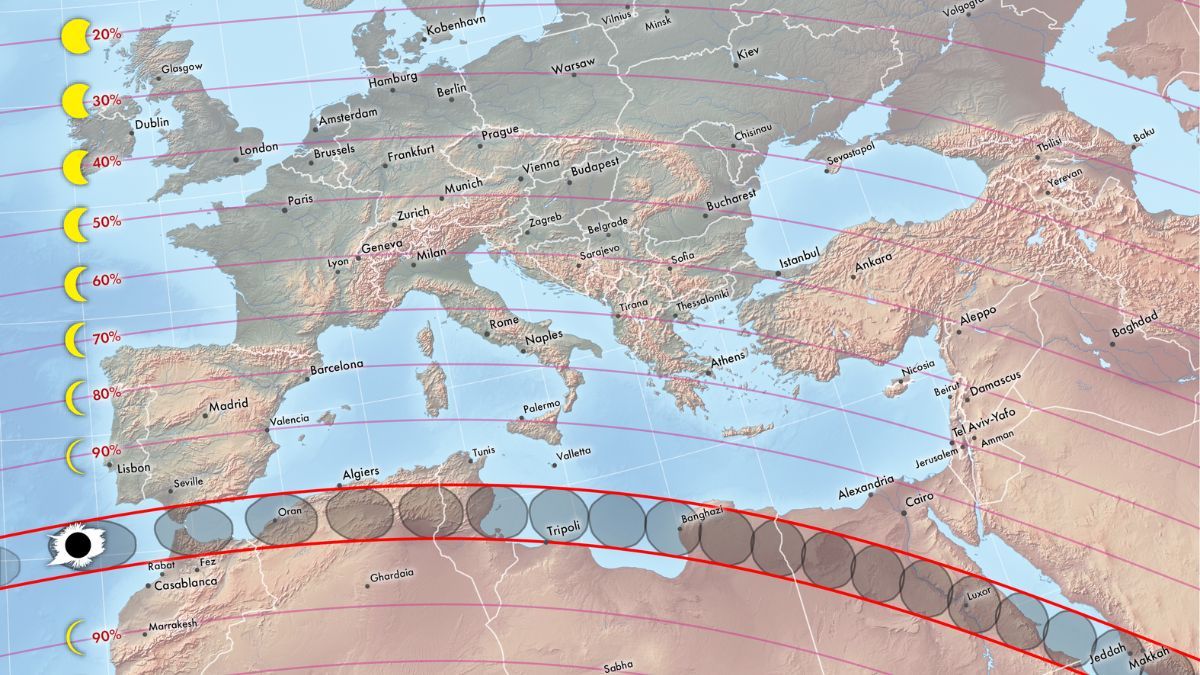
On paper, 2027 is difficult to beat. Maximum totality on Aug. 2 will last about 6 minutes, 23 seconds, making it the longest totality on land since 1991 and until 2114. The path of totality will cross southern Spain and Gibraltar before sweeping across Morocco, Algeria, Tunisia, Libya, Egypt, Sudan, Saudi Arabia, Yemen, Somalia and the Chagos Islands. About 88.9 million people live in its path, according to Time and Date. It will dominate the news for weeks.
For Europeans, southern Spain is the obvious easy option. Tarifa, at the country's southern tip, will see about 4 minutes, 39 seconds of totality, while the U.K. Overseas Territory of Gibraltar gets about 4 minutes, 25 seconds. Travel farther east and the duration increases, with Sfax in Tunisia getting around 5 minutes, 41 seconds and locations in Egypt experiencing more than six minutes. Weather prospects generally improve, too, as the path crosses the deserts of North Africa.
Egypt is the headline destination. Luxor will see about 6 minutes, 20 seconds of totality near midday, with Karnak Temple, the Valley of the Kings, and some of the world's greatest ancient monuments nearby. The climatic odds are excellent, with clouds extremely rare in early August. That combination of a very long totality, ancient landscapes and a very high probability of a clear sky makes 2027's path of totality highly unusual.
But there are downsides. Temperatures around Luxor can exceed 105°F (41°C) in August, a dust storm is not impossible, and totality occurs shortly after 1 p.m. when the sun (and moon) will be high overhead — making photography very difficult. Demand is already intense, making organized trips expensive. Spain will be considerably easier and probably cheaper for European eclipse chasers, but at the expense of roughly two minutes of totality — and slightly less favorable weather prospects.
2028 total solar eclipse: pros and cons
A map of the 2028 total solar eclipse path. (Image credit: Michael Zeiler/EclipseAtlas.com)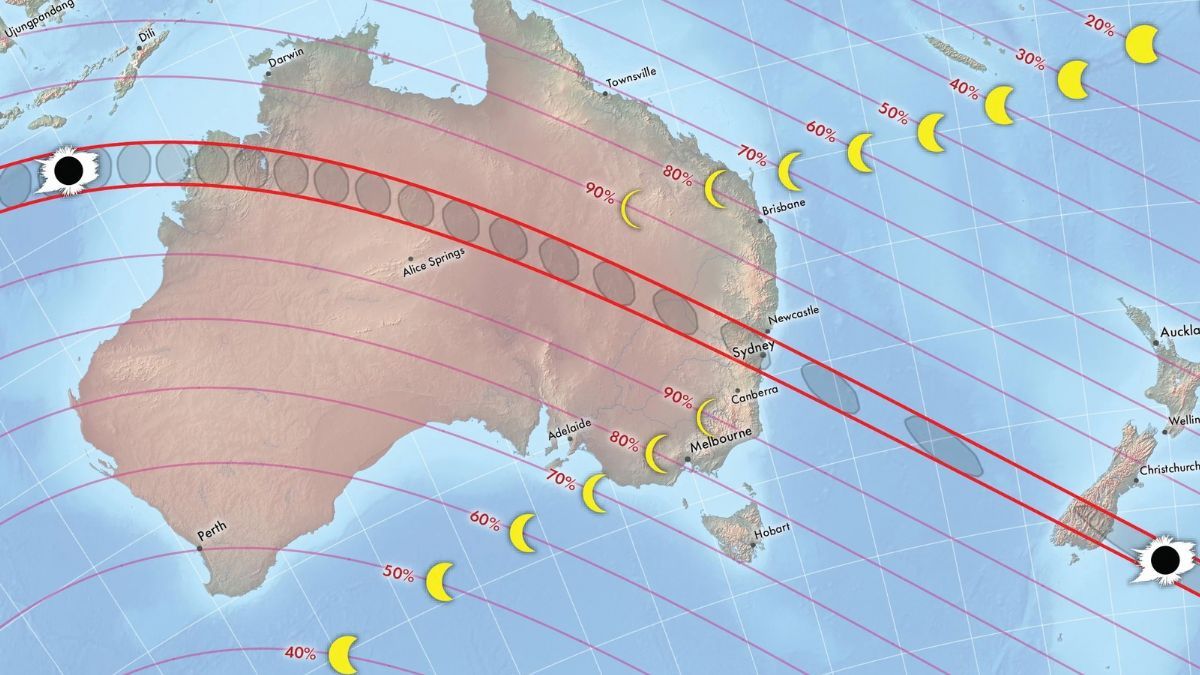
If 2027 is about extreme duration, 2028 is about choice. On July 22, 2028, a path of totality will cross the Cocos Islands, Christmas Island, Australia, from northwest to southeast — passing directly over Sydney — before continuing across the Tasman Sea to New Zealand's South Island. That's about 6.3 million people, according to Time and Date. This will be an exclusive eclipse experienced by relatively few people, certainly when compared to the eclipses in 2024, 2026 and 2027.
Maximum totality will last 5 minutes and 10 seconds in the remote Kimberley region of Western Australia. That's more than a minute shorter than 2027, but still exceptionally long by total solar eclipse standards (most last about two minutes). More importantly, the Australian Outback has excellent climatic prospects. Historical cloudiness on July 22 is around 8% at Purnululu (Bungle Bungles) close to the point of greatest eclipse in Western Australia and 19% at Karlu Karlu (Devil's Marbles) in the Northern Territory, making Australia's interior an attractive destination for serious eclipse chasers. Temperatures will be around 86°F (30°C) in July.
Then there's Sydney. Australia's largest city will experience about 3 minutes, 45 seconds of totality, its first total solar eclipse since 1857. Sydney Opera House and Harbor Bridge beneath a totally eclipsed sun could produce some of the decade's defining astronomical images, while millions of people experiencing totality together should create an extraordinary atmosphere. Temperatures will be around 62.6°F (17°C).
A compromise is weather. Historical cloudiness in Sydney is around 43%, which is good odds for most eclipses — and July is known for clear weather. But in 2028, anyone prioritizing their chances of a clear totality will be tempted by a (albeit pricier) trip to the Outback. For Europeans, reaching Australia also comes with considerable cost and time. The huge number of hotels in Sydney could keep accommodation relatively competitive, but the long flight means it makes little sense to travel there for only a few days. For many international eclipse chasers, 2028 will naturally become an expensive one- or two-week trip.
Don't forget the night sky
Purnululu National Park, Western Australia, will get 3 minutes 44 seconds of totality in 2028. (Image credit: Paul Harrison / 500px via Getty Images)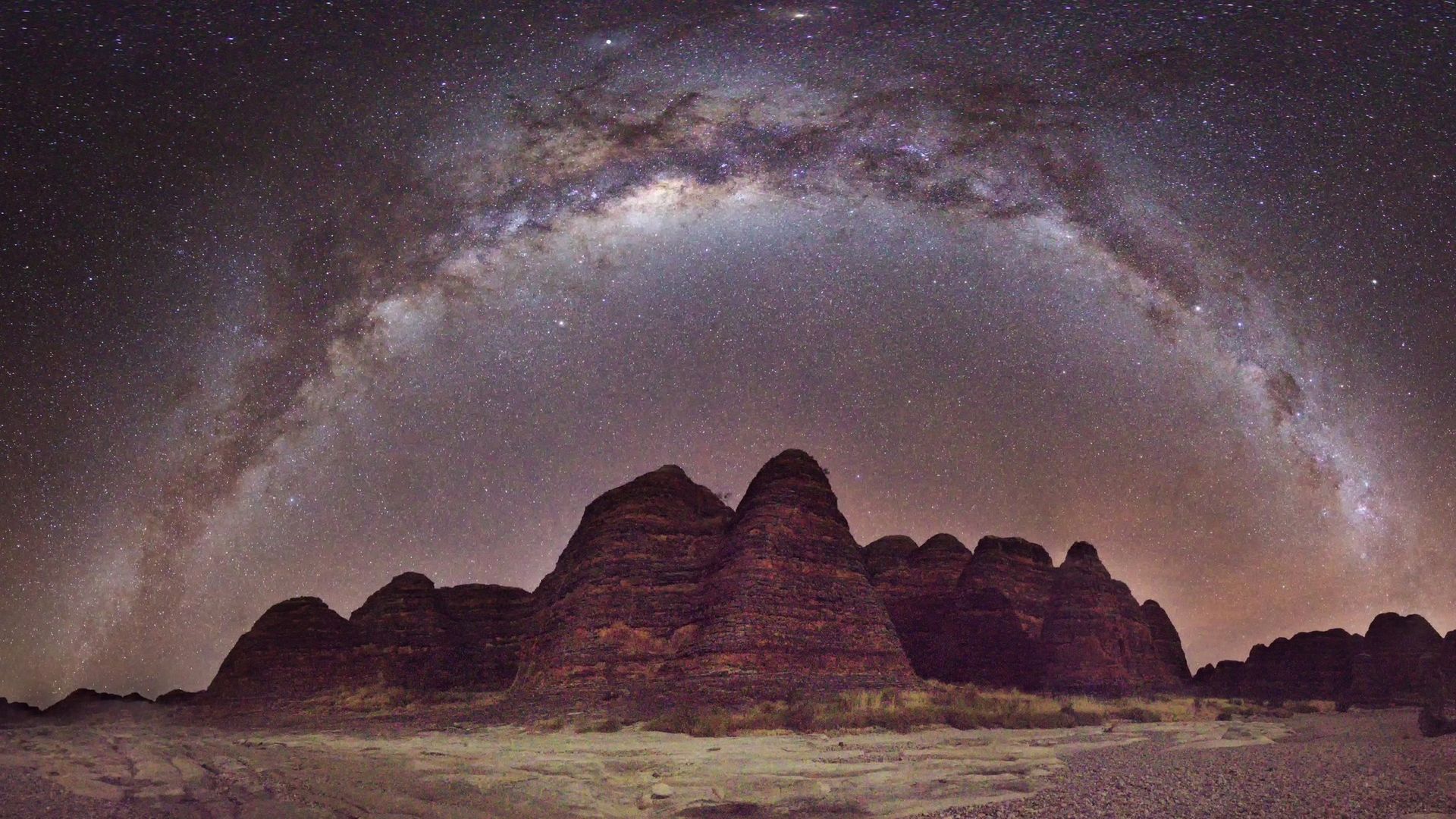
There's another reason to think beyond those few minutes of darkness. With the right planning, an eclipse trip can also become an extraordinary astronomy vacation (tip: come a week before the eclipse for the darkest evening skies). Here, 2028 offers visitors from Europe and North America something very different — the Southern Hemisphere night sky.
July is a superb time to see the bright central regions of the Milky Way from dark locations in Australia. The Southern Cross, or Crux, is one of the southern sky's defining sights, with Alpha and Beta Centauri nearby. Omega Centauri, the largest and brightest globular cluster visible from Earth, is another showpiece, while the Eta Carinae region offers one of the richest sections of the Milky Way for binoculars and small telescopes.
There are other reasons to extend the trip. A partial lunar eclipse occurs on July 6-7, 2028, while the Southern Delta Aquariid meteor shower peaks around July 28 — a week after the eclipse, during a first-quarter moon — and is particularly well seen from the Southern Hemisphere. Add Australia's world-class dark skies, and a trip into the Outback could become as much about stargazing as the eclipse itself.
The 2027 eclipse has fewer night-sky extras. The Delta Aquariid meteor shower peaks a few days before the eclipse — in dark, moonless skies — while Jupiter will dominate the western sky shortly after sunset. However, anyone traveling from the Northern Hemisphere will largely see a familiar celestial hemisphere. Australia offers a genuinely different sky experience.
City, desert or wilderness?
Sydney Harbour Bridge, Australia, will get 3 minutes 44 seconds of totality in 2028. (Image credit: Jenner Images via Getty Images)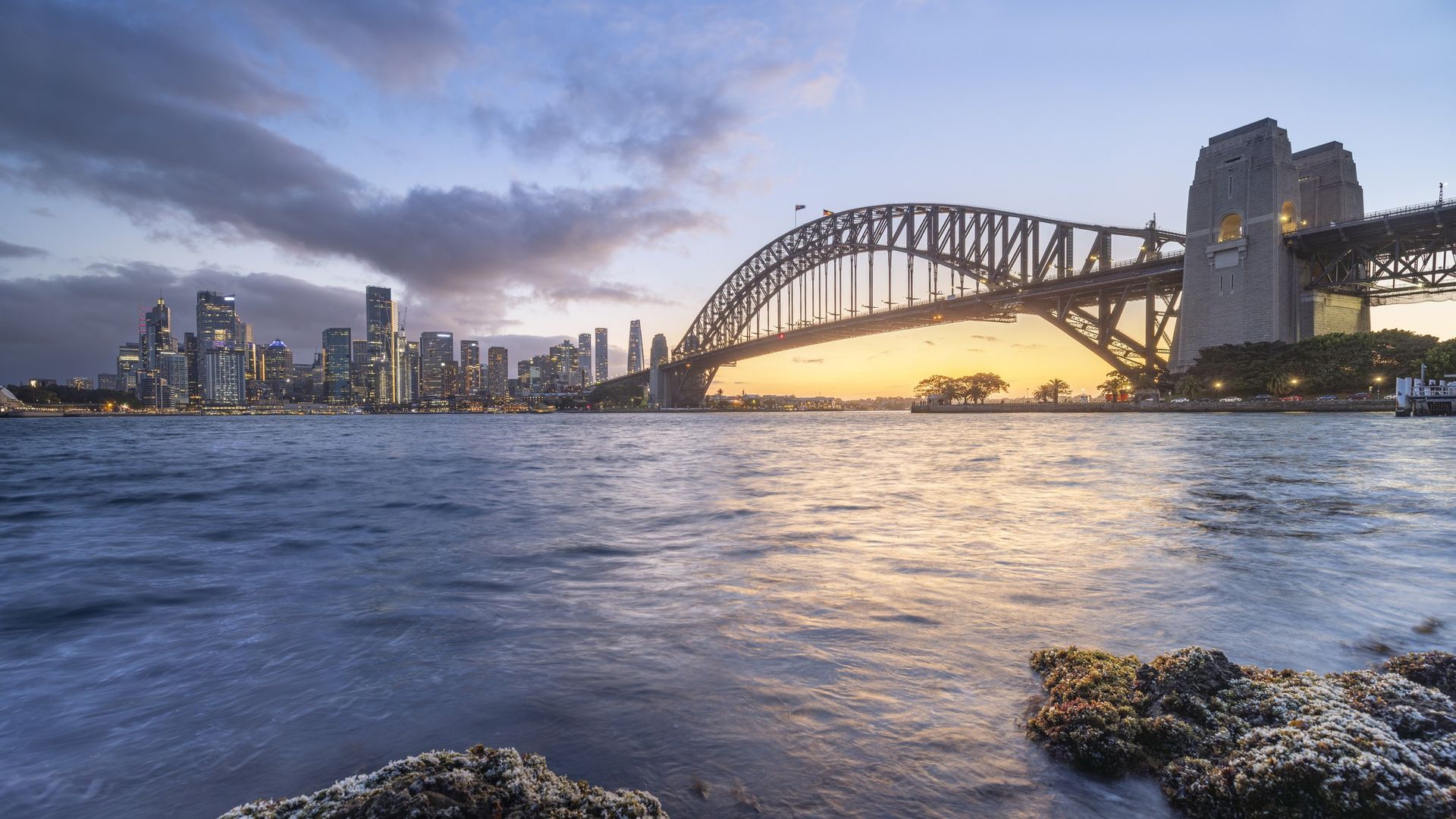
Perhaps the most useful way to choose between these eclipses is not to compare their durations, but to imagine where you would most like to be when the moon's shadow arrives.
In 2027, the decision largely comes down to how far along the eclipse track you want to travel. Stay in southern Spain for convenience and around four minutes of totality, head into Tunisia for longer totality and excellent weather prospects, or go all-in on Egypt for more than six minutes beneath almost cloudless desert skies — and bragging rights among eclipse chasers. It's an eclipse that can be combined with beaches, Roman ruins, North African cities or the temples and, of course, the tombs of ancient Egypt.
In 2028, the contrast is even greater. Sydney offers a communal total solar eclipse — a busy "we eclipse" — with millions watching daylight disappear above one of the world's great cities. Head thousands of miles away into the Australian interior and the same event becomes a lonely "me eclipse" in the wilderness, with up to five minutes of totality above an immense Outback landscape. Continue to New Zealand, and there's yet another possibility — a shorter totality with the sun much lower in the afternoon sky.
Which total solar eclipse should you choose?
Maps of the 2027 and 2028 total solar eclipses over Luxor, Egypt and Sydney, Australia. (Image credit: Michael Zeiler/EclipseAtlas.com)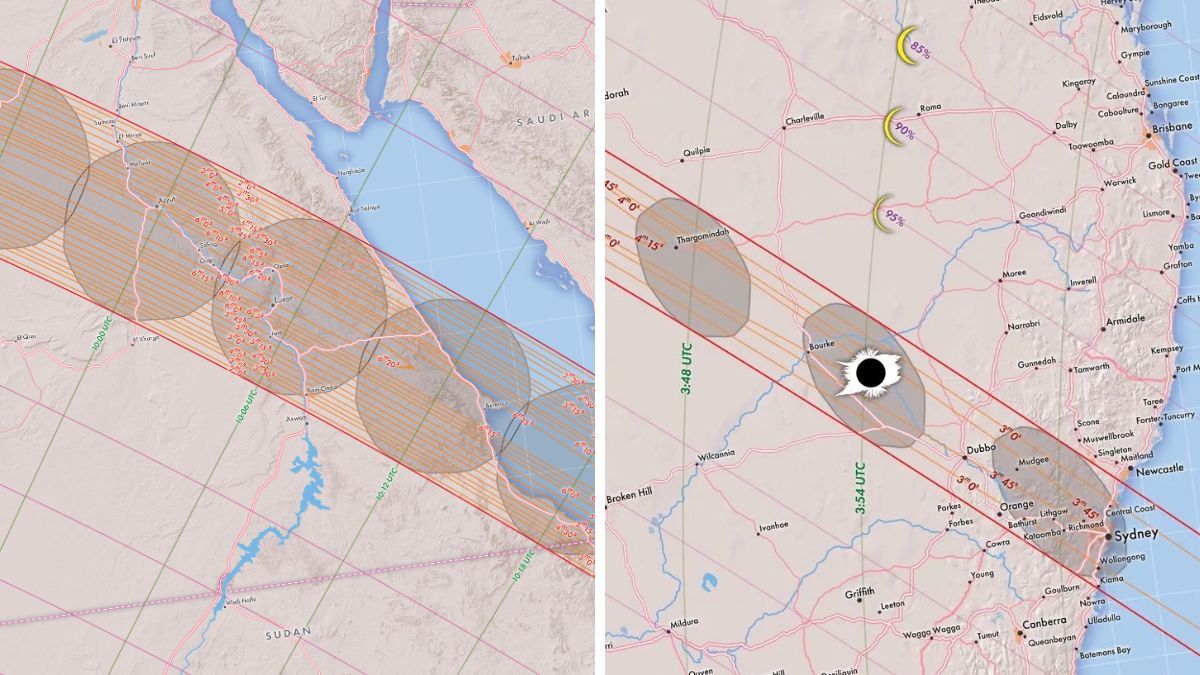
If your priority is purely totality duration, 2027 marginally wins. More than six minutes of totality combined with extraordinarily reliable weather is a rare combination. There's a good reason Aug. 2, 2027 is being marketed as the "eclipse of the century." But if you've always wanted to visit Australia or New Zealand, the 2028 eclipse is an extraordinary excuse to finally go, in addition to experiencing a long totality.
Choose the trip you most want to take, then find the best possible place for you within the path of totality. After all, no total solar eclipse lasts long enough, and most eclipse chasers struggle to recall exactly how long totality lasted. They're just left with the same question as always — when is the next one?





 Bengali (Bangladesh) ·
 English (United States) ·