

 NA
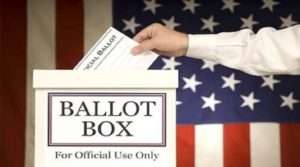
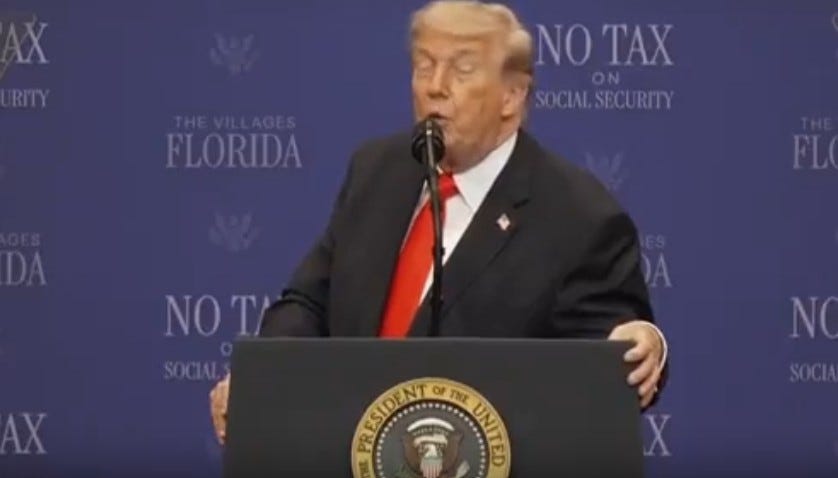
NA Donald Trump has been trying to "nationalize" (his term, not mine) control over elections, claiming sweeping presidential power to control voting processes in a variety of ways. In a compelling recent post at the Election Law Blog, Richard Bernstein explains why these moves run afoul of the major questions doctrine:
Briefing has begun in the cases challenging President Trump's latest attempt to arrogate power over federal elections to the federal executive branch—EO 14399's direction that the USPS provide lists states of voters eligible to vote by mail and to block the mail-in votes of those not on the USPS lists. The Society for the Rule of Law (with me as counsel) filed an amicus brief arguing, at pages 10-14, that the major questions doctrine applies to interpretations of federal agency authority on elections issues. That brief is linked here. The lack of authority for EO 14399 is so clear that a federal court does not need to rely on the major questions doctrine in order to invalidate EO 14399. But it should, as an alternative holding….
Before a federal agency has authority to regulate a major question, a statute must provide "clear congressional authorization." West Virginia v. EPA, 597 U.S. 697, 723-24 (2022). "[M]odest words, vague terms, or subtle devices" do not suffice. Id. at 723. Under the major questions doctrine, courts "presume that Congress intends to make major policy decisions itself, not leave these decisions to agencies." Id. at 723 (quotations omitted). This reflects "both separation of powers principles and a practical understanding of legislative intent." Id. at 723-24. "[A] reasonable interpreter would not expect Congress to pawn . . . a big-time policy call . . . off to another branch." Learning Resources, Inc. v. Trump, 146 S. Ct. 628, 641 (2026) (plurality opinion) ("Learning Resources Plurality") (cleaned up). Deciding what is a major question also reflects "constitutional structure and common sense." Id. at 639.
The major questions doctrine is especially suitable for federal agency regulations of federal election issues. That is because federal elections control who exercises federal legislative and federal executive power. To compare an election issue to Learning Resources, Congress has the power to impose tariffs, but federal elections decide who exercises that power and every other legislative and executive power, and therefore how all those powers are exercised. As James Madison explained in Federalist No. 51, "[a] dependence on the people" through elections "is, no doubt, the primary control on the government."
The Elections Clause unmistakably vests the power to decide the rules for federal elections in legislatures – first and foremost state legislatures, subject to alteration by Congress. Congress has not been shy about exercising this power…..
Allocating power to any President to make election rules would be a fundamental departure from our constitutional structure. Our federalist election structure, designed by the Elections and Electors Clauses and still upheld in federal election statutes, fosters both the reality and appearance of election integrity by decentralizing election rules and who executes them. In our nation's history, it is rare that control of either house of Congress or the Presidency is decided by a single disputed election in one state. Thus, stealing control would require a conspiracy involving officials in multiple states. Stealing such control would be easier if the unitary federal executive branch could make rules for, and exercise greater power over, federal elections in all 50 states.
I largely agree. The major questions doctrine (MQD) requires Congress to "speak clearly" when authorizing the executive to make "decisions of vast 'economic and political significance.'" If the statute is ambiguous, courts must presume that Congress didn't give the executive branch the authority it claims.
Previous Supreme Court major questions decisions - most recently, the tariff case, which Bernstein cites and which I helped litigate - concerned assertions of power over substantive policy issues. These election cases concern power over procedures. Nonetheless, as Bernstein notes, control over elections is a way to leverage vast power over a range of issues (because election winners get to make a variety of policy decisions), and that control is crucial to America's system of federalism and separation of powers. Thus, when the president claims sweeping delegations of power over election procedures, the major questions doctrine applies.
And, as in the case of tariffs, the Constitution gives the president no inherent power over election procedures. Any authority he might have must be delegated by Congress exercising its Article I power to "make or alter" state regulations relating to the time, place, and manner of congressional elections.
To be sure, MQD would not apply in situations where the executive claims he has been delegated only some relatively minor power, such as authority over some minor aspect of election administration. But here, the White House is claiming far greater authority than that.
NOTE: The amicus brief Bernstein refers to was filed on behalf of the Society for the Rule of Law. the Society for the Rule of Law. I am a member of SRL's Advisory Council (an unpaid position).
The post The Major Questions Doctrine Constrains Presidential Power Over Elections appeared first on Reason.com.




 Bengali (Bangladesh) ·
  English (United States) ·