

Have you been wanting to start investing, but you keep putting it off because you do not know what to do?
Maybe you have opened an investing app before, looked at all of the choices, and thought, “How am I supposed to know which one to pick?”
I understand.
Investing can feel confusing when you are first getting started. There are stocks, ETFs, retirement accounts, risk levels, fees, and so many other things to learn.
And even if you already invest, you may still wonder if you are doing it the right way.
Are you investing enough? Is your portfolio diversified? Are you taking on too much risk? What are you supposed to do when the market goes down?
This is where Stash may be helpful.
Stash is an investing and money app that is made for people who want more guidance. You can choose your own investments, use a portfolio that is managed for you, set up automatic investing, open a retirement account, invest for a child, and more.
Instead of just giving you thousands of investment choices and leaving you to figure everything out, Stash is designed to help you understand how you are doing and what you may want to do next. Stash describes itself as the next best thing to having a human financial advisor.
Of course, an app is not the same as sitting down with a financial advisor who knows everything about your income, family, goals, taxes, and other accounts.
But many people do not have a financial advisor, especially when they are only getting started.
So, Stash is trying to fill the space between doing everything on your own and hiring someone to manage your finances for you.
In this Stash review, I will talk about how Stash works, what it costs, the main features, the pros and cons, and who I think it makes the most sense for.
Please click here to sign up for Stash.
Quick Stash summary: Stash is an investing app for people who want help getting started and staying on track. It includes managed portfolios, automatic investing, retirement accounts, and other helpful money tools in one app.
Stash Review
In this Stash review, I’m going to walk you through what it is, how it works, who it’s for, and whether or not it’s worth the cost.
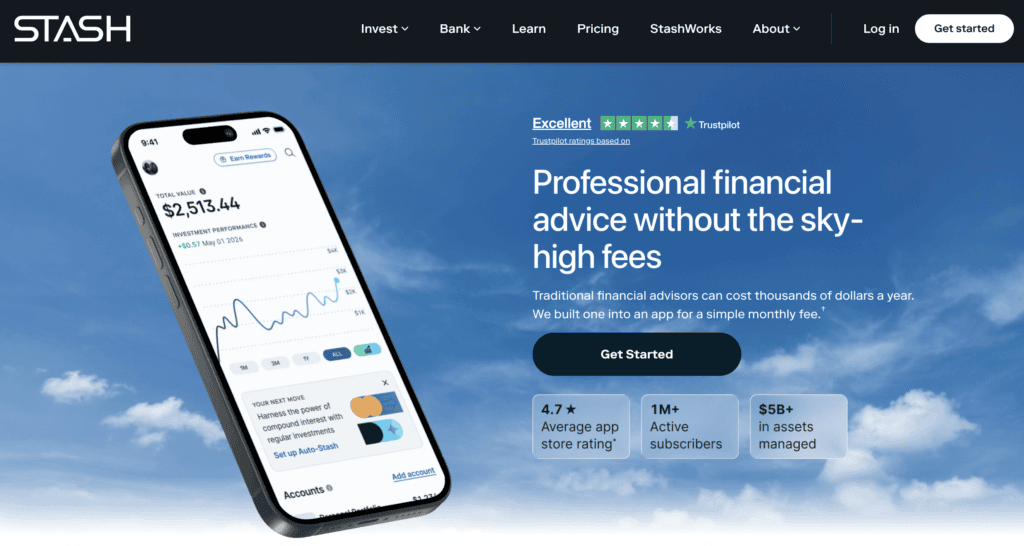
What is Stash?
Stash is an investing app that also includes financial guidance, retirement accounts, banking tools, and more. Stash was launched in 2015, and they currently have around 1,200,000 active subscribers.
With Stash, you can:
Invest in individual stocks and ETFs Start with fractional shares Use a managed Smart Portfolio Set up automatic investments Open a Traditional or Roth IRA Open a custodial account for a child Get guidance inside the app Use a debit card that earns stock rewardsThese days, opening an investment account is pretty easy, and you can usually do it from your phone in just a few minutes.
The harder part is knowing what to do after the account is open.
I have heard from so many people over the years who know they should invest, but they are scared of choosing the wrong thing.
So, instead, they do nothing.
They wait another month, another year, or even longer because investing feels too overwhelming.
Stash is made for this kind of person. It gives you access to investments, but it also tries to help you understand the choices in front of you.
Stash is also a registered investment advisor with a fiduciary duty, which means it is legally required to act in its clients’ best interests.
How does Stash work?
When you sign up for Stash, you answer questions about your goals, finances, and how comfortable you are with risk, and this all helps Stash learn more about what you are trying to do.
For example, someone investing for retirement in 30 years may make very different choices than someone who expects to need the money much sooner.
After answering the questions, you can decide how involved you want to be.
You can:
Choose your own stocks and ETFs. Use a portfolio that Stash manages for you. Do a mix of both.I think the third option may appeal to a lot of people.
You may want most of your money in a diversified portfolio that is managed for you, while still choosing a few investments on your own.
With Stash, you do not have to choose between doing everything yourself and having no control at all.
You can get guidance while still being involved in your money.
What can you invest in with Stash?
Stash gives you several ways to invest:
Individual stocks – You can invest in individual companies through Stash. Fractional shares – Stash also has fractional shares, which means you can invest in part of a share instead of needing enough money to own one full share. For example, let’s say one share of a company costs $300, but you only want to invest $10. Fractional shares may let you invest that $10 instead of waiting until you have the full $300. This makes it easier to start with a smaller amount. ETFs – ETF stands for exchange-traded fund. An ETF holds a group of investments. One ETF may hold stock in hundreds of different companies. This can make it easier to diversify because you are not depending on only one company. For example, if one company inside an ETF performs poorly, there are many other companies in the fund too (that does not mean an ETF cannot lose money – it can).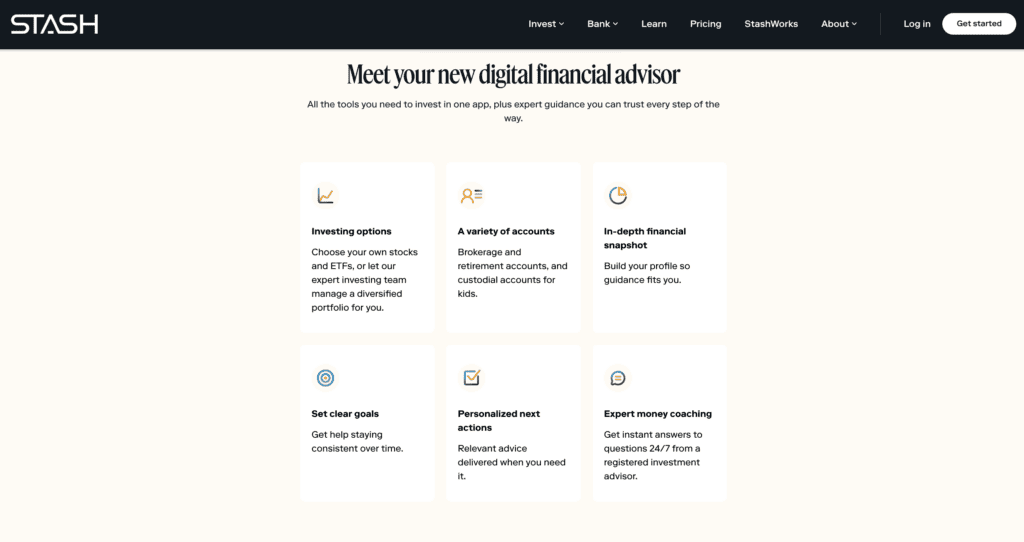
Main Stash Features
Stash includes many features, but you probably will not use every single one.
Before joining, I would think about which features are actually useful to you. You do not want to pay for a long list of extras that you never touch.
Here are the main Stash features.
1. Personalized financial guidance
The guidance is probably the biggest reason someone would choose Stash over a basic brokerage account.
Stash is designed to help you understand how you are doing and what you may want to do next.
For example, it may help you think about:
Whether you are investing regularly Whether your investments are diversified How much risk you are taking Your retirement goals Your current progress Your next financial stepI like that Stash is trying to help people understand their money instead of simply giving them a place to make trades.
A lot of people are not avoiding investing because they do not care about their future – they are avoiding it because they are afraid of making a mistake or because everything is just too confusing to get started.
Having guidance may help investing feel less intimidating.
2. AI Money Coach
Stash also has an AI Money Coach.
You can use it to ask questions about investing, budgeting, retirement, and other money topics.
For example, you may ask:
What is an ETF? What is diversification? What is the difference between a Roth IRA and Traditional IRA? How can I invest more each month? Am I taking too much risk?I can see this being helpful when you have a quick question and do not know where to look.
But I would still double-check anything important.
AI tools can make mistakes, and they do not understand every detail of your situation.
For a major decision involving taxes, retirement, estate planning, or legal questions, I would still talk with a qualified professional.
3. Automatic investing
I am a big fan of automating your finances, and Stash lets you set up automatic investments!
When your investing happens automatically, you do not have to remember to do it each month.
You also do not have to make the same choice over and over again.
You could choose to invest:
$5 every week $25 every payday $50 twice a month $100 each monthThe right amount depends on your budget, and there is nothing wrong with starting small.
A small amount that you can stick with is better than choosing a large amount that leaves you stressed and causes you to stop.
One tip is to schedule the automatic investment for right after payday, because this lets you invest before you have a chance to spend the money somewhere else (just make sure you have enough in your checking account for your bills because you do not want an investment transfer to leave you short on groceries, your mortgage, or another important expense).
4. Retirement accounts
Stash offers Traditional and Roth IRAs.
An IRA is an individual retirement account that can come with tax benefits.
With a Traditional IRA, you may get a tax benefit now and pay taxes when you withdraw the money in retirement.
With a Roth IRA, you contribute money that has already been taxed, and qualified withdrawals in retirement may be tax-free.
One is not always better than the other. The right one depends on your income, tax situation, workplace retirement plan, and future goals.
Stash offers both managed and self-directed retirement options, and this means you can have Stash manage your retirement portfolio, or you can choose investments yourself.
When deciding if you should open a retirement account with Stash, I would look at things like:
The subscription cost Any management fees The investments available How easy it is to transfer the account later Whether you plan to stay with Stash for a long time5. Custodial accounts
Stash also offers custodial investment accounts for children.
This type of account is when an adult manages the account while the child is young, and once the child reaches the legal age in their state, the child generally receives control of the money.
The money may eventually help with:
College A first home A car Starting a business Another future goalNote: I think investing for a child can be a wonderful gift, but a custodial account is not the same as a 529 college savings plan. Money in a custodial account legally belongs to the child, and that means you cannot simply take it back or change your mind about who it belongs to later.
Before opening one, I would learn about:
When the child will get control of the money How it may affect college financial aid Possible tax rules Whether you want the money used only for education Whether a 529 plan may make more senseThe account can be useful, but make sure it fits what you actually want to do.
6. Stock-Back Card
The Stock-Back® Card1 is a debit card that earns stock rewards on eligible purchases. For example, if you shop at Apple, you will automatically receive a piece of Apple stock.
I think this is an interesting feature if you’re looking for a debit card that gives rewards.
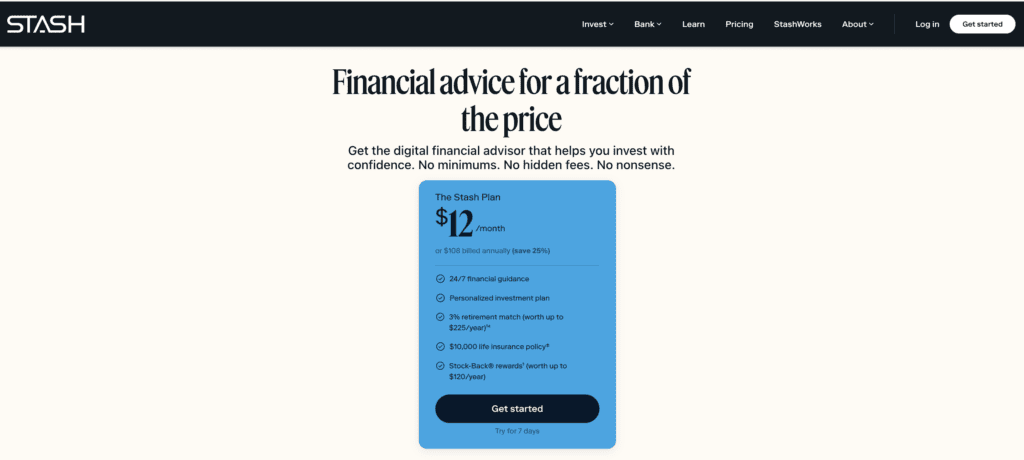
How much does Stash cost?
Stash currently has one subscription called The Stash Plan.
It costs:
$12 per month, or $108 per year. The yearly plan works out to $9 per month, but you pay the full amount upfront.The Stash Plan includes things such as:
A personal investment account A retirement account Smart Portfolio Custodial accounts Financial guidance AI Money Coach Stock-Back® Card1 rewards An eligible IRA match Banking and budgeting toolsThere are also some other costs, such as Stash currently charges a 0.25% yearly management fee on certain managed account balances. The funds inside your portfolio may also have their own fees, called expense ratios. And there may be fees for things such as certain transfers or paper documents.
Honestly, the monthly cost is the biggest downside I see, because paying $12 a month may not make sense if you only have a small amount invested.
For example, if you plan to invest $20 each month, paying another $12 for the subscription is a very high cost compared with what you are investing.
I think Stash makes more sense for someone who will use several of the features.
Perhaps you will use the managed portfolio, retirement account, custodial account, guidance, and automatic investing, and in that case, the price may feel more reasonable.
But if you only want an easy place to invest in one or two funds, you may not need everything Stash includes.
Before joining, I would ask:
How much do I plan to invest? Which features will I actually use? Will I use the guidance? Will I use a managed portfolio? Will I open an IRA or custodial account? Are the total fees worth it to me?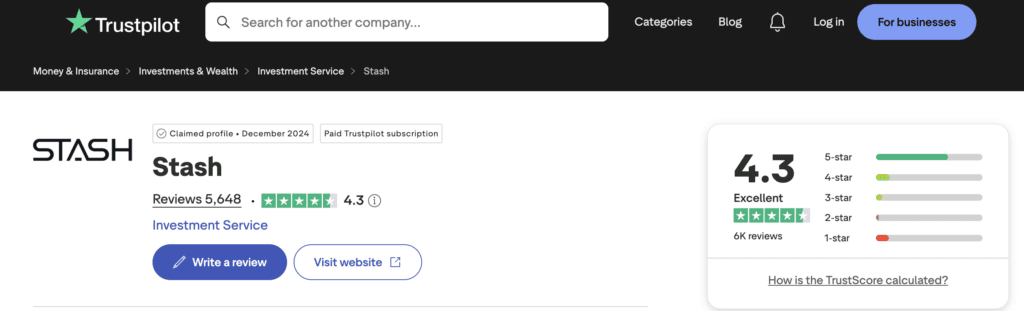 Stash has a Trustpilot rating of 4.3 out of 5 stars, with over 5,600 reviews.
What I like about Stash
Here are the main things I like about Stash.
It is made for people who feel overwhelmed
Many investing apps give you access to investments, but very little direction.
Stash is made for people who want more help, and I can see how this could make investing feel much less scary for someone who has never done it before.
You can choose how involved you want to be
You can use a managed portfolio, choose your own investments, or do both, and I like that you are not forced to make every decision on your own.
It focuses on long-term investing
Stash calls its investing philosophy The Stash Way.
It focuses on investing regularly, staying diversified, and building wealth over time instead of chasing the latest trend – I like this approach because most people do not need to trade all day or guess which stock will go up next week.
Automatic investing can help you stay consistent
Life gets busy, and you may plan to invest each month but forget.
Automating your investing can help you keep going without thinking about it all the time.
It has many tools in one place
Stash includes personal investing, retirement accounts, custodial accounts, financial guidance, and more – some people may like having all of this in one app.
Stash cons
No investing app is right for everyone, and here are the main downsides I see.
The monthly fee may be expensive for a small account
This is the biggest issue for me.
A $12 monthly fee can take a big bite out of a small account, so I recommend that you make sure the features are worth the price for you.
Some managed accounts have another fee
The 0.25% management fee may apply on top of the subscription.
You will want to include both costs when comparing Stash with other investing platforms.
You may not need all of the features
If you already understand investing and only want a basic brokerage account, Stash may offer more than you need, so you may be able to save money by using a different platform.
Who is Stash best for?
Stash may be a good fit for:
A beginner who wants help getting started Someone who feels overwhelmed by investing A person who wants a managed portfolio Someone who wants to choose a few investments too A long-term investor A person who wants to automate investing A parent who wants to invest for a child Someone who wants retirement and personal investing in one place A person who will use several Stash featuresStash probably makes the most sense for someone who wants more help than a basic trading app gives them, but does not have a traditional financial advisor.
Frequently Asked Questions
Below are answers to common questions about Stash.
Is Stash good for beginners?
Stash may be a good option for beginners who want more guidance because it gives you the choice of a managed portfolio, individual investments, automatic investing, and educational tools.
Is Stash better than Robinhood?
Stash is better for beginners who want guidance and long-term investing. Robinhood is more focused on trading.
Is Stash better than Acorns?
Stash gives you more guidance and lets you choose stocks and ETFs. Acorns is more focused on simple, automatic investing.
Is Stash better than Fidelity, Schwab, or Vanguard?
Stash may be easier for beginners due to their easy-to-use app. Fidelity, Schwab, and Vanguard may be better for experienced investors who want more choices and no monthly subscription.
Can you lose money with Stash?
Yes, all investing comes with risk. Your investments can rise or fall in value, and you can lose money.
Can you make money with Stash?
Your investments may build over time, but there are no guaranteed returns. Your results depend on what you invest in, how long you stay invested, the market, fees, and your own choices.
Does Stash choose your investments?
Stash can choose and manage investments through Smart Portfolio. You can also choose individual stocks and ETFs yourself.
Does Stash offer retirement accounts?
Yes, Stash offers Traditional and Roth IRAs.
Can you invest for a child with Stash?
Yes, Stash offers custodial investment accounts that an adult manages until the child reaches the legal age in their state.
Can you cancel Stash?
Yes, but canceling the subscription and closing or transferring investment accounts may involve different steps. I recommend that you make sure you understand what will happen to your accounts before canceling because there may be fees and taxes that you have to pay.
Stash Review: Is Stash Worth It? – Summary
I hope you enjoyed my Stash Review.
So, is Stash worth the cost?
I think it depends on what kind of investor you are and which features you plan to use – Stash may be worth looking into if you want more help than a basic investing app gives you.
I like that Stash focuses on long-term habits, automatic investing, and helping people understand what to do next.
But there is a cost. At $12 per month, Stash may be expensive for someone with a very small balance or someone who only wants a brokerage account.
If you will use several of the features, Stash may be worth the cost.
If you already feel comfortable managing your own investments and only want a basic account, a different brokerage may make more sense.
Overall, I think Stash is best for someone who wants to invest but feels stuck because they do not know what to do. Stash can help you get started!
Ready to get started? Click here to sign up for Stash.
Have you ever put off investing because you were worried about doing it wrong?
The following are disclosures from Stash:
Paid non-client endorsement. Not representative of all clients and not a guarantee. View important disclosures
1 Stash Banking services provided by Stride Bank, N.A., Member FDIC. The Stash Stock-Back® Debit Mastercard® is issued by Stride Bank pursuant to license from Mastercard International. Mastercard and the circles design are registered trademarks of Mastercard International Incorporated. Any earned stock rewards will be held in your Stash Invest account. Investment products and services provided by Stash Investments LLC and are Not FDIC Insured, Not Bank Guaranteed, and May Lose Value. Stock rewards earned with the Stash Stock-Back® Debit Mastercard® are fulfilled by Stash Investments LLC and subject to Terms and Conditions. To earn stock, you must use your card for a qualifying purchase. You are responsible for the standard fees and expenses reflected in the pricing of the investments you earn, as well as any applicable ancillary service fees. Investment products and services provided by Stash Investments LLC, including investment rewards paid via the Stash Stock-Back program, are Not FDIC Insured, Not Bank Guaranteed, and May Lose Value.
A Smart Portfolio is an account that Stash has full authority to manage. Stash-Managed Portfolios with balances of $1,000 or more, calculated daily, are subject to an additional fee of 0.25% of the account balance charged every three months.
Stash’s AI Money Coach provides general guidance based on your personal information available to Stash. It does not reflect your complete financial situation. Responses may be incomplete or inaccurate and should not be your sole source of financial guidance.
A Stash-Managed IRA is an account that Stash has full authority to manage and are subject to an additional fee of 0.25% of the account balance charged twice per year, when we rebalance your portfolio.
Recommended reading:
Empower Review: Is This the Best Free Financial Planning Tool? How To Save For Retirement – Answers To 13 Of The Most Common Questions 16 Best Passive Income Apps To Make More Money How To Create a Realistic Financial Plan (That You’ll Actually Stick To)The post Stash Review: Is It a Good Way to Start Investing? appeared first on Making Sense Of Cents.




 Bengali (Bangladesh) ·
  English (United States) ·