

Now you see them, now you don't. Scientists have discovered that some of the universe's most powerful explosions, hypernovas, may not happen at all.
These explosions, known as hypernovas, were first proposed to explain unusual stars in the halo of our galaxy, the Milky Way, and in a neighboring dwarf galaxy. It was suggested that these stars could only form from the debris of an explosion 10 times more powerful than the 'average' supernovas.
The team behind these new findings suggests that ordinary supernovas could actually account for these stars when the uneven or non-spherical way they fling out matter is considered.
"If we look at a supernova today, the star's materials are not spread evenly. Oxygen might predominantly fly in one direction, sulphur in another. New stars might form from a mix of pieces of the supernova, not its overall mix of elements," team leader Anmol Aggarwal of University College London (UCL) said in a statement. "We developed mathematical models that took account of this and found in all cases that stars with a very unusual mix of ingredients were most likely formed from ordinary supernovas.
"All the evidence we see for hypernovae is suddenly gone."
Hypernova vs. supernova: What's the difference?
Supernovas occur when massive stars run out of fuel for nuclear fusion, effectively ending their lives. This results in the star's core collapsing, sending shockwaves rippling through its outer layers, causing explosions we call supernovas.
Hypernovas are proposed to occur in a similar way, but for an even more massive and rapidly spinning star. This results in a vastly more energetic explosion.
When supernovas or hypernovas happen, they fling elements that the dying star has forged throughout its lifetime into their surrounding cosmic environments. These elements eventually become the building blocks of the next generation of stars.
That means analyzing the chemical signatures of stars can tell stellar scientists about their family histories.
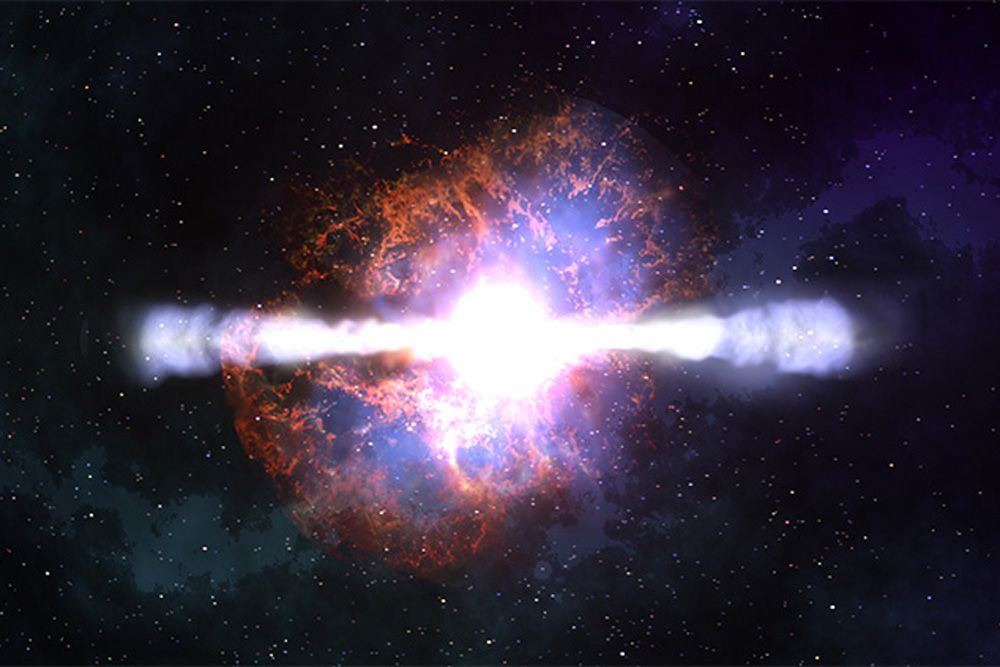
"Just before a star goes supernova, it has layers like an onion, with heavier elements at the center and lighter ones further out. Our model looks at how much material from each layer or each region would be needed to fit the observed star," Ralph Schoenrich of Mullard Space Science Laboratory at UCL said. "We still don’t know how well the supernova material gets mixed before it forms new stars. That is despite decades of work in this area. Our research suggests some mixing goes on, but incomplete mixing.
"We need to take this into account in our models of how chemicals evolve in galaxies and of how the interstellar medium works."
The team began their investigation by observing four stars that are suspected to have been forged from material ejected in a hypernova explosion. Three of those stars were more likely to have been created after supernovas, the team concluded.
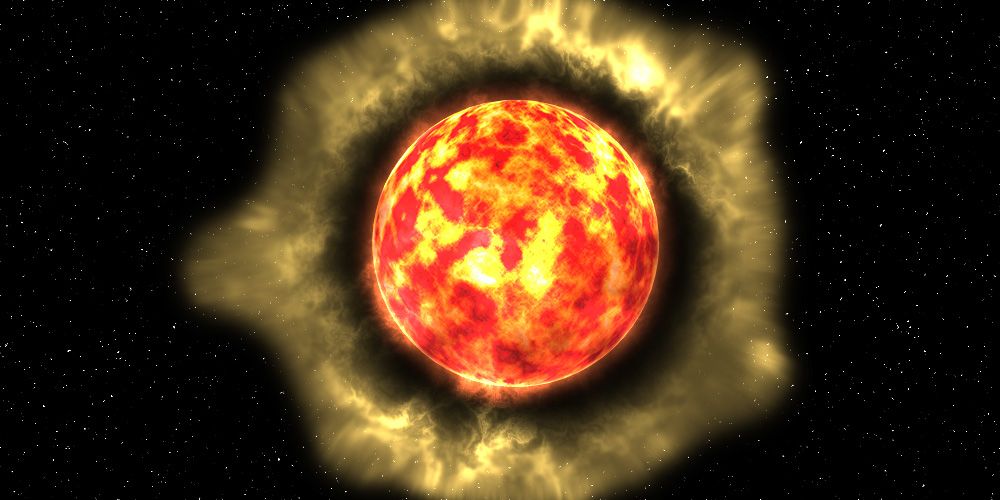
The scientists then studied a single red giant star in the halo of the Milky Way with an odd chemical composition, including an overabundance of heavy elements like silver and uranium. These are too heavy to be forged in the cores of all but the most massive stars, the kind of stars that go hypernova.
Such elements could also be created when two massive and dense stellar remnants called neutron stars collide and merge. However, this star doesn't have certain other heavy elements that would be present after a neutron star collision.
This team considered the origins of this star using a model of the Milky Way that has been rapidly enriched with elements heavier than hydrogen and helium, which astronomers call metals, via the death of the first generation of stars.
The rapid speed at which the star spins and the fact it exists at the outskirts of the Milky Way led the team to conclude that this star escaped a metal-poor dwarf galaxy and was eventually dragged into our galaxy. The event that created it, they concluded, was the combination of a neutron star merger and an ordinary supernova.
No hypernova required. An asymmetrical supernova would be enough, the scientists found.
The team's research was published as two papers in the journal Monthly Notices of the Royal Astronomical Society.
![Bees may survive a swim by heading for the dark [COMIC]](https://www.snexplores.org/wp-content/uploads/sites/3/2026/10/1440_swimming_bee_comic_banner.jpg?w=800)



 Bengali (Bangladesh) ·
  English (United States) ·