

Is the Milky Way even bigger than we thought? New observations have revealed that our galaxy's spiral arms could stretch farther and wider than we previously concluded.
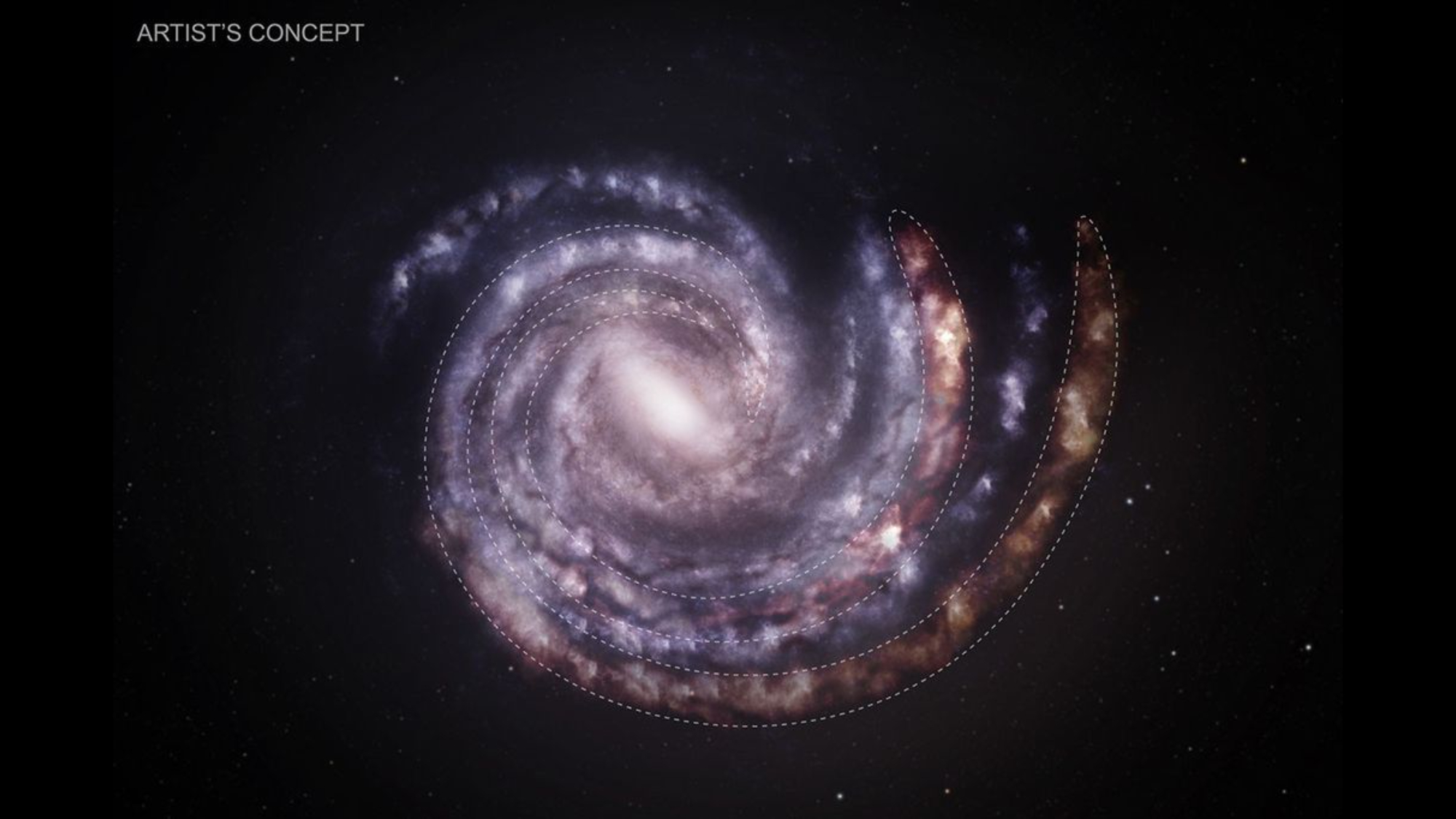
The Milky Way's spiral structure was discovered over 175 years ago in 1850. But new information could completely change our understanding of our cosmic home. Astronomers have taken a new look at our Milky Way galaxy using data from NASA's Chandra X-ray observatory and the European Space Agency's XMM-Newton observatory and have pieced together new, precise measurements of the galaxy's spiral arms. And what they found is that its spiral arms stretch out farther than we once thought, a discovery that could change our understanding of our galaxy's structure.
"The differences are small, but any revision of these distances is important because they are so fundamental for understanding our galaxy," co-author Ilaria Fornasiero said in a statement. "For example, this could mean that astronomers have to revise estimates of the mass of the galaxy, because that affects how wide the arms stretch."
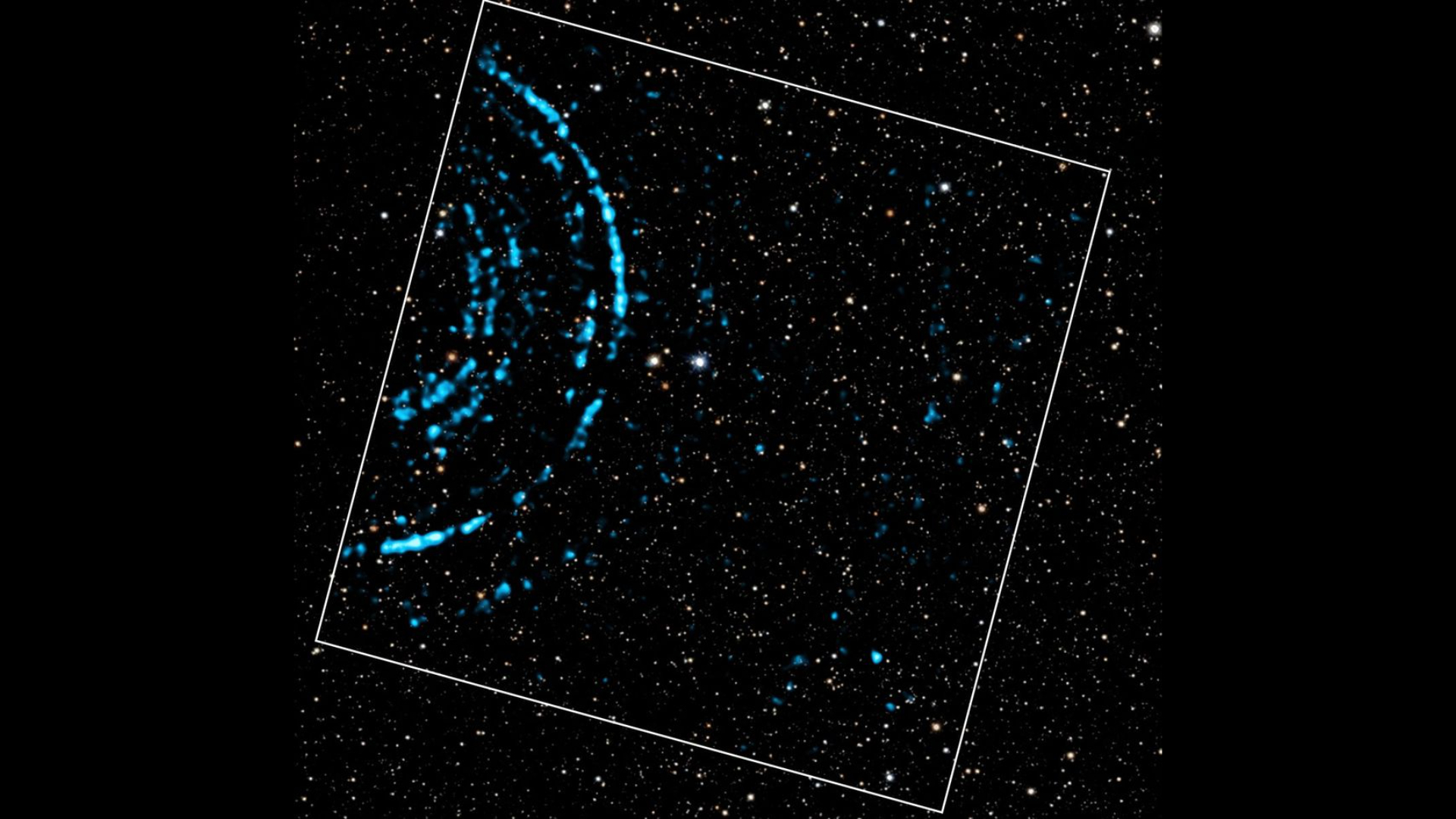
To make this new galactic measurement, researchers had to get a little creative with the data. They measured these cosmic distances by observing X-ray light scattered by the dust in the Milky Way's arms as it echoed out from around gamma-ray bursts, or the most powerful explosions across the universe that happen either when massive stars collapse or neutron stars collide and merge. These massive bursts of energy are happening far beyond our galaxy, but their X-ray light is so powerful that it can reach and bounce off of dust clouds in the Milky Way's arms.
By studying the diameters of the rings of light as they expand away from these explosions and observing how and where they reflect off of the Milky Way's dust, the team was able to precisely point to where the galaxy's arms extend.
"This is a very direct way – relying only on geometry – to precisely measure distances to the Milky Way's spiral arms," lead author Beatrice Vaia, who led this research as a PhD student, said in the statement. "Most other methods rely on assumptions about how the Milky Way rotates, which become increasingly uncertain in the outer regions of our galaxy."
The team used the X-ray light from three different gamma-ray bursts to look at three of the Milky Way's spiral arms: the Perseus, the Outer, and the Outer-Scutum-Centaurus arms. According to these new measurements, both the Outer and the Outer Scutum-Centaurus arms are about ten percent more distant than was previously thought.
With this data, the team was also able to measure the thickness of the Milky Way's most distant arm, which they found to be about 3,500 light-years wide. By incorporating the arm's width, the team ensured that they were measuring the full extension of the arm and not just one particular dust cloud, further bolstering their findings.
While it's interesting that the Milky Way's arms extend out a bit farther and wider than we previously thought, these new findings could have larger implications. Based on these new measurements, astronomers may have to reinvestigate our understanding of our galaxy's mass distribution, rotation and overall structure. This evolving understanding could ripple out and impact how we view not just the structure but the evolution of our galaxy and beyond.
But this study isn't one that can be replicated too easily. That's because gamma-ray bursts don't happen all of the time. Even more rare are bursts that we can see clearly through our galaxy.
"We’re relying on the universe to provide us with these events, and so far, over 25 years, we’ve only found a handful that we can use," co-author Andrea Tiengo of Scuola Universitaria Superiore IUSS Pavia said in the same statement. "That said, we will continue to be on the lookout for more."
This work was described in a new study published June 19 in the journal Astronomy & Astrophysics.




 Bengali (Bangladesh) ·
  English (United States) ·