

TORONTO — Last April, after he was recalled from triple-A to make his MLB debut less than a week into the Toronto Blue Jays‘ season, Mason Fluharty started hitters with three balls and felt his mind start to wander.
What am I doing? Why can’t I throw a strike? I’m going to get sent down.
“It’s hard to not think like that when you’re young, you’re experiencing all of this for the first time,” Fluharty says. “But my mindset this year has changed a lot.”
Now, if Fluharty falls behind, 3-0, as he did to Colorado Rockies outfielder Brenton Doyle during an outing on Tuesday, he doesn’t grant those intrusive thoughts access to his mind.
He tells himself he’s in a post-season game. That the out he’s trying to get is one of his team’s most important of the season. That he owes it to each of his teammates, owes it to himself, to not leave any regrets on the mound.
And then he does this:
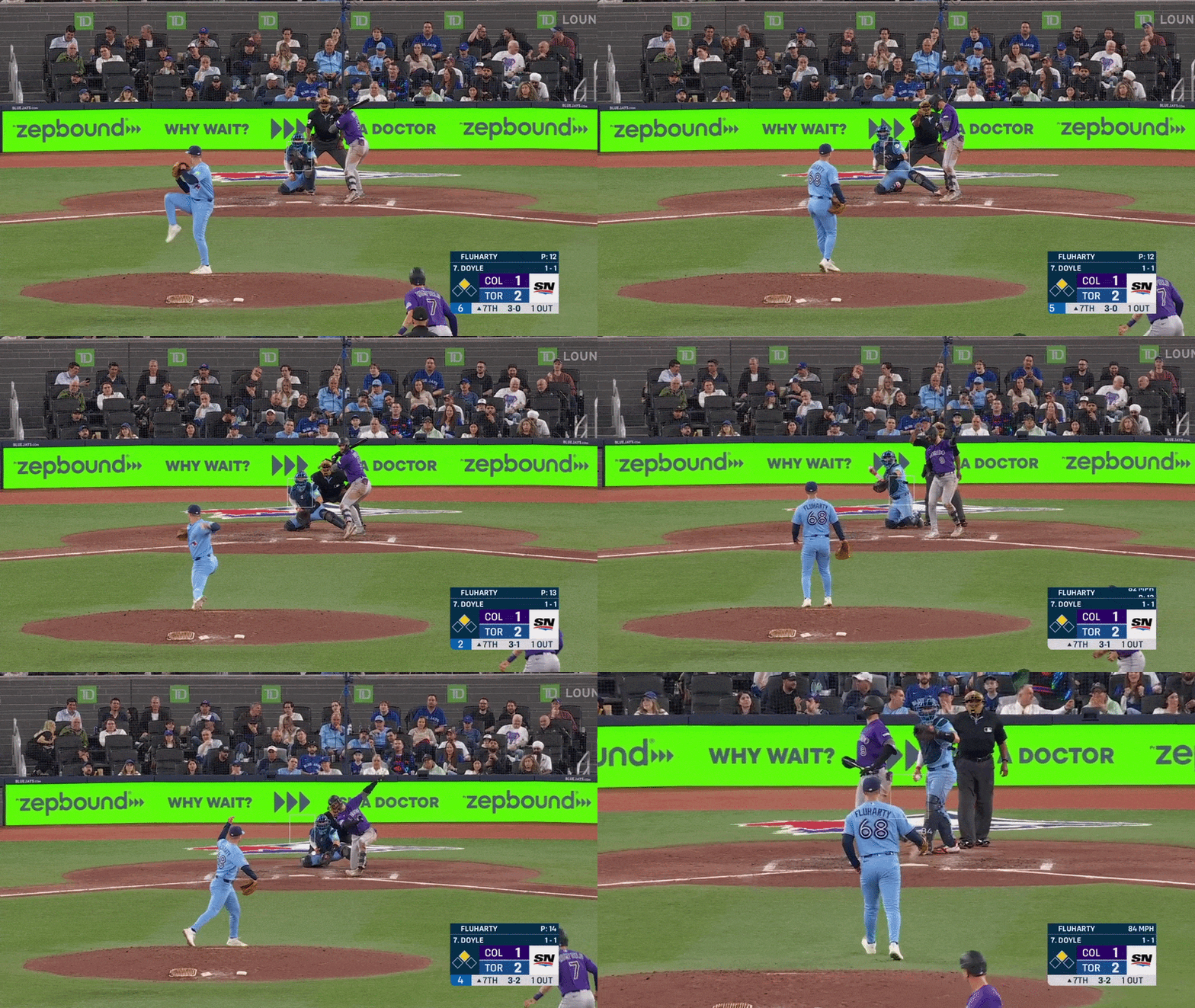
“I just got amped up and I was like, ‘I’m going to punch this guy out.’ And then I just did,” Fluharty recalls. “I’ve always been a guy that gets fired up on the mound. I have to be. Because if I’m not, then I’ll just get ran over. But the difference now is I want to think every single night is October. Just go be a dog and get outs.”
It’s the biggest lesson Fluharty took away from the 11 post-season appearances he made last fall during Toronto’s captivating run to the World Series. If he’s going to perform in some of the most significant, pressurized, game-deciding moments for a contending team — an expectation the Blue Jays made clear to him entering the season — he needs to be in control of his inner monologue on the mound.
Repeated October encounters with some of MLB’s peskiest left-handed hitters such as Jazz Chisholm Jr., Josh Naylor, Shohei Ohtani and Freddie Freeman taught him how to navigate long plate appearances, fight his way back into counts, and stubbornly refuse to give away easy bases.
But as he battled those hitters — 23 per cent of Fluharty’s post-season pitches were fouled off, third-most of the 50 pitchers who threw at least 100 pitches last October — it also revealed the need to finally develop a third offering.

MLB on Sportsnet
Watch the Toronto Blue Jays, Blue Jays Central pre-game, marquee MLB matchups, Jays in 30, original documentaries, the wild card, divisional series, championship series and entire World Series on Sportsnet and Sportsnet+.
For his entire career, Fluharty has succeeded with merely his cutter and slider, both darting to his glove-side. But big-league analysts, coaches and hitters are awfully good at what they do. And if you show them you can only move in one direction, they’ll rapidly devise approaches to nullify your strengths and exploit your weaknesses.
It’s part of the reason why, after working to a 1.96 ERA with 3.4 K/BB through his first 18 big-league appearances, he pitched to a 9.77 ERA with 1.9 K/BB over his next 19, a challenging run that led to a realizing of fears when he was optioned at the end of June. The element of surprise was gone and the book was out.
So, following the World Series, Fluharty spent his entire off-season training at Toronto’s player development complex in Dunedin, Fla., where Blue Jays bullpen coach Graham Johnson helped him devise a changeup. It wasn’t Fluharty’s first stab at developing the pitch. But as a natural supinator, he’d long struggled to find the grip and release that allowed him to create meaningful arm-side movement.
The fix was found in Fluharty’s lower half. Using striped baseballs to better demonstrate the spin and tilt he was achieving, Johnson helped Fluharty develop a set of delivery cues intended to keep his body back on the mound, letting his arm lead out front so he can flick down on the ball at release and help it move to his left.
“A big cue is to drag my toe as much as I can so that I stay back,” Fluharty says. “It took time. It was really good in catch play. And then I threw it on the mound for two weeks and it was awful. It was so bad. But we kept at it.”
Eventually, Fluharty found a comfort zone and his diligence was rewarded the first time he threw it in a game this spring — to the left-handed hitting MJ Melendez, no less:
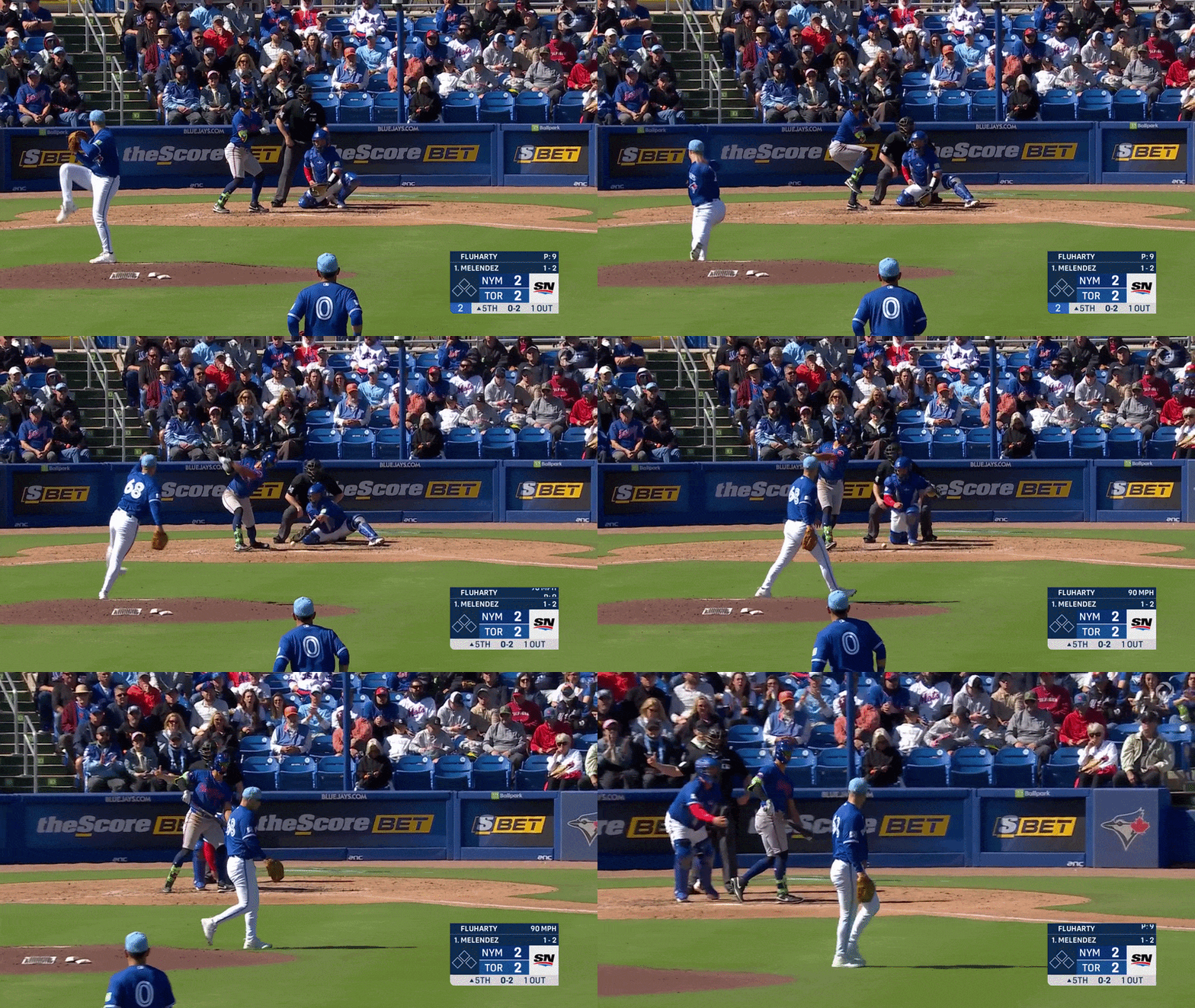
The pitch is intended to give Fluharty something to run off a right-handed hitter’s bat. Getting whiffs down-and-in from lefties wasn’t Priority A. But that’s become an option as Fluharty’s continued to hone the pitch, particularly against batters who have seen him frequently. If they start cheating out to pitches away from them, Fluharty can now work those lefties back inside.
“I faced (Melendez) a couple times last year in Buffalo. And mixing that in there just threw him completely off,” Fluharty says. “The game’s telling me I need to throw it. Especially when guys are getting on the slider. The changeup opens everything back up. It gets me back to where I was last year when no one had seen me and the slider was really playing.”
And now we’ve seen it in a regular-season game. Right before he battled back and struck out Doyle, Fluharty put Jordan Beck in a deep hole with a pair of cutters down:
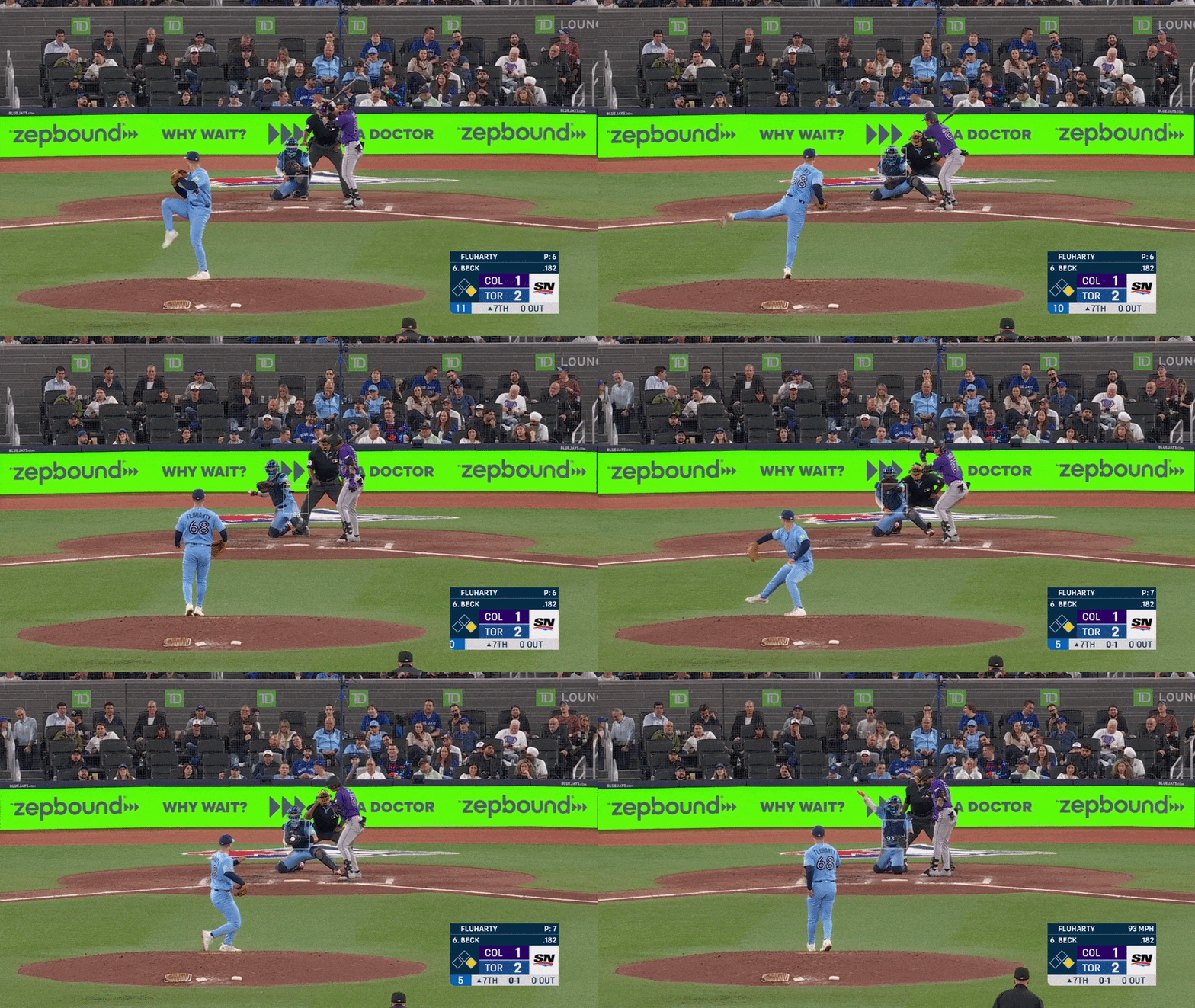
Behind the plate, Tyler Heineman was thinking nothing’s broken, nothing needs fixing. So, he called for another cutter. Fluharty shook it off. Then he called for a slider. Fluharty shook again. That brought Heineman out to the mound, where his pitcher said he was convicted in throwing a pitch he’d never before thrown in a game that counted:
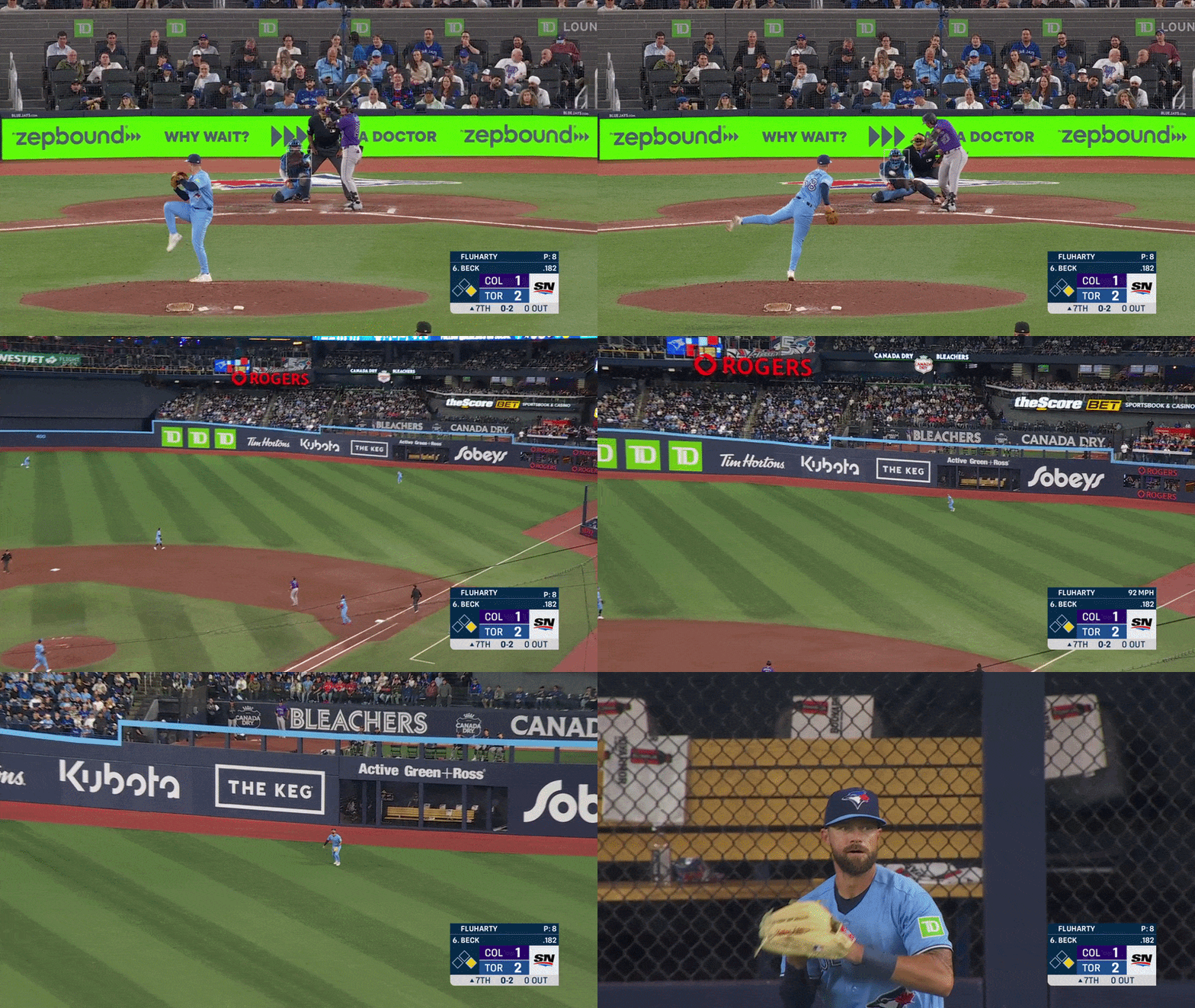
“I kind of pulled it a little bit. It was supposed to be down-and-away, not down-and-in,” Fluharty says. “But it moved and did what it was supposed to do. It had the right shape. So, it worked out.”
The right shape is a similar amount of drop as his slider with anywhere from eight to 12 inches of arm-side run. That will create a spread of over two feet between his secondary weapons, allowing him to work both off the same plane in opposite directions. That way, hitters can’t zone in on the inner or outer half of the plate.
And now that he’s actually thrown one in a game, we can show you what Fluharty wants his approach to look like graphically:
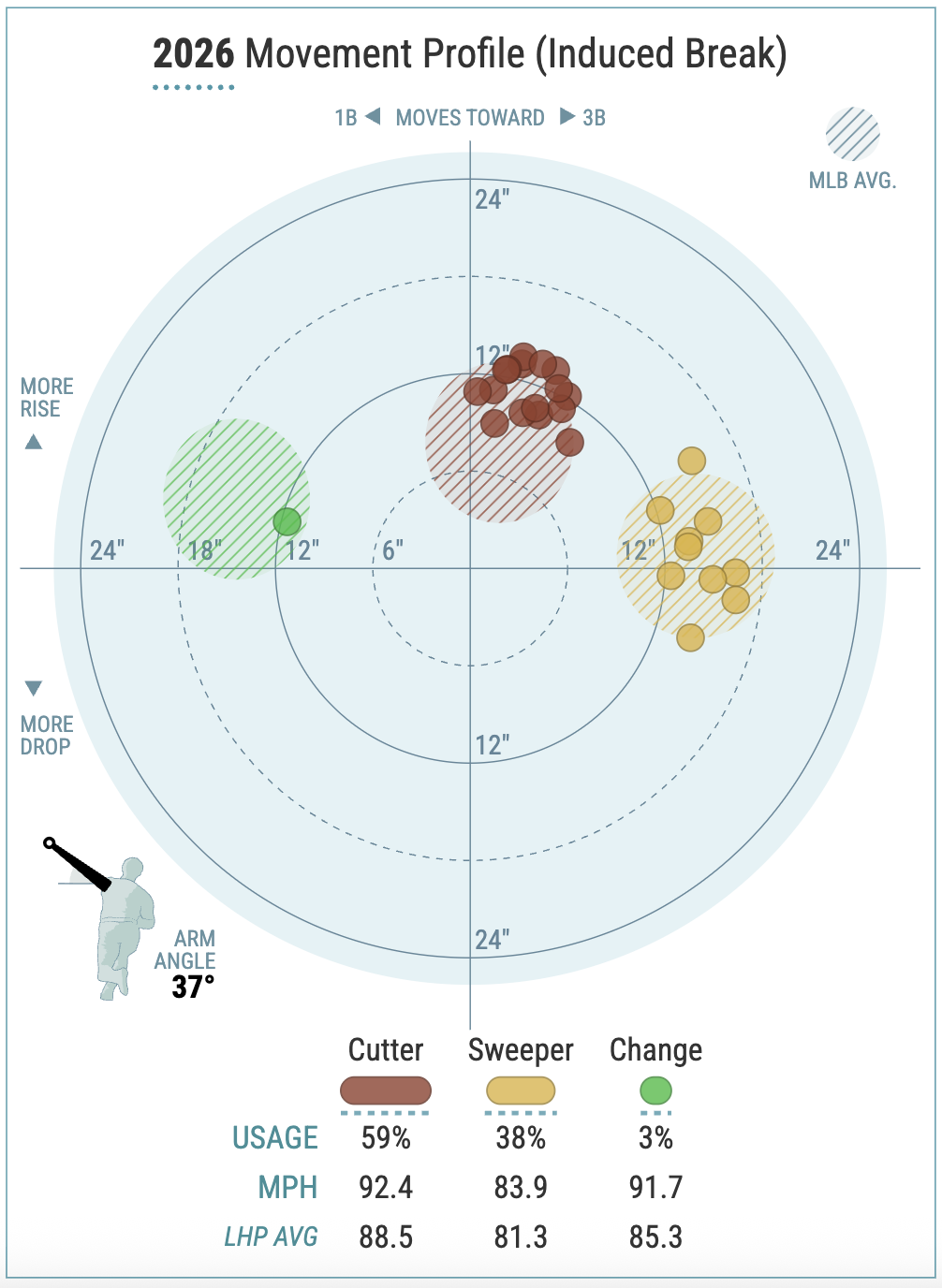
“That’s exactly how we want it. A lot of people’s changeups run a ton. But mine doesn’t need to do that, because it has so much difference off my slider,” Fluharty says. “I think it really messed Beck up (Tuesday) night when I threw it. It’s going to be a huge weapon going forward.”
Now, it might not always come out of his hand at 92 m.p.h. That was a surprise even to Fluharty, who’d been throwing the pitch in the 86-88 m.p.h. range during spring training. But an ancillary benefit of his new, treat-every-inning-like-it’s-October mindset has been a velocity increase that led to Fluharty throwing the four hardest pitches of his career on Tuesday.
The 24-year-old spent the winter training with Blue Jays strength coach Jeremy Trach in Dunedin, weighing in this February 10 pounds heavier than he was a year prior. That and recovering from a career-high workload are no doubt helping juice his arm.
But Fluharty’s convinced his improved mindset is contributing just as much. This time last year, when things didn’t go his way in an outing, he’d start thinking he was getting sent out after the game. Now, he thinks he’s back facing Ohtani and Freeman on the sport’s biggest stage.
“If that’s what makes me be my best, then I’ve got to do it every time I put the jersey on. I owe it to every guy on the team,” he says. “I’ve got to be out there thinking I’m going to punch everyone’s ticket. I’m not going to strike everyone out. But if I can ride that mindset, I’ll be in a good spot.”






 Bengali (Bangladesh) ·
  English (United States) ·