

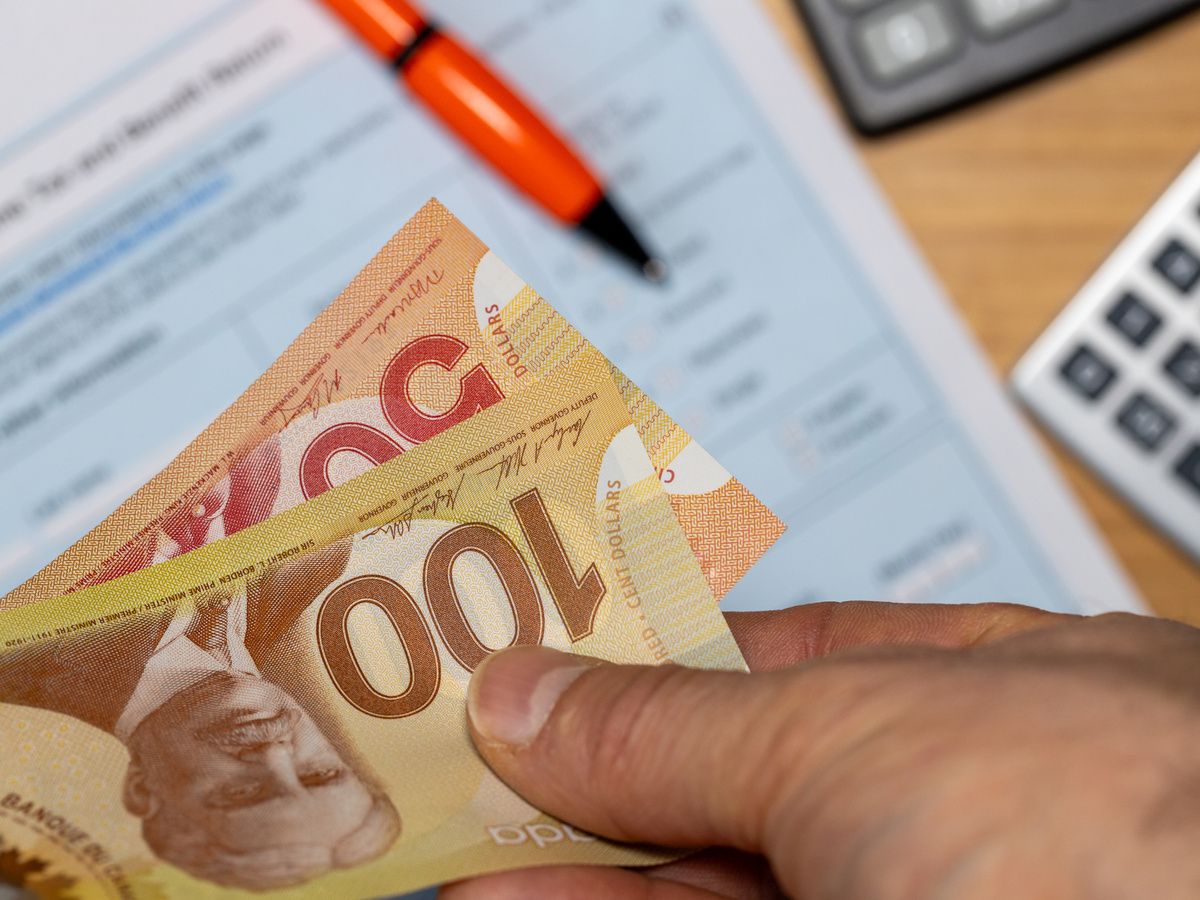
While most income tax brackets , amounts, and thresholds are indexed to inflation , a recent analysis conducted by the Society of Trust and Estate Practitioners (STEP) of Canada found more than 200 items that are not indexed to inflation, and the society has written to the government to try to get this fixed.
In an August 2026 submission to the federal Department of Finance, STEP Canada’s public policy committee is calling for the full indexation of “limits, rates, and other relevant parameters that are not currently indexed.” STEP Canada provided the department with a preliminary list of nearly 20 items that haven’t been indexed in years, or, in some cases, decades.
While most of us take indexing for granted, prior to 2000, indexation of tax amounts would only take effect in years in which the percentage change in the consumer price index (CPI) exceeded three per cent. The result of this partial indexation was that when inflation ran below three per cent, the personal income tax system would stay stagnant, not keeping up with inflation, and result in what tax pundits and economists often refer to as “bracket creep.”
For the past 25 years this problem has been mostly solved. The inflation indexation factor for 2027 that will be applied to tax brackets and various other amounts won’t officially be released by the Canada Revenue Agency until November. This indexation factor will be arrived at by taking the percentage change in the average CPI data that will be reported by Statistics Canada for the 12-month period ended Sept. 30, 2026, and comparing that to the average CPI for the 12-month period ended Sept. 30, 2025.
Though we don’t yet know the CPI numbers up to Sept. 30, 2026, if we use the data up to June, the indexation factor for 2027 could be around 2.1 per cent. (Incidentally, this would be enough to bump up the 2027 TFSA limit to $7,500.)
In its submission, STEP Canada puts forward three policy reasons for why full indexation of all measures should be implemented.
Preserves Parliament’s original policy intent: When Parliament enacts a new tax deduction, credit, exemption, contribution limit or eligibility threshold, it selects a specific dollar amount that is intended to achieve a specific policy objective. But, inflation gradually erodes the real value of these amounts, causing the various deductions, credits, amounts, etc. to be worth less than originally intended in real dollar terms.
Promotes fairness and transparency: To the extent that certain tax measures are not indexed to inflation, the effective tax burden on affected Canadians gradually increases. That’s because those taxpayers receive declining benefits, due to the power of inflation, even though Parliament has not expressly reduced those benefits. By the same token, eligibility thresholds and deduction limits become increasingly restrictive over time, not because of a deliberate parliamentary policy choice, but because inflation has reduced their real value.
STEP Canada calls this a form of “ hidden taxation ,” because, unlike an announced tax increase, it occurs without any public debate, parliamentary scrutiny or taxpayer awareness.
Enhances consistency, certainty and confidence: Our Income Tax Act already contains a well-established indexation regime for many provisions, including the five federal personal income tax brackets, and the numerous non-refundable credit amounts, such as the basic personal amount, the age amount and the disability tax credit.
But the decision to index some amounts, but not others, has created various inconsistencies that can’t be readily justified from a policy perspective. Take, for example, the registered retirement savings plan (RRSP) annual contribution limit, meant to allow Canadians to save up to a certain maximum amount of their earned income annually towards retirement. RRSP limits are fully indexed to inflation.
Contrast that to the lifetime contribution limit for the registered disability savings plan (RDSP), which has been frozen at $200,000 since it was launched in 2008. The RDSP is meant to help build long-term savings for individuals with disabilities. Had the $200,000 RDSP contribution limit been fully indexed to inflation since its inception in 2008, the contribution limit (as of 2025) would be $301,644. This represents a decline in value of the benefit by more than 33 per cent.
STEP Canada notes that a comprehensive approach to indexation would promote greater consistency across the Act, reduce the need for periodic ad hoc legislative adjustments and provide taxpayers with greater certainty that tax incentives and benefits will retain their intended value over time.
Other examples of non-indexed amounts cited by STEP Canada in its submission include: the $100,000 threshold to report foreign property on Form T1135 (the inflation adjusted value should now be approximately $177,000); the child-care expense deduction , which is currently $8,000 for kids under age 7, and $5,000 for children aged 7 to 16 (inflation adjusted: $12,600, and $7,300); and the small business deduction limit of $500,000, which is available to private corporations (including professional corporations) and provides small businesses with a lower federal and provincial corporate tax rate on the first $500,000 of net income. This $500,000 threshold hasn’t been changed since 2009, and would currently be valued at about $740,000 if the limit had been properly indexed to inflation.
The STEP submission comes three years after the release of the C.D. Howe Institute’s 2023 report entitled Double the Pain : How Inflation Increases Tax Burdens, in which authors William Robson and Alexandre Laurin identified problematic interactions between inflation and taxes and also recommended indexing of various unindexed amounts and thresholds to the CPI.
Other examples of amounts that haven’t been indexed include the federal pension income credit (stuck at $2,000) and the maximum tuition credit that can be transferred to a spouse or partner or parent (still at $5,000).
CRA denies tax deduction for paying someone else’s legal feesCRA denies disability credit to 'housebound' taxpayer with chemical sensitivitiesThe lack of inflation adjustments also affects consumption taxes, such as the goods and services tax/harmonized sales tax (GST/HST). For example, the GST/HST systems have thresholds that determine whether a business must collect the taxes or whether a transaction is taxable, and inflation erodes the real value of these thresholds.
The C.D. Howe report pointed out that the $30,000 small-supplier threshold for registering and collecting the GST has not changed since the establishment of the GST back in 1991. After more than 35 years, inflation has cut its real value by more than half. And each year, as inflation further erodes the threshold, more businesses must register and collect GST. Notwithstanding the potential benefits of registering to claim input tax credits, the falling real value of the registration threshold creates administrative and compliance costs for many small businesses that may otherwise choose not to register.
Jamie Golombek, FCPA, FCA, CFP, CLU, TEP, is the managing director, Tax & Estate Planning with CIBC Private Wealth in Toronto. Jamie.Golombek@cibc.com .
If you liked this story, sign up for more in the FP Investor newsletter.





 Bengali (Bangladesh) ·
  English (United States) ·