

 Humor won’t cure depression. But it might save your life. That’s not a metaphor for Jenny Lawson. It’s the hard-won truth of more than two decades of living with treatment-resistant depression, anxiety, and the kind of dark seasons that make getting out of bed feel impossible.
Most of us hide when we’re struggling. We perform wellness for the world and suffer in silence behind closed doors. Jenny took the opposite approach, writing about her darkest moments with such radical honesty and unexpected humor that thousands of people have written back to say those words kept them alive. This conversation explores how she does it, and what the rest of us can learn about finding light and meaning in the hardest places.
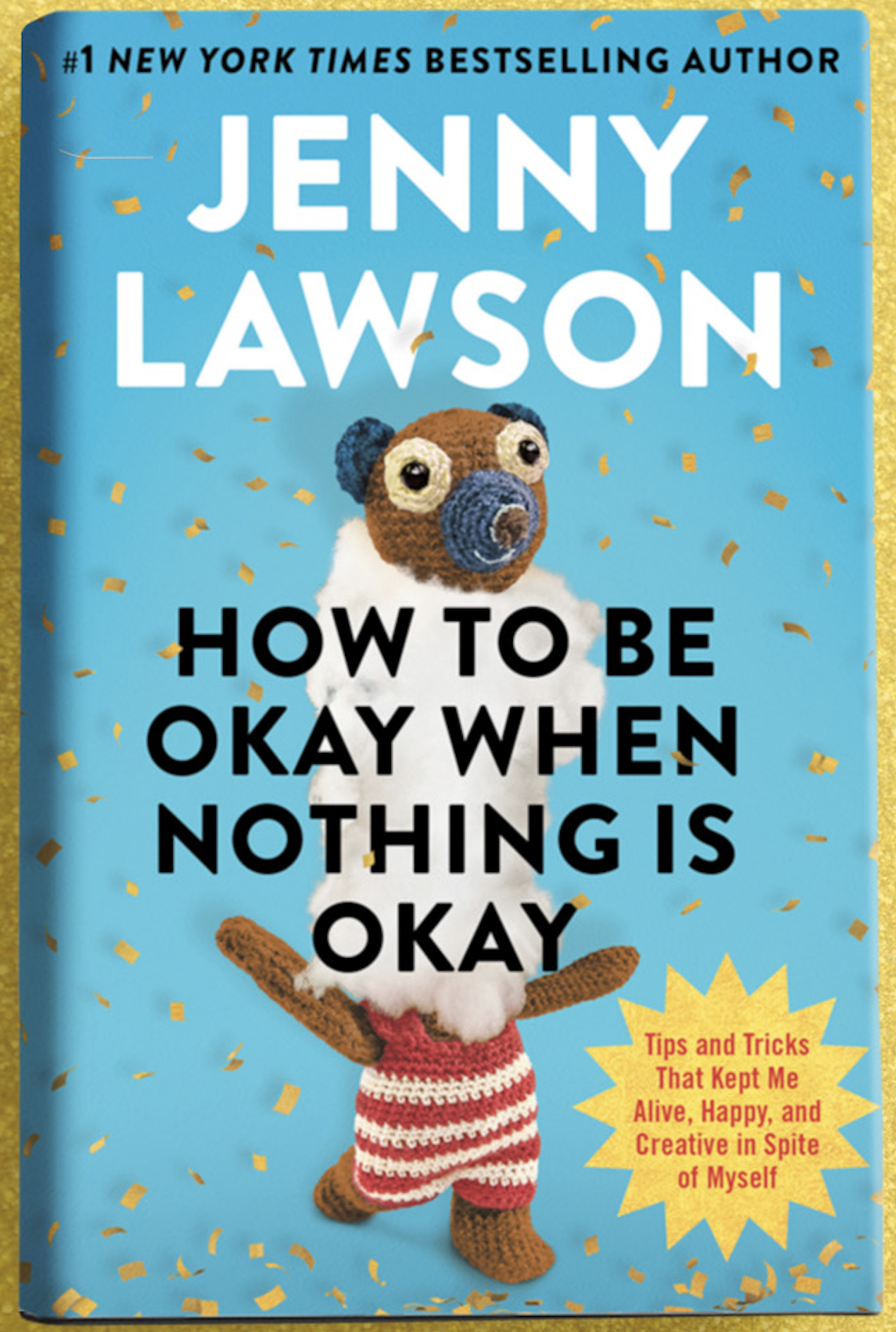
Jenny Lawson, known to millions as The Bloggess, is a #1 New York Times bestselling author, humorist, and the owner of Nowhere Bookshop, a beloved indie bookstore and bar in San Antonio, Texas. Her books include Let’s Pretend This Never Happened, Furiously Happy, You Are Here, and Broken. Her upcoming book, How To Be Okay When Nothing Is Okay (Tips and Tricks that Kept Me Alive, Happy and Creative In Spite of Myself), arrives March 31, 2026.
You’ll discover…
The single phrase Jenny returns to during every depressive episode that stops her from believing the darkest lies her brain tells her A simple “easy mode” approach to work and daily life that gives you full permission to do less without guilt, and why it often leads to better results for everyone Why sharing your struggle honestly can create an unexpected ripple effect of connection and healing for people you’ve never met A powerful reframe of what success actually means that has nothing to do with money, status, or bestseller lists How to find “your people” and build real friendship even when you’re deeply introverted, anxious, or terrible at texting backIf you’re navigating a hard season right now, or you love someone who is, this conversation is full of practical warmth, unexpected humor, and real tools for getting through it. Hit play and let Jenny remind you that you’re not alone, and that finding joy in the middle of the mess isn’t just possible, it might be the very thing that keeps you going.
You can find Jenny at: Website | Instagram | Episode Transcript
Next week, we’re sharing a really meaningful conversation with Harvard Business School professor Leslie John. We’re diving into the science of disclosure—specifically, why that cringey feeling of ‘oversharing’ might actually be holding you back from your best relationships. We’ll discuss how to find the sweet spot between being a closed book and TMI.
Check out our offerings & partners:
Join My New Writing Project: Awake at the Wheel Visit Our Sponsor Page For Great Resources & Discount Codes_____________________________________________________________________________________________________
Episode Transcript:
Jenny Lawson: [00:00:00] They called and they were like, she didn’t make it. And we were like, you know, we were sad. But also she had always said like, I wanted to go way before this anyway. So like, it was sad. Um, and then they called back and they were like, we got it wrong. She’s still alive, but just barely. And I was like, okay. And then I had to call my sister. I was like, I guess she’s alive again. And she’s like, like, like a zombie, like we got a granny zombie. I was like, I don’t know. And then my mom called again and she’s like, she’s dead this time for sure, I think, I don’t know.
Jonathan Fields: [00:00:29] So here’s a question. What if the funniest person in the room is also the one hurting the most? And what if that combination isn’t a contradiction or a delusion? But actually one of the most powerful tools that we have for surviving the hardest moments. My guest today is Jenny Lawson, also known as the Bloggess. She’s a number one New York Times best selling author and the owner of Nowhere Bookshop, a beloved indie bookstore and bar in San Antonio, and her new book, How to Be Okay When Nothing is Okay, It’s just really powerful. Jenny has lived with treatment resistant depression and anxiety for most of her life, and instead of hiding it, she’s actually written about it with a level of honesty and often dark humor that has literally saved her life. And if you believe thousands of messages she’s gotten in response other people’s lives too. In this conversation, we explore why your brain lies to you when you’re struggling a simple, easy mode approach that gives you permission to do less without guilt. And we talk about how sharing your struggle honestly can create an unexpected ripple effect of connection and healing for people you never met, and how to find real connection even when you’re terrible at texting people back.
Jonathan Fields: [00:01:43] So excited to share this conversation with you. I’m Jonathan Fields and this is Good Life Project.. I’m excited to dive in with you. You know, you have been. You’ve been writing so openly and so, so humorously, and just like in such a real transparent way about the types of things that so many of us go through, we experience in life, it’s a natural part of it for so many of us. Depression, anxiety, struggling with mental health. Yet so often when we experience these things, we hide it. We don’t talk to people about it. We don’t write about it. The last thing we want is for the conversation to become public. Often we don’t even tell those closest to us. We just we’re just like, all they want to do is put my head down and get through this. You’ve taken almost like the the completely opposite approach. And I’m curious why, like what’s underneath that?
Jenny Lawson: [00:02:39] So when I first started writing about dealing with mental illness, it was, I want to say about 2006. Um, so it was still relatively new thing where people didn’t talk about it very much. I was blogging at the time for the Houston Chronicle. I had a parenting blog. And what would happen is during the times when I was dealing with depression and I couldn’t do anything, I would have these posts saved up and I would post, you know, these funny parenting things. And it felt so uncomfortable, this like cognitive dissonance of people saying, oh, that’s so funny. Your life is so funny. And meanwhile, I was just like holding on to the couch just thinking, just get through this day. It’ll get better. And so I decided to just be honest about it. And what was really interesting is that, um, first of all, I really expected people to run away in fear instead. I had so many people saying I thought it was just me, and I had so many people who anonymously, uh, would talk about their own personal struggles. And I started getting these letters from people, and the letters said that they were actively in the process of considering suicide and decided not to. Not because of what I wrote, but because they saw thousands of people in my comments saying, you know, me too me, me too. Depression lies to me too and says the world would be better off without me. And they thought, well, that can’t be true. And then they thought, well, if that if it’s not true for them, maybe it’s not true for me either. And they decided to get help. And what’s so lovely about that is that all of these people who were sharing, even completely anonymously, their own struggle, have no idea that they may have saved lives just with being authentic about the fact that we’re all going through it. You know, everybody has their own struggle. But being honest about it gives other people permission to be honest about their own.
Jonathan Fields: [00:04:56] I think a lot of us are often trying to figure out, well, how do we contribute to the world? How do we provide value to others? And so often when we go there, we’re like, okay, so what’s the problem that I can help fix? And what I love about what you just described is that it talks about a way to contribute, to add value that we often don’t think about, which is simply the notion of doing something that in some way lets people who are struggling know that they’re not alone. And there’s, there’s so much power in that, yet we really don’t talk about that a whole lot.
Jenny Lawson: [00:05:29] Yeah, we, we really don’t. Um, when I first started talking about mental illness, my dad, who also struggles was like, I don’t think this is a good idea. What are you doing? You can’t come back from this. You know, this once it’s out there, it’s out there. And, um, after that, he started being honest about his own personal struggles with his friends and with people that he worked with, and found other people who were struggling. And I mean, it’s such a it’s such a lovely circle of empathy when we can be honest and, and honestly, like, not everybody can be that’s there is a privilege to being able to say, okay, I’m going to do this and let the chips fall where they may. But if you can, it is a wonderful gift that you can give to yourself and to everyone around you, that they can be authentically who they are as well.
Jonathan Fields: [00:06:27] And I love also what you shared. I don’t want to just skip over it. This notion that you say you would write something, you would put it out there publicly. So this is you kind of saying, I feel like I’m living like there’s the there’s the public side, which is like the, hey, like here’s and then there’s the private side and I’m really suffering. What happens if I actually share what I’m going through? And then what you commented about. Okay, so now thousands of people are then commenting on this saying, me too. Not realizing that they’re not just saying, yeah, like I’m along with you. But other people are then seeing what they’re writing. And not just they’re not just reading Jenny, they’re reading thousands of other people saying, wow. And that wasn’t their intention was to demonstrate that you’re not alone. Um, and influence, you know, potentially another reader. And yet they did. The ripple effect is just it’s really gorgeous.
Jenny Lawson: [00:07:16] It is. I mean, it really is all about sort of accidentally forming community. And, um, you know, yesterday it was yesterday day before yesterday, I was having a really rough day. And, um, you know, it was a Sunday, so I didn’t have a whole lot to do, but I could not force myself to get out of bed. I just was stuck and I was, I had no energy and I had so much just weird fear and dread. And so I went on threads and said, I’m having a rough day. I need somebody to tell me to get out of bed. And thousands of people responded with, um, with, first of all, lovely, lovely words. And so many of them also saying, hey, it’s okay if you don’t get out of bed. No judgement. That’s okay. Sometimes you need to find people sharing, like, here’s a picture of my cat. Here’s a picture of. And just so many people in the comments saying, I am also in bed and I’m reading these comments and this is encouraging me that it’s okay if I don’t get out of bed, but also it makes me feel like, oh, I can do this.
Jonathan Fields: [00:08:31] Yeah, I mean, it’s so powerful, you know? Um, the other part of this is also that, you know, some people may be joining, may have not had any exposure to your writing and think writing about mental health, writing about depression, writing about anxiety. It’s just such a downer. Like, why would you want to keep writing and writing and writing? And this is such a, it’s a hard. They they’ve clearly never read you because the way you write is, is raucous. It’s funny. You’re swearing, you’re telling stories. You’re you’re like, you’re writing and you’re like. But in a weird way, it’s almost like, how can this person actually feel the way they feel when they still have so much access to what feels like this underlying sense of irreverence and joy?
Jenny Lawson: [00:09:16] Yeah. Um, I think the, the word that best describes my writing is unhinged, which is a very, very fair. Whenever I am out of a depression, I demand joy in my life because I know that there’s not going to be. I know I’m going to fall back in. I have treatment resistant depression and it’s, it’s just clinical depression. It’s just chemistry. And so there’s, there’s not going to be a way that I’m ever going to completely escape from it. But what I know is that, um, during the times when I come out of that depression, I try to grab all the joy that I possibly can. I do every ridiculous thing I possibly can. I am I strangle the whimsy. I’m 100% there. Um, because I know that I’m going to go back down into the dark spaces again, and I know that I need to be able to take those memories with me so that I can remind myself during those periods when depression is lying to me. And it is such a cunning liar, even though, you know, I go in and out and in and out so often when you’re in there, it is so much easier to believe those lies that depression tells you. So being able to take that and have it and even just reread it later and be like, okay, yeah, I was happy before. I was I felt emotions before this, this numbness, this uncomfortable numbness and exhaustion. It is going to go away. I have to believe the person on this page who was experiencing joy. And it reminds me that those dark spaces feel like they last much longer, but they really they really don’t. They just feel like that when you’re in them.
Jonathan Fields: [00:11:09] Do you ever reread yourself when you’re in those spaces to remind you?
Jenny Lawson: [00:11:14] I do, I do. Um, I will, I will not only will I reread myself, but I will quite often write when I’m in a really dark space, just because there’s something about putting something down on paper and closing the page on it that feels like even though I haven’t taken it away, it feels like it can exist on the page by itself, and I can walk away for a little bit and not feel like I’m I’m carrying it around so heavily. So I do. I reread a lot. I especially reread, uh, little, little hints and tools of things that I have written about. Of this is what helps me before. This is what helps me before. Let’s, you know, find all of those, those tips and tricks. And, you know, it’s different for every person, right? So finding those that work for me super helpful.
Jonathan Fields: [00:12:12] Yeah. And I think that’s such an important point, right? Because some people may hear this and think, well, if I’m in a really dark place and I then sit there and I start to journal. The place that I’m in, it almost like rather than saying, okay, I can, I can almost leave it on the page and walk away from it for a bit and know it’s there. And maybe it’s a little bit of a release. I would imagine you also have some people who kind of think to themselves, me turning what I’m feeling inside into something that’s written, memorialized on the page makes it more real. Like more tangible. I want to do the opposite side. So I love the invitation to say like, okay, so this works for me, but you got to do you that.
Jenny Lawson: [00:12:50] Exactly, exactly. And, you know, I think for a lot of people, um, so for me, when I’m writing something down, my typically the point of me writing something down is to reframe it and understand myself. So as I’m writing, I am writing about this is what I’m struggling with. This is the hardest thing, especially if I’m writing something that is not just for me. I will add a lot of humor so that it sort of encourages people to come in. And there’s something about if you make something funny, this monster becomes smaller.
Jonathan Fields: [00:13:31] Um.
Jenny Lawson: [00:13:32] And it also encourages people, you know, I have a lot of people who, um, a lot of people read my work and they’ve never dealt with, you know, depression or anxiety or, or anything like that. But if you can, uh, make humor and make them laugh, sometimes that can be an on ramp for them to say, okay, well, maybe I do want to read a little bit more. And then it gets them, uh, you know, really into it. But typically at the end of everything that I write it, I always try to reframe whatever it is I’m going into what, whatever it is I’m going to write about, whether it’s memory loss or chronic pain or whatever it is. Of how can I reframe this in a either a somewhat positive way or a way that just makes it easier for me to understand myself?
Jonathan Fields: [00:14:24] Yes. Some of it is reframing it in a positive way and easier. Some of it is also just downright like really comedic and like not laughing funny, which again, it boggles my mind sometimes to think that that you can be in a really tough place and still have access to that. And I wonder if being the person who like, who is writing it in that place, sometimes that’s also reminded you that says, yes, I can be here and this other part of me is still there. It may not be like the fiber of everything that I’m feeling, but somewhere it’s still there.
Jenny Lawson: [00:14:59] Exactly, exactly. And you know what’s weird is I’m always surprised when it’s there. I feel like at a certain point I should be like, yeah, clearly I am. You know, we all contain multitudes, but it I do struggle with the fact that every time that I have writer’s block or every time I’m, you know, dealing with depression, I have this feeling of what if this time though, is the time that I can never write again? What if yesterday was the last time I was ever funny? And I’ve lost the ability to be funny. Um, and I’m. I’m sure that all comes just from the anxiety. But, um, every single time when it comes back, I feel this rush of. Oh, she’s still there. Oh no, oh no, I’m still here. I still exist, but I’m glad I keep showing up somehow.
Jonathan Fields: [00:15:49] Yeah. I mean, I think that speaks to also something that you brought up a number of times now. And it’s also one of the things that you focus on in the new book, which is this notion that depression lies. Take me more into this.
Jenny Lawson: [00:16:02] So when I am dealing with the depression, so depression looks different for every single person. And I think sometimes, uh, people may think, well, I’ve never had depression because I don’t, you know, cry all day or I don’t this or that. So depression for me, um, there’s no tears for me. Depression is a, a very uncomfortable numbness, um, where I just feel nothing. Um, it comes on like a like a flu. It literally when the first day. Um, I usually will feel like. Oh, I’m getting really sick because I can’t move. I feel awful. My head hurts. I’m so tired. I’m just so wiped out. I’m definitely coming down with a flu. And if by the second day I don’t start to get sick. That’s when I’m like, oh, right, this is a flu of my brain, right? This is depression. Um, and during that time, because depression lies so well, it’s so easy to listen to the lies that it says that, you know, you’re not worth it and it’s not worth, um, you know, paying money for treatment because that’s money that could go to something else. And it’s not really that bad because you’ve got such a great life and so you’re making a big deal out of nothing or, um, you know, a million different things that if if a real person said that to me in real life, I would be like, that person’s an idiot. What in the world? How cruel and wrong you are. But for some reason, when it’s coming from your own head during a depression, it sounds believable. And so one of the things that I continue to go back to and have to tell myself over and over again is depression, lies, and anything that I’m thinking during a depression has to have a question mark behind it.
Jenny Lawson: [00:18:00] If you cannot trust your brain when you’re in those dark spots and. And it’s a really big reason why I write that over and over again, to remind myself every time I’m in there that depression lies. And I have had some people say like, well, clearly she doesn’t really have depression because she’s funny and you can’t laugh and be funny, which is not true. There’s tons of people who are, you know, absolutely hilarious and are not there. The next day. But the thing that I go back to the most is just to remind myself that all I have to be is authentic to myself. And I, when I first when I would hear those things, I would be like, really? Because I’ve been taking, you know, ten different medications for decades and I’ve done, you know, transcranial magnetic stimulation on my head for months at a time, which is so uncomfortable. And I’ve done, you know, the ketamine treatments for depression and I’ve done, you know, so many different things. And clearly that’s not true. Um, but yeah, when you’re, when you’re in a depression, those crazy things that other people say mimic the crazy things that your own brain is saying, it can be hard. It can be hard. So just having a reminder that if you’re hearing negative thoughts in your head, they’re probably lies.
Jonathan Fields: [00:19:32] And we’ll be right back after a word from our sponsors. One of the the lies that I think is so pervasive and so harmful also is this lie that says you will never feel anything but the way that you feel now, like this will never end. And I think that that lie, that line is so pervasive. So many people, when they’re in like in the swing of, of depression and it adds this sense of futility. Um, you know, like the whole experience, but I also want to key in on what you just said, which is this notion of somebody looking and saying, well, you couldn’t really feel the way you feel because you’re so you’re just, you’re too funny. Like you’re too, there’s too much lightness in this. And like you said, look at the history of stand up comedy.
Jenny Lawson: [00:20:25] Exactly.
Jonathan Fields: [00:20:26] You know this this is not a history of of, like, really good mental health. And yet so many of these people step on stage. They make millions of other people laugh and cry and, and they’re hysterically funny. And, and yet so much of it comes from their own suffering.
Jenny Lawson: [00:20:43] Exactly, exactly. Yeah. What is it they say? Tragedy plus time equals comedy. Um, and I think I think so often that is one of the, it has definitely been a life raft to me is being able to laugh at things. There is nothing better than being in a terrible, sad situation and finding a way to laugh. When I found out, um, this last year, I found out that I have cancer and luckily it’s slow moving and eat like it. It’s not a it’s not a concern, but I didn’t know that at the time when they first found it. That. And so I called my sister and, um, my husband was so distraught and so upset. And so I called my sister and my sister immediately started with the most terrible jokes and I could not stop laughing. I had tears running down my face and it was such, it was so wonderful because number one, it was the most cathartic. Like I was able to cry, but in a good way. Number two, it reminded me that, um, I’m going to get through this. I’ve got I’m going to find the joy in this. There’s going to be funny in this, even if it’s awful, it’s also going to be funny. Uh, and it gave me permission to access it at a different point where I didn’t have to be like, you guys, I have cancer and it’s the end of the world.
Jenny Lawson: [00:22:12] And instead I could be like, you guys, I have cancer and now I never have to wash the dishes again. Because every time my husband is like, why haven’t we washed the dishes? I’m like, I can’t, I have cancer. Um, and, and, and I think that there are probably a lot of people who would be like, how dare you? You can’t joke about that. And I’m like, but I can because I have cancer. Um, so I think it, I think it takes a certain type of person and not everybody is that type of person. But if you can find the joy in the horror, it gives you so much more energy to fight. And, um, and that’s so important, especially, you know, now not just dealing with, you know, depression or anxiety or, you know, just the bullshit of having to be a human. Um, but like the world feels like it’s on fire constantly. And, you know, we’re not, we’re not meant for that. We’re not meant to every two hours be like, oh, what happened? What, what this, what? Um, and so to be able to find the joy when you can, gives you the energy to figure out, okay, what are the things I need to focus on? What can I actually do to, to, to make those changes? And what do I just need to let go for now and say, the universe has got to take care of it.
Jenny Lawson: [00:23:34] I think if you can find and no judgment, if you can’t find the humor in everything, not everything has humor, but if you can find humor in something, it gives permission for people to join and it gives, it kind of shows them that like, all right, it’s okay. It’s, um, you can make, you can, you can say the dumb thing that you don’t have to worry about. Like, you know, I have a tendency, um, that I babble when I get nervous. And so sometimes I’m afraid if, you know, somebody’s dealing with something and I’m like, oh, what if I say the wrong thing? What if I, um, if you’re, if you make a joke right up front, it kind of gives them permission of like, I’m not going to hold it against you if you get it wrong. It’s okay. We’re going to find the humor in this. We’re going to get by. Um, and then also it, it was really helpful because I had so many people who reached out and were like, I have, my husband has the same cancer and here’s the special oncologist that he went to. And here’s the. Hey, did you know that you’re not supposed to take this sort of medicine? And hey, did you know. And, um, and it was, it was so it was so helpful.
Jenny Lawson: [00:24:48] Uh, not only because, you know, I’d been diagnosed with this, like, weird cancer that even my doctor was like, this is a very rare sort of cancer. I was like, oh, great. Nobody’s going to know about this. Um, and so that was really helpful. Although it was weird because I, um, was binge watching a TV show and then at the end it said like in memoriam of and there was like this young actor and I was like, oh, I wonder what happened? And I looked it up exact same cancer. And I was like, motherfucker. But, um, you know, you, you just have to push through and, uh, look for, look for the lighter things. If you were the kind of person that responds to that and I really am. You know, when Covid, before vaccines were around, my grandmother, uh, had Covid and none of us could be with her because this was she had to be in the isolation room and, um, they called and they were like, she didn’t make it. And we were like, you know, we were sad. But also she had always said, like, I wanted to go way before this anyway. So like it was sad. Um, and then they called back and they were like, we got it wrong. She’s still alive, but just barely. And I was like, okay. And then I had to call my sister.
Jenny Lawson: [00:25:57] I was like, I guess she’s alive again. And she’s like, like, like a zombie, like we got a granny zombie. I was like, I don’t know. And then my mom called again and she’s like, she’s dead this time for sure. I think, I don’t know. And we ended up having the most hysterical, Ridiculous. And I think a lot of people would be in that situation and think this is, first of all, this is an awful thing to have to go through. It was so sad and so frustrating to not be there. And you’re getting all of this, you know, misinformation and everything. But by being able to laugh at it and knowing that my grandmother was also one of those people who had her same sense of humor and would be like, I, I absolutely know that she would say, this is the story I have left for you. You are welcome. There is such joy even in even in the tragic. And finding that joy is, um, is a wonderful gift that you can give to yourself and something that I think you owe it to yourself. You’re having to go through all this crap. You should be able to pull out the gold and say, actually, but you know, what else happened here is I got a really funny story about it and, and, and just laugh whenever you can.
Jonathan Fields: [00:27:13] Yeah, I mean, because who knows when those opportunities are going to be around. And again, not everyone is going to have access to that. But if you can at least ask the question, is there something else here that I’m missing? Maybe you can, maybe you can. And like, no judgments, no matter what your circumstance is. But exactly. Um, it’s, it’s a really, it’s a beautiful invitation. Um, you know, part of what you write and talk about also is this notion you’ve written about this in different ways, but it’s also in the, in the new book is this notion of really meeting yourself where you are. If you’re going through like a hard time, we tend to hold ourselves to the same standard as when we’re not in that same space. And I think your phrase was something like, easy mode is still working. Is that right?
Jenny Lawson: [00:27:54] Yeah. Working on easy mode is still working.
Jonathan Fields: [00:27:57] Yeah. So take me into this a bit more.
Jenny Lawson: [00:28:00] I read somewhere, uh, someone had said that if you only have 50% to give, you gave 100%. And I think that’s that’s absolutely true. Very often when I’m struggling, I will feel like I need to pretend that I’m the person who can do all of the things, who has the energy, who, who doesn’t. You know, after I’ve spent two hours talking to people, doesn’t have to like, lay starfish, like on the floor and say, nobody touch me, and the cat has to sit on my chest so that I can recover. And I will be there for literally hours as my entire family walks around me. But what I have found is that if I’m honest about the fact that things aren’t always working for me, people really want to help accommodate you. For example, I may have someone who will say, you know, I need you to come in for a meeting and I’ll think, okay, well, I’m having a bad day. I don’t have a lot of energy. If I drive myself down, I’ve got to take a shower. I’ve got to drive downtown. I’ve got to find parking. I’ve got to go to the meeting. I have to figure out what to do with my hands when I’m in front of people. Like in real life. I’m all of that. I will not have the energy to drive back home. And that sounds ridiculous, but that has happened to me before on many occasions where I’ll get back to my car and I’ll be like, well, I have to just lay here in the car for 4 or 5 hours because I have literally no energy left.
Jenny Lawson: [00:29:36] And so instead what I started doing is I would say, is there any way that we could make this meeting a Zoom meeting? And I could that way I don’t even have to put pants on. And what I have found is that every single time, not only have people said, oh, yeah, sure. Usually the Zoom meeting starts with, thanks so much for doing this on Zoom. I really didn’t want to have to drive downtown, so giving yourself permission to work on easy mode gives everyone permission. And then all of a sudden people understand that asking for accommodations is not about like, you know, accommodate me, I’m weak. It’s about saying, hey, here’s something that I’m struggling with. Is there any way that we could. And then they are able to, first of all, use compassion and empathy, and then they feel good because they’re like, oh, look, I helped someone. This is amazing. And, um, it’s just wonderful. And you know what? When I start to feel like, oh, I feel bad that I’m asking for things that a normal person wouldn’t have to ask for. I think nobody’s going, oh, Jenny again with her, you know, wanting me to have a Zoom meeting. How dare you?
Jonathan Fields: [00:30:49] And we’ll be right back after a word from our sponsors. Oftentimes asking for accommodations, we just assume everybody is up to the task. You know, like the way that it was ordained. And oftentimes that’s not true. You know, it’s like. And people on the other side are like, oh, thank God, it’s such a great way to kind of like this notion of self-forgiveness is embedded in that too. And it’s like, you know what? It’s a, it’s a Tuesday at 4:00. I’m doing the best I can. Like I thought I would feel this way. I feel differently and it’s okay to just acknowledge that and, and guaranteed other people are going to have similar experiences. And when you normalize actually honoring the truth of how you feel and then resourcing it and putting decisions behind that, and you start just showing up that way in a regular basis. On the one hand, some people be like, oh, but people are going to think I’m a flake and I’m and but I think pretty quickly those people who really matter enough, they realize, oh no, this is my friend who I really care about, and she’s doing what she needs to do to be okay, you know, and, and maybe that gives me permission to do the same. Maybe that can become the quality of our relationship too. We can be more honest about that with each other.
Jenny Lawson: [00:32:02] You know, I, I had a sort of a struggle recently with, um. With the upcoming book. You know, it’s, I’m starting to see, you know, publicity is doing different things. And it’s, it’s the first book that I would say is like more of a self-help kind of book. And I was having this and still having a little bit of a struggle about being honest about the fact that there are no I mean, there’s tons in this book that, you know, it’s, it’s encouragement, it’s reframing. These are all the things that help me to get through the day and continue to to live. And they have saved me, but none of them are a cure. And so sometimes I want to be like, oh, like yesterday or day before yesterday when I was like, I’m having a really hard day. And I know that there are probably some people who will be like, why in the world would you write a self-help book then? Clearly you are struggling. Clearly you are not the, you know, the the be all end all. You don’t know how to cure it. And, um, I think the one of the things that I’m having to really, uh, embrace is the fact that none of us know the real answers. If I, if there was somebody who said, I know the cure for depression and here it is, and here’s my book, then I would be like, this is ridiculous. And it’s probably a cult. Um, and so I have to just embrace the fact that knowing how to get better is not the same thing as knowing how to be cured. And life is a constant moving thing. And some of it is a constant battle and some of it is constant joy. And it’s, it’s all there, um, and continually moving and continually coming at you. And, uh, yeah, it can be hard, but but also lovely. I’m not sure if that made sense. I have not taken my ADHD meds this morning. This is pretty obvious.
Jonathan Fields: [00:34:11] It’s all flowing just the way it needs to right now. Um, but this also speaks to something else that, that you’ve spoken about and that you write about. Um, maybe in a little bit of a different way. It’s this notion of imposter syndrome. A who are you to be like talking about this particular thing? You know, like, show me your credentials, show me, or you haven’t figured out the actual, the cure, the answer, the solution, like what are the five treatments in the research? And yes, you are not showing up and saying, I am any of those things you’re showing, you’re just showing up and saying like, I am who I am. And um, all I can do is share my experience and what’s worked with me and also maybe share it in my voice and with the stories that’ll really land and connect us and hope it reaches a lot of people. And you’re somebody else who’s also. This is not your first book. This is not your first writing rodeo. You are out there, your number one New York Times best seller. You have been phenomenally successful with your writing, and even someone like you will still have this voice spinning you, even knowing you’re not misrepresenting who you are. You’re not like you’re showing up just as Jenny. Sharing my personal experience. Wildly successful in the past. You know that a lot of people really resonate with what you say and what you have to share in your stories. And still, as you’ve written, you show up and you’re like, I don’t know.
Jenny Lawson: [00:35:26] Yeah, yeah. When the first book, um, it debuted, number one, the New York Times list and there were people who were like overnight success. And I’m like, yeah, overnight, if you don’t count the like 15 years that it literally took me to, to write it. But I guess I, I, I guess I understand, but in my head, I thought this will, this will fix me, this will prove to me that I need to stop doubting myself so much and, you know, second guessing everything and constantly thinking, oh, this is the time when people will realize she’s not that funny. She’s a fraud. We don’t actually like her. What were we thinking? Um, what I found is that it was just the opposite. That once I got to, what I thought would show me was success. That first of all, it just added more stress. Because where do you go from there? Um, secondly, it was really uncomfortable because I still felt just as, um, my imposter syndrome feels like guilt. So I’m like, oh, no, I took somebody else’s spot on the New York Times list like that. I feel bad like that. It should not be there. What’s going on? Um, and so I talk a lot about because I, I still struggle with it, but I talk a lot about how I reframe it and different stories that help me look at, okay, here are other people who have struggled with this. Here’s a, you know, an analogy about this author who did this thing or this, and, um, finding those little bits of encouragement.
Jenny Lawson: [00:37:09] And then the other thing is reframing what actually should success look like. And I think in some ways, I was really lucky that, I mean, my first book came out, I don’t know, I was in my 30s and I would consider that like still pretty young. And, um, I was able to hit something that I would have thought, oh, that’s the thing that’s going to fix me that I probably would have continued to strive for forever. And instead because I did it and was like, oh, actually that like, it’s lovely. It’s so wonderful. But it doesn’t change the voice in my head. So instead I had to go back and go, what does success really look like? What is it? What feels like success to me? And to me, it was being secure enough that I didn’t have to go back to work in human resources, which was a miserable place for me. Um, loved it at first. But eventually, if you’re working in human resources, teaching people how to be appropriate at a religious institution, and for me, this was not a good fit. Um, so that was one. And the other one was looking at, I think a lot of people, and it’s totally okay if your thing is, I want to be able to, you know, own a fancy purse or a car or a second house or whatever.
Jenny Lawson: [00:38:33] And what I have realized is what I really want is I want to be able to, whenever I want, go outside onto my back porch with a book. And that seems like such a strange thing, but it is such a wonderful escape and something that not everybody can do. Not everybody can just say, you know what? I’m not I’m not going to work today. Today I’m having a really bad day and I’m going to go outside and I’m going to escape my brain. And instead I’m going on a science fiction journey and I’m going to go to space and I’m going to do this and that. Um, and being able to recognize that was such a gift because I can recognize right now I’ve succeeded. And so if you pull aside all of those things in your life and think about, but what do you really want? So finding those things and realizing that you may already be so much more successful than you are, and you may be in so many ways, living the dream without realizing that, that you are living the dream and then also demanding that dream of saying, yes, there’s dishes in the sink and yes, I do. And yes, I have several deadlines, but I could probably push some of them back. And I deserve to to play and to have fun and to read and create and do all the things that we’re here for in life.
Jonathan Fields: [00:40:10] Yeah. I feel like sometimes we don’t really take a look at what our definition of success is until we’re pretty far into life because, you know, the first probably two seasons of life, more or less adopting societal or familial or peer group definitions of what success should be for us. We pour ourselves into it, we judge ourselves for not achieving it. And then if others around us who we perceive to be like, like, similar to us, go and achieve the thing, we’re like, oh wow, I really suck, you know? Um, and so often, and I think it’s really. It’s so unfortunate. It’s a major illness. It’s mental illness. It’s, you know, like losing somebody really close to you or seeing them struggle. It’s something that brings you in some way, shape or form to your niece that for the first time makes you not only question how to get better, but also question how you’re living and why you’re making the choices you’re making and what really matters. And I’ve talked to so many people that kind of say like, is there some sort of, you know, like fake experience we could create that would deliver somebody into that same space without having to be brought to their knees? And I haven’t found it yet, but, um, it would be so nice if somehow earlier in life, without having to be so humbled and sometimes brutalized, we could reacquaint ourselves with, with our own understanding of what it means to thrive and to succeed in life.
Jonathan Fields: [00:41:38] But, um, I hate, I really hate the phrase like, like, what’s the silver lining in things? And like, where’s the blessing in it? Um, I’m not oriented towards that as much as I’m an optimist. Mhm. Um, the snarky New Yorker in me still fiercely rejects that, even though I’m like living in the mountains now. Um, but I, you know, I, I’ve seen so many people and experienced, you know, like going to that place and for the first time being acquainted with what really matters. And like for you, if it’s literally like, I just want to hang out on my back porch and read a book and in your life, that is success. I mean, that’s beautiful, but it takes a lot, often for us to get to that place where we acknowledge that’s actually what I want.
Jenny Lawson: [00:42:22] It is. And especially, uh, I don’t know who said it, but, you know, comparison is the thief of joy. It was so true. And it’s so much easier right now to compare ourselves to everyone else because, you know, you go on social media and you see this sizzle reel of the best of the best. First of all, um, secondly, you’re seeing these tiny little snippets where whereas you’re living life in like the incredibly slow documentary. So like you, you look and, you know, like, oh, she had a new baby and then you look again and like, oh, the baby’s a valedictorian. Oh, and, and it feels like, oh my God, everything is happening so fast.
Jonathan Fields: [00:43:04] Because I just thought the idea of a baby being a valedictorian, by the way.
Jenny Lawson: [00:43:08] Exactly, exactly. She was the valedictorian of preschool.
Jonathan Fields: [00:43:12] Preschool.
Jenny Lawson: [00:43:13] Exactly. So, so it’s so easy to compare yourself. Um, I tend to follow a lot of people who are just very honest and upfront, and I love that. Um, I am the first person who will, if I’m doing a Zoom and somebody says, oh my gosh, like, your house looks so cute. I’m the first person who will move so that they can see like the literal stacks and piles of crap that I have that I’ve just put to the corner because I’m like, okay, well, I’ll just clean it this much and then I’ll feel like I can like escape over here. And then that’s for tomorrow. Jenny. Oh, that’s actually the bookcase is behind me that are a mess. I, I’m like, but I just moved in. I moved in a half a year ago. Still have not put the books up where they, where they belong. Um, but there’s no real rule. There’s no rule that says you have to unpack in a certain way and your house has to look a certain way. And you’re. If it did, I wouldn’t follow any of those rules. It doesn’t change the fact that I do when I see somebody who has like this, you know, beautiful house and great decorating skills and my maximalist, you know, I’ve got taxidermy everywhere and they’re all wearing, you know, Victorian outfits that I made for them.
Jenny Lawson: [00:44:35] It’s absolutely, it’s, it’s a hat. Like you walk in and the plumber goes, what has happened here? Why would you let your husband do this? And I and my husband has to say, no, this is all her. Um, and but you know, you gotta, you gotta, you gotta find who you are and live life the way that you are and realize that those sizzle real people. You’re not seeing the real stuff. You’re just not. You gotta you gotta find the people who. Who are authentic. And you gotta find people in real life if you can, which is hard. I, I don’t have a lot of in real life friends. I mean, I literally have one friend who lives in my town who I can call and say, let’s have lunch. Um, without them saying, oh. Oh, okay. I mean, I’m sure I could reach out and I’m sure a thousand people would be like, I’d be so excited to, but there’s only one person who I feel comfortable enough that I can say, Let’s meet. And I want to tell you everything that’s going wrong. And then you’ll make me laugh about it. And then you can tell me everything that’s going wrong. And finding those people is, I think, so hard, but so important.
Jonathan Fields: [00:45:54] It’s been a joy chatting. I feel like this is a great place for us to come full circle. And I always wrap with the same question in this container of Good Life Project.. If I offer up the phrase to live a good life, what comes up?
Jenny Lawson: [00:46:05] Safety and security for everyone. Um, and the ability to be authentic and know that I’m safe in that. That’s something that I don’t think everybody has that privilege. And more than that, finding all of those little ridiculous joys. Being able to find those every day, whether that’s, you know, dressing my cat up in clothes, but only Hunter s Tomcat because the other two are not having it or, um, you know, reading books or writing ridiculous things or, uh, yesterday I went out and put little, um, miniature miniature, uh, furniture inside a hole in a tree that’s next to my, my next door neighbor’s house so that their little girl, when she comes out, will maybe see it and be like, oh, fairies. Um, just being able to grab all of those joys. That’s it for me.
Jonathan Fields: [00:47:19] Thank you. Hey, before you head out, make sure you tune in next week for our conversation with Harvard Business School professor Leslie John. We’re diving into the science of disclosure, specifically why that cringey feeling of oversharing might actually be holding you back from your best relationships when you don’t share enough. We’ll discuss how to find the sweet spot between being a closed book and TMI. Be sure to follow Good Life Project wherever you get your podcasts so you don’t miss the episode. This episode of Good Life Project was produced by executive producers Lindsey Fox and me, Jonathan Fields. Editing help by, Alejandro Ramirez and Troy Young. Chris Carter crafted our theme music. And of course, if you haven’t already done so, please go ahead and follow Good Life Project wherever you get your podcasts. If you found this conversation interesting or valuable and inspiring, chances are you did because you’re still here. Do me a personal favor. A seven-second favor and share it with just one person. If you want to share it with more. Hey, that’s awesome. But just one person even then, invite them to talk with you about what you both discovered to reconnect and explore ideas that really matter. Because that’s how we all come alive together. Until next time. I’m Jonathan Fields signing off for Good Life Project.
The post How to Find Joy in Hard Times (and When Your Brain Lies to You) | Jenny Lawson appeared first on Good Life Project.



 Bengali (Bangladesh) ·
  English (United States) ·