

"Tomb Raider" celebrates its 30th anniversary this month. While many remember the iconic T-Rex or locking Winston the Butler in the freezer, many forget about the UFO in 1998’s "Tomb Raider III"; a mysterious alien craft that worked a lot like Doctor Who’s TARDIS.
Coming off the back of the hugely successful "Tomb Raider 2", developer Core Design had big plans for the third entry, including kayaking, those iconic London levels, and, of course, a level featuring a UFO in Area 51. Although it looked small on the outside, the UFO featured multiple floors for players to explore as they searched for a vital artifact, all as enemies swarmed in.
Now, I'm something of a Tomb Raider historian, and my upcoming book — "The Making of Tomb Raider: 1997-2000" (available from October 30) — goes into detail about the making of "Tomb Raider III", "Tomb Raider IV", and other games in the series during those three years. While writing the book, I spoke to level designer Richard Morton about how the physics-defying UFO was made and how shows like "The X-Files" inspired him and the team.
The Lone Gunwoman
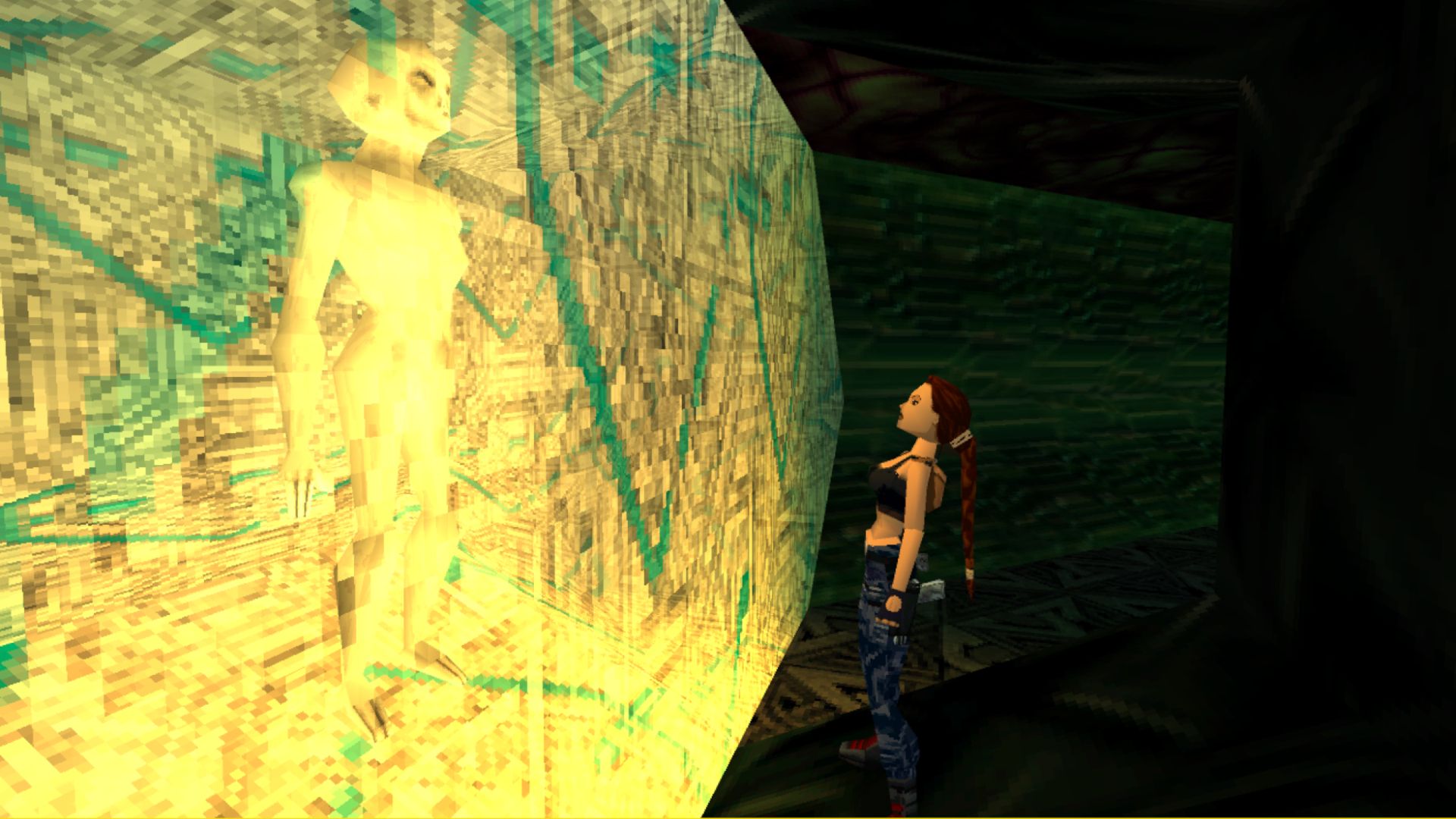
When you start "Tomb Raider III", you find Lara in India, stumbling across one of four artifacts. After completing India, you can choose between London, South Pacific, and Nevada to collect the other artifacts before reaching the final section in Antarctica.
Richard Morton was one of the designers for "Tomb Raider III", who took on South Pacific and some of Nevada, a location that Neal Boyd had already begun work on before he moved to "Project Eden". Eventually, Lara would find herself in Area 51, with the final part of the level taking place in a UFO that houses the artifact she seeks.
“Area 51 was a bit of a team effort,” reveals Morton. “The part where the rocket launches, Neal did a lot of that stuff. So much of that level is his work, as well as some of the other routes. Andy Sandham helped in finishing off that level, too. And then the bit with the UFO, that was mine.”
Of course, a level called Area 51 needed aliens. In the late 1990s, UFOs were everywhere, ranging from TV shows like The X-Files to countless documentaries on whether aliens were real.
“We knew Area 51 had to have aliens in it in some form. And we did put some down on operating tables – we were all influenced by films and shows like 'The X-Files' and 'Independence Day', which were around at the time of TR3.”
You’d run past the UFO at certain points in between toggling switches, collecting keys, and even launching a rocket. Eventually, you’d unlock a door, letting you in to reveal an impossibly large interior. But all wasn’t as it seemed, and the journey to get here was fraught with challenges.
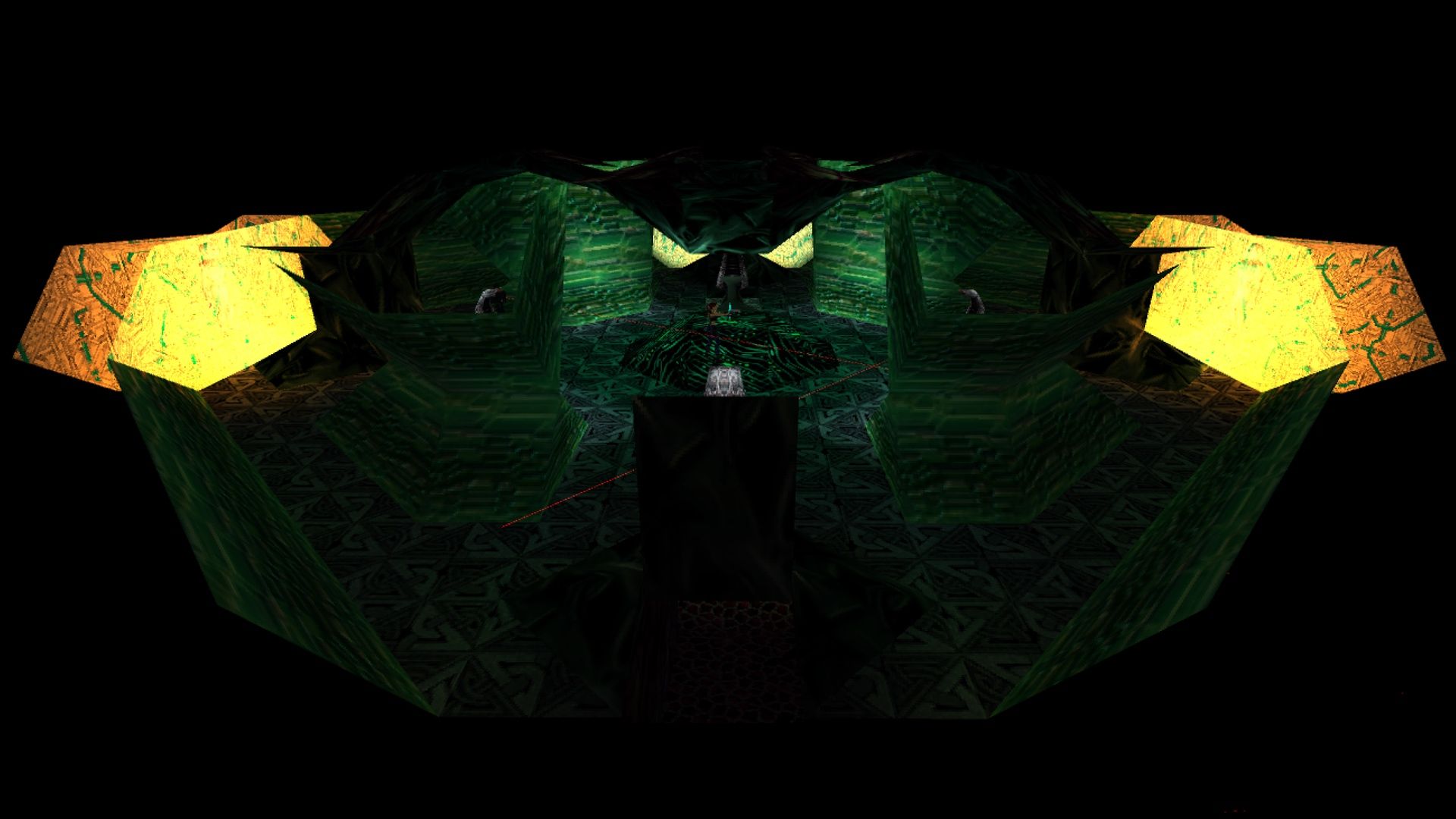
“I was working quite late one evening, and it wasn't a UFO to start with. I was working on the level and suddenly wondered what would happen if I had three rooms next to each other, with the room in the middle that was only the width of the portal,” explains Morton. “Then I’d link that to a separate room that was only visible inside the portal. I then somehow managed to build this impossible room that was surrounded by eight rooms – the only way I could get it to work. And it did, but it worked horizontally – it was just like Valve's 'Portal', but nine years before.”
AI programmer Tom Scutt, who had joined the team to improve the artificial intelligence for the enemies, worked with Morton to see how a portal could work in the level.
“Tom loved it, but I think he started doing some tests around it – this was just a portal in a room to see if it could be used. Soon after, he explained to me that enemies wouldn't work with it without being heavily reworked, because of how the navigation worked with the enemies,” Morton explains. “So if Lara went through a portal to 'another world', for example, the enemies wouldn't know; they'd just stay in the same room. So all in all, they basically said that they loved it, but you can't do it - and yet I kept trying.”
The truth is in there
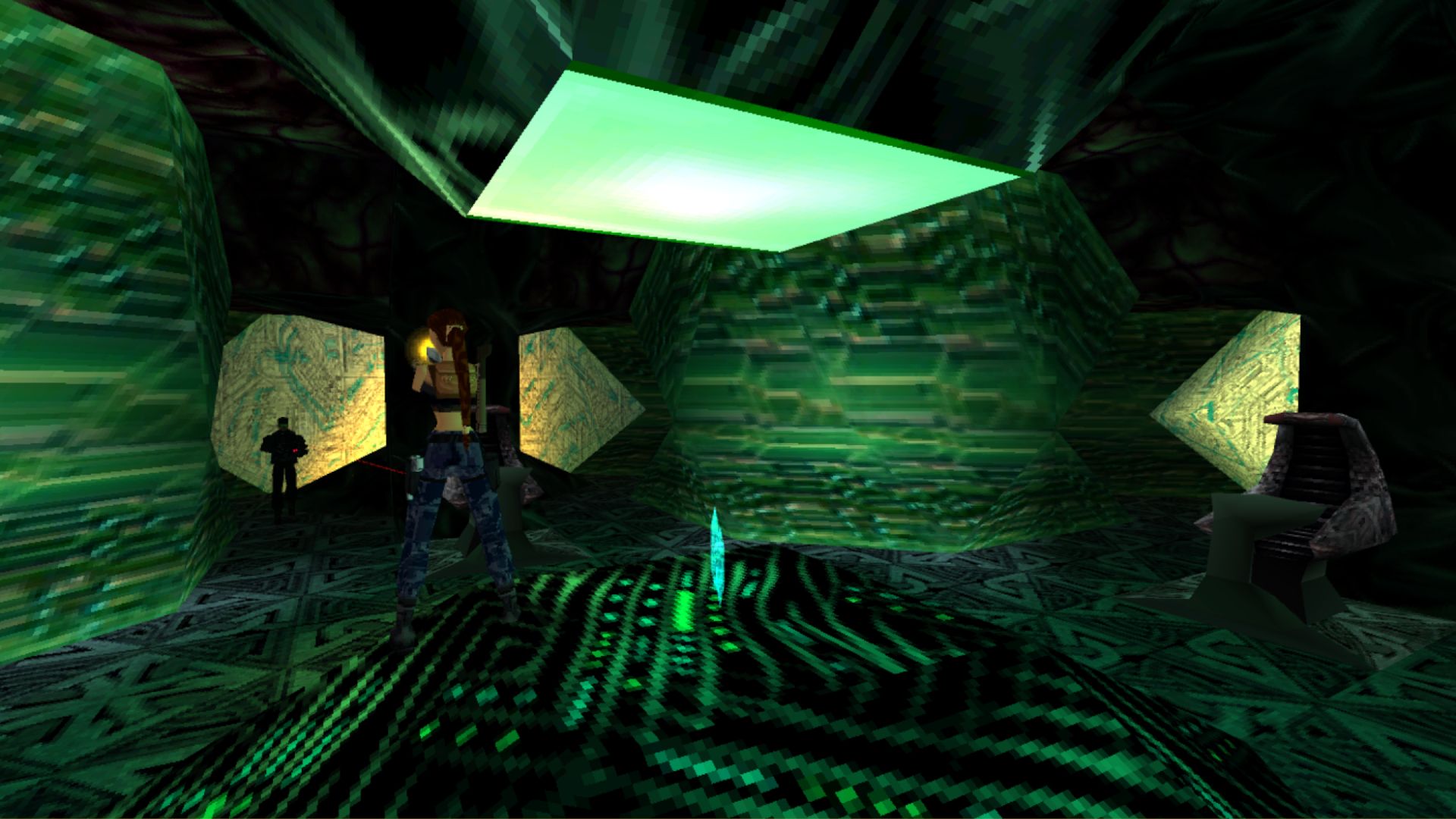
With Area 51 taking shape and the portal idea becoming viable, Morton realized that the two could become one, resulting in the UFO. “The next night, I decided to build a UFO, which we'd already built within the level in this rough shape in one of the hangars at the end of the level.”
That night, Morton cracked it, meaning the inside of the UFO could now be far bigger. “I built a ladder going up from the entrance, which went straight up through the tiny UFO model, which was only three by three blocks, with a one-block hole going up into it. So I remade the same trick from the night before, only vertically, and it worked!”
Still, despite getting the trick to work, more had to be done to ensure no bugs would emerge during this final section of the level.
“Once you got inside the UFO, I think we had to do a tiny bit of fiddling around, just to make the enemies warp inside the UFO. But they'd only try to attack you when you were in the UFO. I think we triggered them once you got in there and de-triggered them once you came out, just to stop them from firing at you when you weren't in there, just to keep that illusion of this TARDIS UFO going.”
Programmer Martin Gibbins, who had previously warned that the UFO would break everything, was won over by it. “Despite the UFO being Richard's idea, that was a testament to Gavin Rummery's ridiculous portal system. It had a single-block doorway into what was effectively a room. That was the clip window for the rest of the world, so you could do whatever you'd like inside of it. He got it working, and I thought it was great.”
For its time, it was an amazing feat on PlayStation and PC. With this being the third mainline "Tomb Raider" game, some players felt that the series was getting stale. But it was moments like the UFO and discovering it was far bigger than many initially thought that stuck with players, and still does to this day.
Unfortunately, another moment like the UFO would not happen in subsequent games, with the pressure of making the Thanksgiving deadline looming over the team. But Morton reveals that the team did speak about what could have alternatively happened at the end of the level.
"I think we talked about having a portal room that took you to another area that could have been either another location on Earth or another location across the galaxy. But obviously, we just didn't have time to do anything like that. It would have been awesome, though.”
However, after Morton spent two evenings trying to get the UFO to work and some on the team worried that it would break the game, it became a big highlight of "Tomb Raider III".
“When I showed the team the UFO, they were basically trembling, thinking, 'What have you done now!?' And we found out that it did work, and they ended up loving it. Looking back, I couldn't believe that I'd pulled it off, to be honest. I couldn't believe that the engine didn't just crash the game every time the camera looked into that portal. It didn't crash, and I thought, ‘Wow, that's awesome,’ at the time.”
The impossible geometry of the "Tomb Raider III" UFO is indeed an impressive spectacle, even almost 30 years later. If you’re interested in seeing how the TARDIS/UFO works, you can play "Tomb Raider III" via the Remastered collection, available on PlayStation 4/5, Xbox Series, Nintendo Switch 1/2, iOS, Android, and PC via Steam.
If you want to know more about "Tomb Raider 3" and its enigmatic UFO, "The Making of Tomb Raider: 1997-2000" is available from October 30 via Pen and Sword, Amazon, and other retailers.
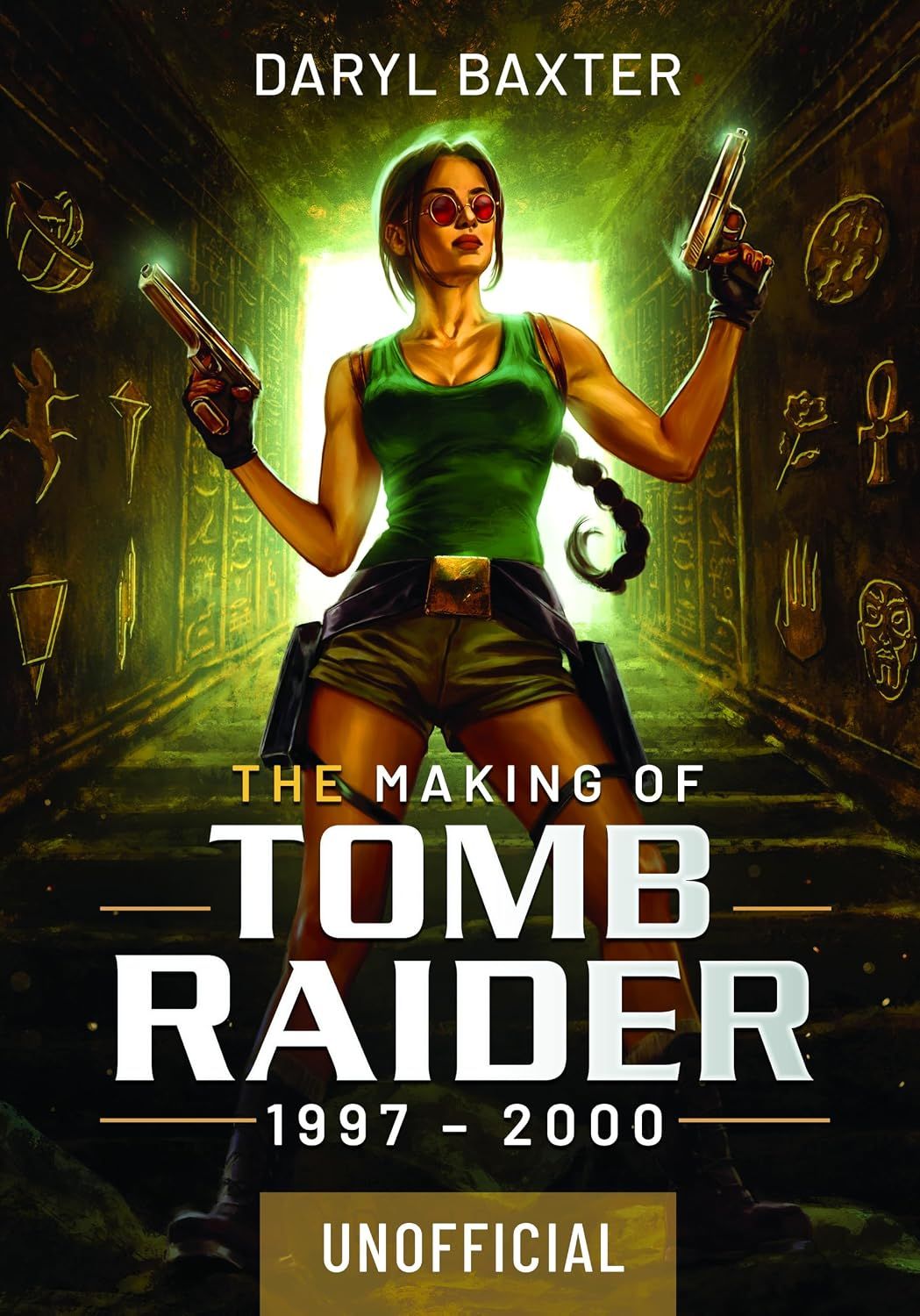
The Making of Tomb Raider: 1997-2000 by Daryl Baxter: was $49.95 now $39.07
The Making of Tomb Raider: 1997-2000 tells the untold story of a pivotal period about one of the most successful video game series of all time, as a new development team at Core Design took charge of Tomb Raider in 1997.View Deal



 Bengali (Bangladesh) ·
  English (United States) ·