
 2 hours ago
10
2 hours ago
10 
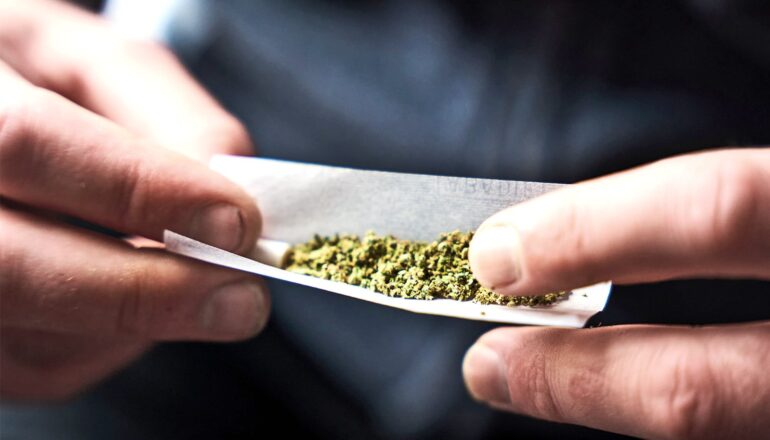
Adults with hard-to-treat epilepsy who used cannabis most days had more than twice as many convulsive seizures per year and more rapidly became resistant to antiseizure medications compared with nonusers, according to new research.
The authors examined 64 adults with drug-resistant epilepsy—when two or more antiseizure drugs haven’t controlled seizures—who were admitted to a specialized inpatient unit where doctors observe seizure activity in real time to determine if medication adjustment or surgery are needed. About one-third of them reported using cannabis recreationally most days, and 90% of these frequent users experienced the convulsive types of seizures most associated with injury and sudden unexpected death in epilepsy, often referred to as grand mal or generalized tonic-clonic seizures. In contrast, about half of nonusers did not experience these types of seizures.
The findings cannot establish that cannabis use worsens epilepsy, but there is a concerning association.
Aaron F. Struck, an associate professor of neurology at Washington University School of Medicine in St. Louis, the chair in epilepsy at Barnes-Jewish Hospital, and the study’s senior author, says the findings make cannabis use worth raising directly with patients, especially those who are using cannabis for issues such as insomnia for which more proven treatments are available.
“There isn’t definitive data that cannabis use worsens epilepsy,” Struck says. “But if someone is using cannabis to help with anxiety or sleep, I’d prefer to treat those problems with drugs we understand rather than something largely unregulated whose impact on the brain we don’t really know.”
Struck note that the research was spurred by a trend he had observed treating patients with epilepsy amid the boom in recreational cannabis use in recent years.
“I was seeing patients with horrible seizures, really severe epilepsy, who didn’t have any of the expected risk factors,” he says. “The one thing they had in common was frequent, high-potency cannabis use. It’s an uncontrolled variable that was appearing more and more in my practice, and nobody had really studied it.”
A purified form of cannabidiol (CBD), a nonpsychoactive chemical compound in cannabis, is approved by the US Food and Drug Administration for treating some severe forms of epilepsy. But the medication contains no tetrahydrocannabinol (THC), the psychoactive component in cannabis. In animal studies, CBD has been shown to suppress seizures; THC may do the opposite. The cannabis sold in the recreational market is increasingly high in THC and low in CBD, according to recent studies of cannabis potency.
To explore the relationship between frequent cannabis use and epilepsy, Struck and Santiago Philibert-Rosas, a researcher in his lab and the study’s first author, analyzed records from patients treated between 2019 and 2024 in an epilepsy monitoring unit at the University of Wisconsin School of Medicine and Public Health, where they both worked at the time. They compared 22 frequent recreational cannabis users—people who reported using cannabis 20 days a month or more—with 42 nonusers.
What emerged among the frequent users, Philibert-Rosas says, was a clear set of features: patients in their 20s, mostly male, without the usual risk factors for epilepsy, whose seizures escalated quickly from onset to admission to the epilepsy monitoring unit.
Overall, frequent cannabis users had more recurrent and more severe seizures than nonusers did. They were seen at the inpatient epilepsy monitoring unit—an indication that their prescribed medications had stopped working to control seizures—an average of five years after their first seizure, compared with 18 years for nonusers, and they were discharged on more antiseizure medications despite having had epilepsy for far less time.
The study could not determine if cannabis use was responsible for the more severe clinical findings among frequent users. However, the researchers found that among 15 frequent users whose timelines could be documented, all started using cannabis before experiencing their first seizure, weakening the likelihood that they began using cannabis in hopes of improving their epilepsy.
Epilepsy this severe usually leaves visible scarring on the hippocampus, a seahorse-shaped structure deep in the brain that is central to memory where many seizures begin. But frequent users’ brain scans looked largely normal, which indicated to Struck that something other than the usual disease process was going on. THC acts on receptors densest in those same brain regions, suggesting these patients’ seizures may arise from damage to how brain circuits are firing rather than from physical damage.
The team is designing a larger, multisite study, including geographic regions with distinct cannabis legalization histories and data on use patterns, such as how many people consume cannabis, at what ages, and in what modality, to reach a more diverse group of patients. Instead of having patients report their own cannabis use, the researchers plan to incorporate objective measures at admission for a more accurate gauge of what people actually consume.
“Right now, the honest answer when a patient asks whether their cannabis use is affecting their seizures is that we’re not sure,” Philibert-Rosas says. “Larger studies will help us give them a real answer—how much matters and whether stopping helps—so they can make an informed decision.”
The research appears in Epilepsia.
Source: Washington University in St. Louis
The post Frequent cannabis use linked to worse epilepsy appeared first on Futurity.





 Bengali (Bangladesh) ·
  English (United States) ·