

In the late 1800s, Westminster Abbey clergy stumbled upon a mysterious sarcophagus. The lid was decorated with an 11th-century Anglo-Saxon cross, but the base had a fourth-century Roman funeral inscription. For nearly 150 years, the tomb has baffled experts, but the abbey's consulting archaeologist may have finally figured out who was buried there, according to a new study.
Westminster's chief mason unearthed the stone sarcophagus in 1869, but when experts investigated it, they discovered that the burial had been looted earlier that century. Experts also noticed that the carved decoration on the side of the sarcophagus was stylistically Roman, with a Latin inscription that can be translated as "To the memory of Valerius Amandinus. Valerius Superventor and Marcellus made this for their father." But an enormous medieval cross had been carved into the lid of the sarcophagus, suggesting that the tomb had been reused to bury an important religious figure hundreds of years later.
The mystery of the medieval individual buried in a Roman sarcophagus remained unsolved for 150 years, as no one thought that any bones were left inside. But when the stone coffin was opened for conservation in 2016 and a full skeleton was discovered, clues to the identity of the deceased finally came to light, Warwick Rodwell, the consultant archaeologist for Westminster Abbey, wrote in a study published Wednesday (Oct. 21) in the Journal of the British Archaeological Association.
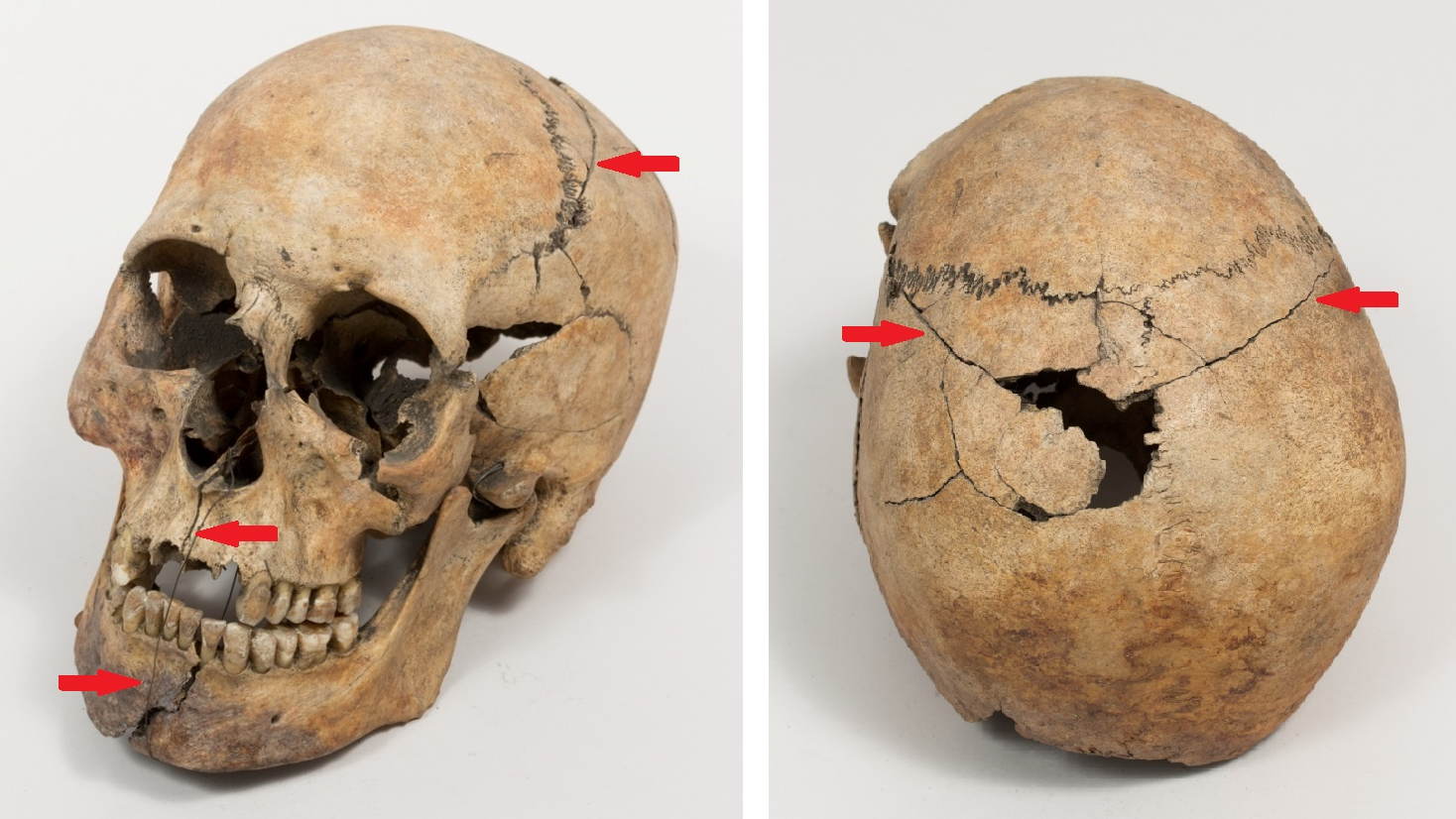
Although the skeleton had been disturbed over the years, with a hole accidentally made in the skull and arm and leg bones mixed up, it was clear that the person was male, middle-aged, and of average height, bioarchaeologist James Langthorne of Pre-Construct Archaeology wrote in a 2016 report. The man also had some evidence of osteoarthritis, two healed rib injuries and gout. The bones were carbon-dated to between 987 and 1052, confirming that the Roman-era sarcophagus was reused in the Middle Ages.
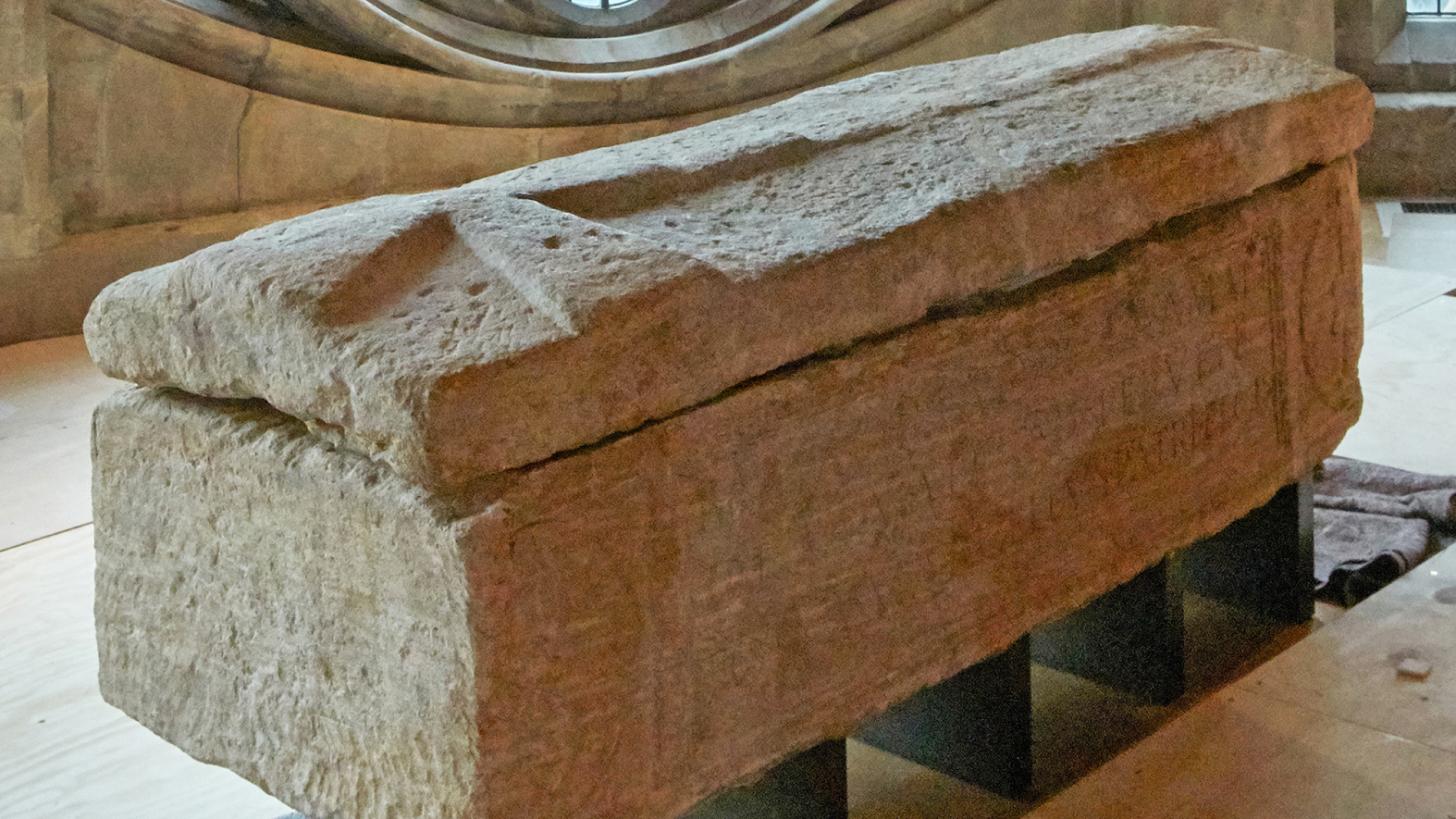 Dean & Chapter of Westminster
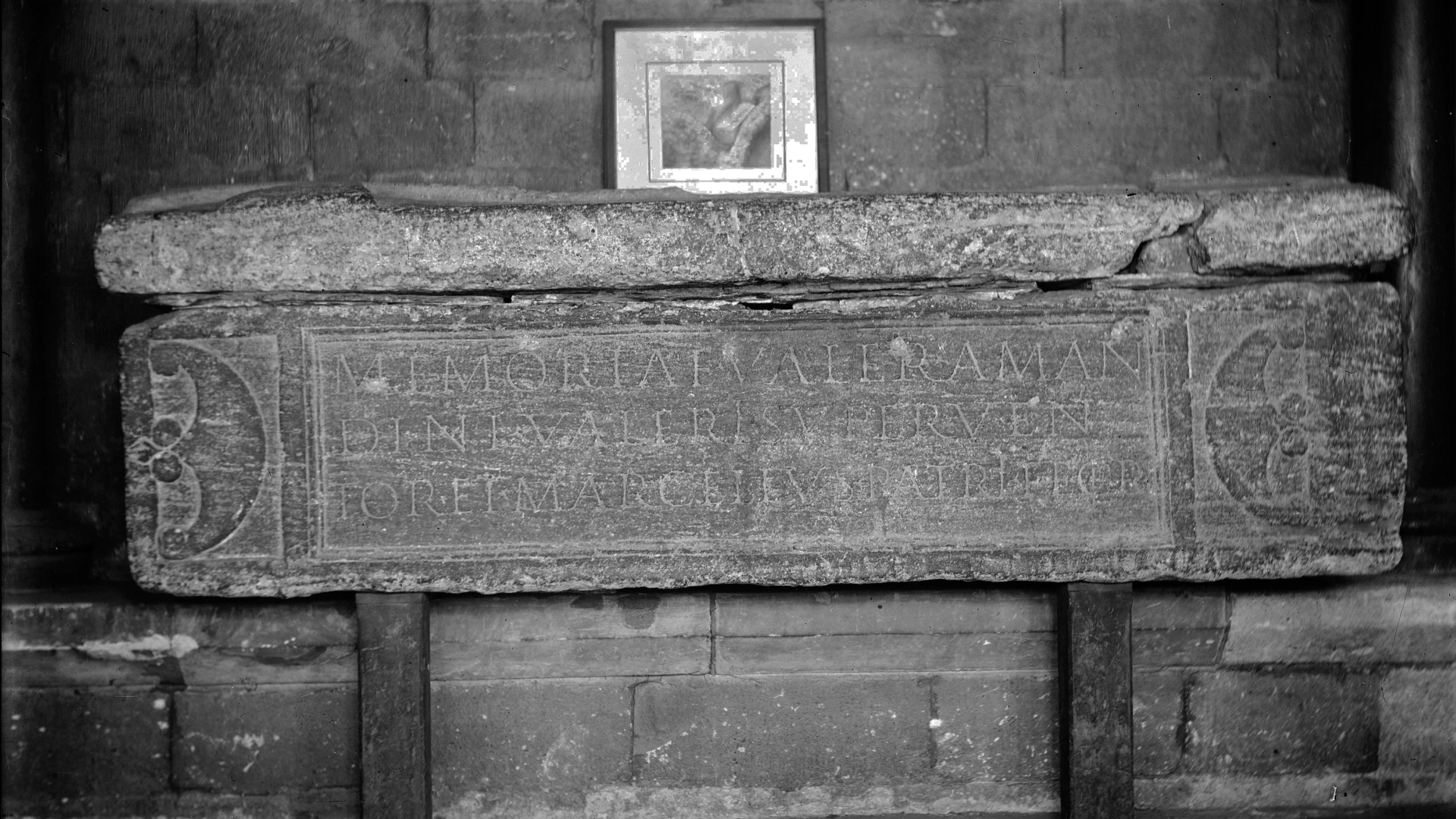 Dean & Chapter of Westminster
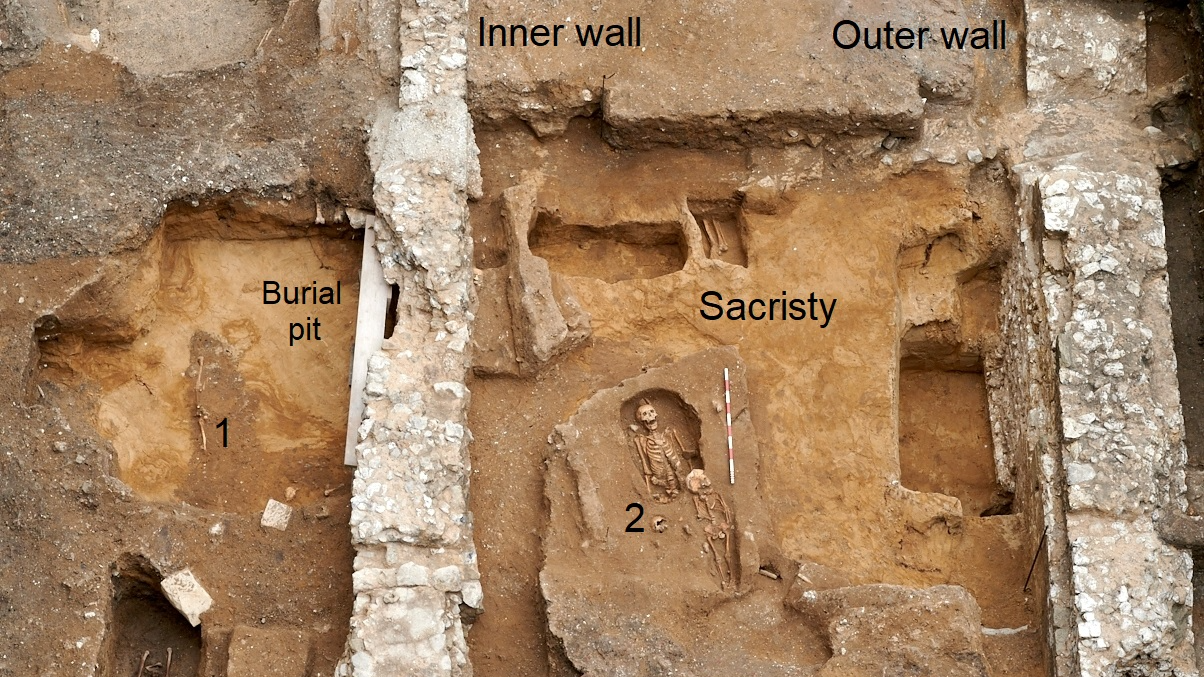 © Pre-Construct Archaeology Ltd; (CC-BY-ND 4.0)
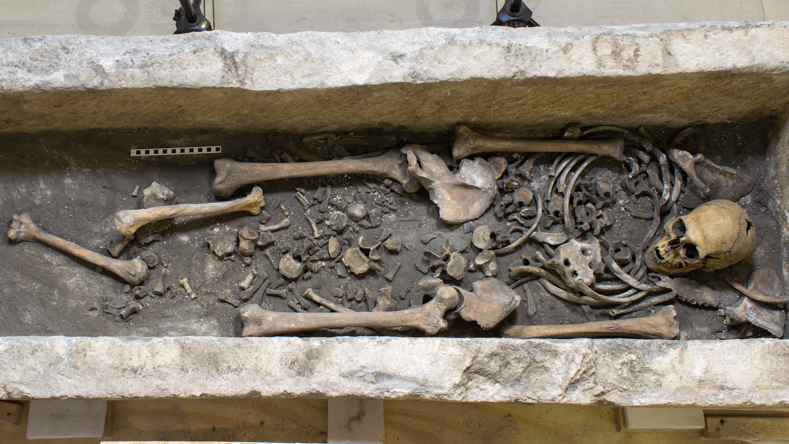 © Pre-Construct Archaeology Ltd; (CC-BY-ND 4.0)
 © Pre-Construct Archaeology Ltd; (CC-BY-ND 4.0)
"This brings us to the final question of importance: who was he?" Rodwell wrote in the study. Despite the lack of grave goods, which may have been stolen in the early 19th century, "he was almost certainly an abbot" who was given a dignified burial in a stone sarcophagus with a large cross, Rodwell wrote.
Based on the birth and death dates of the abbots of Westminster and their tenure as clergy, Rodwell narrowed the candidates down to Wulfsige (abbot from 988 to 993), Ælfwig (abbot from 993 to 1020) and Wulfnoth (abbot from 1020 to 1049). Given that Wulfsige left Westminster to become a bishop elsewhere, he was likely not buried in the abbey.
"Consequently, we have two viable contenders for the occupant of the sarcophagus," Rodwell wrote. "The fact that Ælfwig was already a monk of Westminster might favour him."
Although the final resting place of Ælfwig may have been found after a millennium, some questions remain unanswered.
For example, it is unclear why an 11th-century abbot was buried in a recycled fourth-century Roman sarcophagus. The reuse of Roman coffins is extremely unusual, Rodwell noted in the study, and nothing comparable to this sarcophagus has ever been found. One explanation for the reuse may rest with the Latin inscription, whose first word — "memoriae" (to the memory) — suggests that Valerius Amandinus was an early Christian himself. This Roman may have been a significant figure in Roman London, Rodwell wrote, but "unfortunately, nothing is known about his career."
Experts are also unsure where the Roman sarcophagus came from. It was made from limestone sourced from Oxfordshire, a county in the South of England. But perhaps the coffin was originally buried in a Roman mausoleum and they were unearthed and moved at some point, Rodwell noted. But as Rodwell pointed out in the study, "there could be a villa and its cemetery somewhere in the vicinity of Westminster Abbey, awaiting discovery."
The sarcophagus is currently on display in the Queen’s Diamond Jubilee Galleries at Westminster Abbey.
What do you know about the Empire's conquest of the British Isles? Find out with our Roman Britain quiz!




 Bengali (Bangladesh) ·
 English (United States) ·