
 1 hour ago
2
1 hour ago
2 
TLDR
Bitcoin is capped at 21 million coins, making it a scarce, store-of-value asset favored by institutions Ethereum powers decentralized finance, tokenization, and smart contracts across thousands of applications Spot Bitcoin ETFs have made it easier for traditional investors to buy in without holding crypto directly Ethereum’s shift to proof-of-stake cut energy use and added staking rewards for holders Many investors now hold both, treating them as complementary rather than competing assetsBitcoin and Ethereum are the two biggest cryptocurrencies by market value. But they do very different jobs, and in 2026, investors are asking which one gives them the better opportunity.
The answer depends on what you are looking for.
Bitcoin: The Case for Digital Gold
Bitcoin was built to be a store of value. Its supply is capped at 21 million coins, making it one of the scarcest assets in the world.
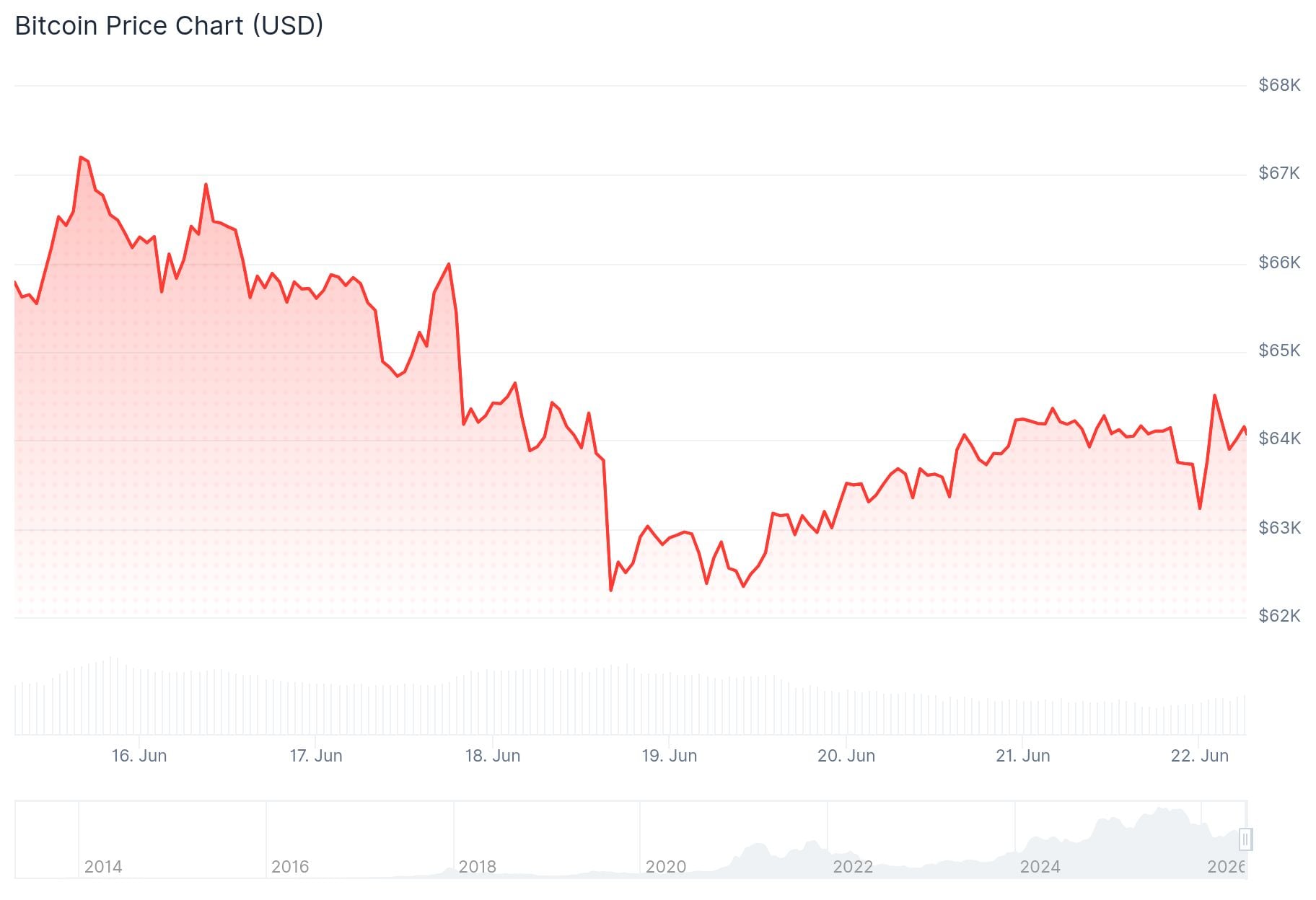 Bitcoin (BTC) Price
That scarcity has attracted institutional investors, pension funds, and publicly traded companies. The launch of spot Bitcoin ETFs made it even easier for traditional investors to get exposure without managing a crypto wallet.
Many analysts now compare Bitcoin to gold. If that comparison holds, demand from large institutions could continue to support its price over the long term.
Bitcoin also does not face direct competition in its lane. No other cryptocurrency is seriously challenging it as a digital store of value.
For conservative investors, that simplicity and institutional backing make Bitcoin the lower-risk option of the two.
Ethereum: The Case for Blockchain Utility
Ethereum’s value comes from what happens on its network. It supports decentralized finance, stablecoins, tokenized real-world assets, and thousands of applications.
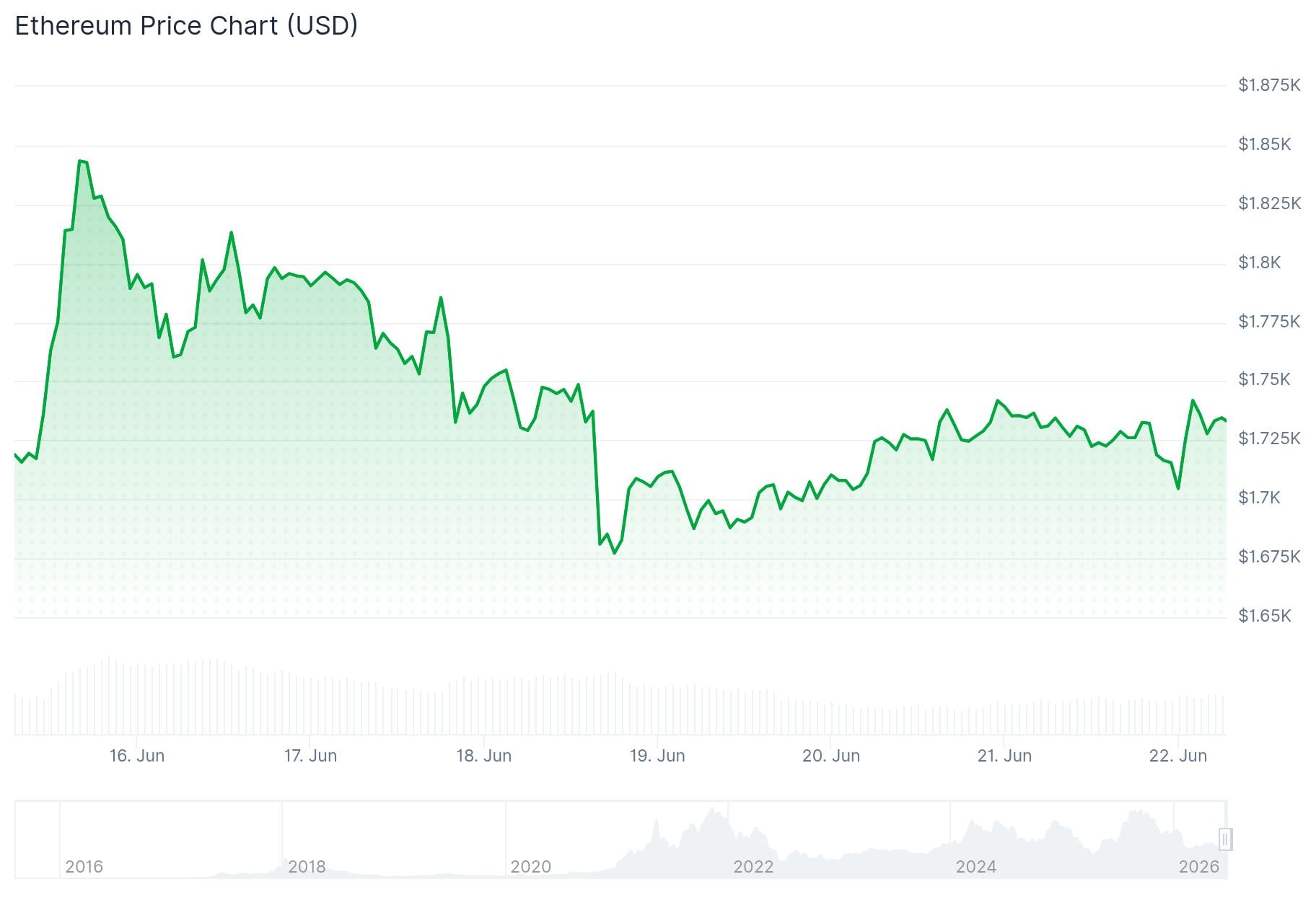 Ethereum (ETH) Price
Every time users interact with those applications, Ethereum earns fees. As activity grows, so does demand for the network.
Ethereum’s move to proof-of-stake reduced its energy use. It also allowed holders to earn staking rewards by locking up their coins to help secure the network.
Major financial institutions are now experimenting with putting bonds and funds on blockchain networks. Ethereum remains one of the main platforms for that work.
Supporters say Ethereum should be thought of as a technology platform, not just a coin.
Competition and Risk
Ethereum does face more competition than Bitcoin. Networks like Solana and Avalanche are trying to win developers and users away from it.
Bitcoin does not have that problem. Its role as digital gold is largely uncontested.
That said, both assets have attracted billions in institutional money. Both are now part of mainstream financial conversations.
Many investors no longer see them as rivals. They hold both, using Bitcoin for stability and Ethereum for growth exposure.
In 2026, Bitcoin holds the edge in institutional recognition. Ethereum holds the edge in potential upside tied to blockchain adoption.
The most recent data shows Ethereum still leads all other blockchains in total value locked in decentralized finance applications.
The post Bitcoin vs Ethereum: Which Cryptocurrency Is the Better Investment in 2026? appeared first on CoinCentral.




 Bengali (Bangladesh) ·
  English (United States) ·