
 5 hours ago
2
5 hours ago
2 
I love a rousing epic, but I’m equally drawn to smaller, more interior odysseys—stories set in kitchens, in unassuming towns, or in the mind itself. Unlike larger-than-life quest narratives with a traditional (and traditionally male) protagonist, these little odysseys take place in spaces often coded as female and just as often dismissed as unimportant. But their smallness is precisely the point, and although they promise neither resolution nor reward, they offer something equally rich: friction, intimacy, insight, and a slow remaking of the self.
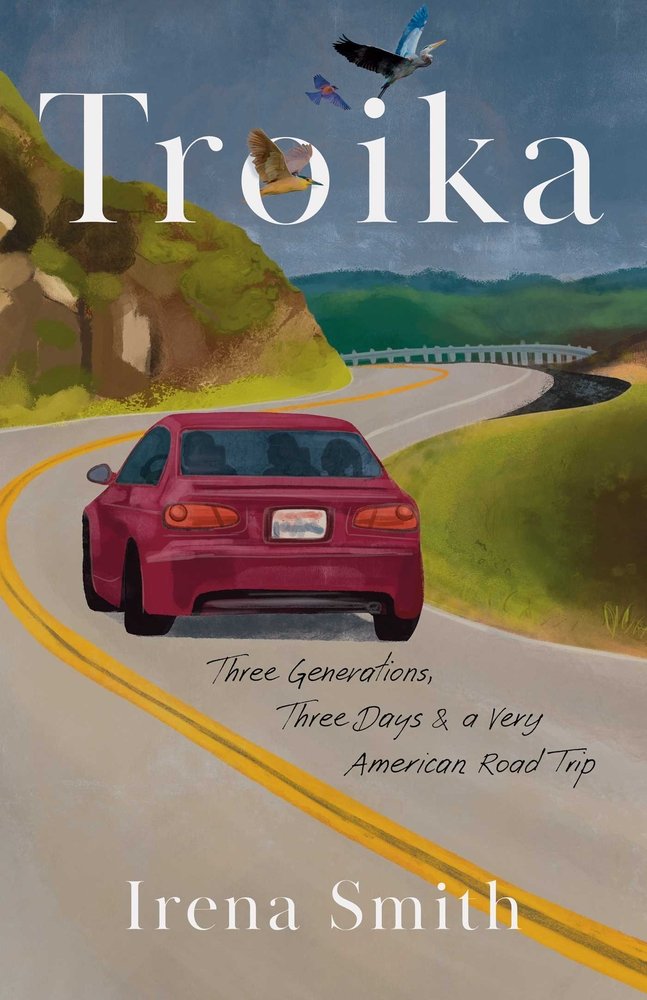
My book, Troika, chronicles a three-day road trip to California’s Central Coast. In the car: me, my 77-year-old mother, and my 22-year-old daughter. We drive 250 miles south to Solvang, a quaint Danish town made famous by the 2004 film Sideways, meander through the Santa Ynez Valley, stop at an ostrich farm, visit a stunning outdoor light installation in Paso Robles, bicker, binge-watch the second season of The White Lotus, and embark on a quest for the best latte art. It’s a modest journey—three women, three days, an unambitious itinerary—but along the way, Troika explores the complicated interior landscapes of myth, migration, and memory, braiding together echoes of the Odyssey, a legacy of loss, and a family history of fleeing from monsters, both real and imagined.
The nine books on this list undertake similarly circumscribed journeys: across a parlor, through a single unruly sentence, back into a childhood bedroom. Their protagonists are daughters, mothers, wives, caretakers, and strivers—women who struggle with the weight of inheritance and expectation, confront and name their own desires, and navigate uncharted interior terrain. But even when hemmed in by economic exigency, physical disability, or cultural constraints, these protagonists show us that nothing is more heroic than a consciousness finding a way forward on its own terms.
Ducks, Newburyport by Lucy Ellmann
Over the course of a single, breathless, looping sentence that runs for a thousand pages, the unnamed narrator muses about her failed first marriage, her happy second marriage, her four children, her health, her health insurance, money, her part-time job baking pies, her earlier job as an untenured history professor, the sites of Native American massacres near the small Ohio town where she lives with her family, GRWM routines, climate change, internet headlines, and the thrumming violence just beneath the surface of American life. We may not know her name, but she contains multitudes, and by the end of the novel, she feels like a close friend.
Washington Square by Henry James
Catherine Sloper’s beautiful, clever mother died in childbirth, and Catherine—who grows up to be neither clever nor beautiful—is left in the care of her meddlesome older aunt and her exacting, acerbic father, a well-regarded doctor who believes that “you are good for nothing if you aren’t clever.” What’s a girl to do, especially if she’s stuck in her father’s house with no marriage prospects? If you’re Catherine, you endure a broken heart, quietly defy your controlling father, take up needlepoint, find your backbone and your voice, and realize that your small-seeming life may not be so small after all—especially if you live it on your terms…
Scavengers by Kathleen Boland
A mother and daughter embark on a treasure hunt in the Utah desert. They are carrying an unreliable map, a lifetime of resentments and regrets, and not enough sunscreen. The mother, Christy, is erratic and irresponsible; the daughter, Bea (short for Beautiful), seeks order in numbers and weather patterns. Their search for treasure loops and meanders, but much of the narrative drama takes place in the cramped spaces of memory, text exchanges, and snatches of conversation. A fraught, uneasy tenderness slowly builds between the two women as they chart an unexpected path back to each other.
Goodbye, Vitamin by Rachel Khong
Ruth’s fiancé has dumped her for another woman (“I loosened the jar lid,” she notes, “so someone else could open him”). Her father, who has Alzheimer’s, is flinging his pants and shirts into trees. Ruth returns to her childhood home, where she cooks cruciferous vegetables (her father calls them “crucified vegetables”) and jellyfish, which are supposed to stave off cognitive decline, accompanies her parents on walks to the park, and searches for projects that spark her father’s interest. The novel’s modest scale—meals prepared, notes left on the refrigerator, snatches of dialogue overheard in the street—belies its immense affection, wry hilarity, and attentive intelligence.
A Cup of Water Under My Bed by Daisy Hernández
Daisy Hernández is five when she begins learning English—a language that sounds like “marbles in the mouth”—and for years afterward, the hurt of being the first to leave her Cuban-Colombian family for another language lingers. Her fluency puts her at a remove from the people she loves most; so does identifying as bisexual and speaking out in a culture that traditionally values stoicism and silence. But no matter how far she ventures, writing allows her to remain close to home; writing, she says, “is how I leave my family and how I take them with me.”
All Fours by Miranda July
A self-described semi-famous artist sets out on a cross-country drive, but 20 minutes into her trip, she checks into a small-town motel. There, she spends an exorbitant amount of money redecorating the motel room, engages in an unconsummated affair, and dreads the “estrogen cliff” that will send her hurtling into the jaws of menopause. The novel is polarizing—readers have dismissed the protagonist as self-indulgent and unlikable and cringed at her no-holds-barred frankness—but I was brought to tears by her fearless willingness to explore the darkest recesses of her psyche and the rich intimacy of female friendships that undergird the novel.
The Penelopiad by Margaret Atwood
Odysseus’s loyal wife, Penelope, spends most of The Odyssey weaving, waiting, and weeping. Now that she’s dead, she’s ready to drop some truth bombs from the underworld. She is no longer willing to bite her tongue, to keep the right doors closed and go to sleep during the rampages. She’s sardonic and angry. She regrets not standing up for the maids Odysseus and Telemachus slaughtered when Odysseus returned to Ithaca, but it’s too late; their voices haunt her story, for the maids understand better than anyone the steep cost of keeping the home fires burning.
We Are Never Meeting in Real Life. by Samantha Irby
Why go outside when you can hang out in your apartment with the internet, the TV, and your garbagemonster cat? Samantha Irby sees no reason for it. Her bowels are irritable, her arthritis is flaring, the dating scene is “fucking dire,” and her job skills are limited to—in her words—surly phone answering, playing the race card, and eating other people’s lunches in the break room. Also, her mind is a “never-ending series of shame spirals” leavened with depression and anxiety, which is why she’s staying home in her day pajamas, eating the snacks she ordered online, and spinning the dross of daily life into gold.
Priestdaddy by Patricia Lockwood
A Mother-Daughter Novel That Transforms the Western
Kathleen Boland’s “Scavengers” is a madcap adventure probing questions of reinvention, the wilderness, and the stories we tell ourselves

Imagine your father (who, incidentally, spent your college tuition on a guitar that once belonged to Paul McCartney) is one of a handful of non-celibate Roman Catholic priests in the world. You are nothing like him. You write poetry. On the internet, which has just become a thing, you meet another poet in a poetry chat room, and the two of you marry (at 19!)) and move to Savannah. You’re poor and happy, until a catastrophe forces you and your husband to move back into your father’s house, which in this case also happens to be the house of God. Lockwood’s main instrument of resistance—her profane, poetic, loose-limbed, exquisitely unhinged voice—punctures the domestic claustrophobia and creates its own sacred spaces.
The post 9 Little Odysseys That Don’t Go Very Far, and That’s the Whole Point appeared first on Electric Literature.




 Bengali (Bangladesh) ·
  English (United States) ·