

One in seven UK adults experience constipation at any given point in time. That’s a lot of backed-up people – and those figures are even higher (one in three) for children and women, who face twice as much constipation as men.
The uncomfortable state can leave you feeling bloated, sick, and low on appetite. For those struggling to get things going, any helpful tools (like chewing sorbitol-rich sugar-free gum) are welcome.
Of course, the best advice is to stay hydrated, eat enough fibre, and keep active. Aside from those lifestyle interventions, though, it seems some foods are more, er, useful than others.
For instance, while certain fruits help you “go”, others might actually keep the pipes clogged for longer.
The best fruits to help you poop
1) Prunes
Look, it’s a cliché for a reason. Prunes are high in asugar alcohol called sorbitol, which draws water into your colon andsoftens the stool. The added pressure this bulk places on yourbowels encourages motion, too.
Some research even suggests dried prunes (which contain the fibre missing from prune juice) are better than psyllium husk for “improving stool frequency and consistency” among constipated people.
2) Kiwifruit
One 2022 study found that “Two gold kiwifruit daily are as effective as fibre-matched psyllium in treating constipation in adults and should be considered as a treatment option”.
Though not quite as effective as prunes in other research, it did seem kiwifruit were less likely to cause stomach pain than either the dried plums or psyllium husk (11% vs 18-19%).
More good news: you don’t have to eat them with the skin on to see benefits.
3) Rhubarb
The delicious crumble base (or porridge topping, or pie filling... I’m getting distracted) is both high in fibre and a compound called sennoside A, which can have a laxative effect.
A 2022 paper showed that rhubarb seemed to take a multi-pronged approach to tackling constipation in mice. Not only did it reduce gut inflammation and improve the microbiome, but it also seemed to make our bowels’ collagen fibre more flexible, which is useful to help BMs pass smoothly and easily.
4) Figs
Weird wasp-related origin story aside, figs are pretty great for our health. They’re rich in copper and vitamin B6, and like most fruits, also contain fibre.
A small study found that eating fig paste “was associated with a significant reduction in colon transit time and a significant improvement in stool type” compared to a placebo, meaning it “may have beneficial effects in subjects suffering from constipation”.
And other research involving 150 people with irritable bowel syndrome found that consuming about 45g a day of dried figs seemed to lower symptoms like pain, bloating, and constipation.
5) Dragonfruit
In an Instagram Reel, gastrointestinal surgeon, author, and lecturer Dr Karan Rajan called dragon fruit a secret tool for “prize-winning” poops.
Science is on his side. A 2023 study found that 8g of dragon fruit oligosaccharides (a carbohydrate extracted from the fruit) a day can feed the good bacteria in your gut, while its high fibre and water content help to make passing stool easier.
6) Apples
The common fruit has a lot of both sorbitol and fibre, each of which gets things going in your guts. And polyphenols – naturally occurring antioxidants – derived from underripe apples seemed to “increase defecation frequency and ameliorate constipation”, per a 2025 study.
Even the juice, which has little fibre, seems to help.
However, apple sauce might not work as well. That’s because it’s high in pectin, which can make stools harder and therefore more difficult to pass.
7) Pears
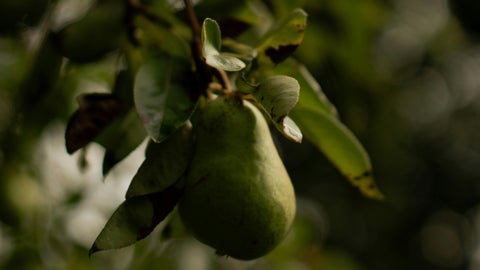
Pears have even more sorbitol than apples and are also higher in fructose, another sugar that can sometimes double up as a mild laxative.
The “only” fruit that could back you up
1) Unripe bananas
Unripe bananas are high in tannins, chemical compounds that make your mouth feel dry (which are also found in tea), and amylase-resistant starch, which can be useful in preventing diarrhoea.
But this is bad news if you have the opposite problem.
A 2015 World Journal of Gastroenterology article reads: “The only fruit that is not recommended for a constipated patient is the banana, especially if unripe”: these can have “a constipating effect”.
Yet another paper suggests “not feeding banana[s] to a constipated child”, for similar reasons.
Luckily, there are at least seven other options to try if you do have trouble on that front (or should we say back?).


.jpg?width=1200&auto=webp&crop=3:2)




 Bengali (Bangladesh) ·
  English (United States) ·