
 7 hours ago
2
7 hours ago
2 
Small towns and cities mean different things to different people. To a big-city dweller visiting for the weekend, it can be a place to lose—or find—oneself; a place to rejuvenate and invigorate. For someone who hails from a small town, it can mean getting in touch with one’s roots. To those who inhabit these spaces permanently, they signify something still more different. A small town might mean warmth and safety, but it can just as easily be a stifling presence to escape.
Whatever their effect, there’s no doubt that these in-between spaces make perfect breeding ground for stories. The term “mofussil,” used for places outside the major metropolitan cities in India, expresses the intricacies of these locations perfectly. These mofussil spaces can be small towns where everyone knows everyone’s business, where anonymity is impossible and the bonds of community are still strong. On the other hand, it can also refer to the tier-2and tier-3 cities—once smaller, they now sprawl in all directions, rapidly re-inventing themselves. None of these spaces are silent backgrounds. They are active presences that shape the lives and histories of their people, particularly in a country like India. Perhaps this is why stories set away from the major Indian cities are becoming popular with global audiences. The latest example of this subtle shift is the success of the film Homebound, which was on the shortlist for Best International Feature Film at the 2026 Oscars.
The following seven novels are set in these twilight places spread across the length and breadth of the country. Whether it’s the Himalayas looming in the background or the sea on the edge of the town, a place in the terai or a dusty town hard to find on the map—these places make for stories worth telling, sometimes acting as catalysts, sometimes as accomplices.
English, August by Upamanyu Chatterjee
Upamanyu Chatterjee’s English, August is the story of Agastya Sen, who has been posted to Madna after joining the elite civil service. This hot, dusty town is far removed from Kolkata and Delhi, where Agastya has spent most of his life, and the contrast between his life so far and the life he is expected to lead in this outpost lies at the center of this darkly humorous novel. Chatterjee brings the quintessential small town of the ’80s to life through descriptions of slow-moving bureaucracy and the portrait of a place where cattle camp in the corridors of government offices and the walls of buildings are splotched “maroon with paan spittle.” As Agastya’s existential crisis intensifies, Madna refuses to stay in the background, gradually becoming the catalyst to his struggles and driving the novel towards its conclusion.
The Inheritance of Loss by Kiran Desai
Kiran Desai’s novel moves between New York and Kalimpong, a small town in the Eastern Himalayan region, weaving the stories of multiple characters. There’s a retired, Cambridge-educated judge clinging to colonial ways; his granddaughter, Sai; and their cook’s son, Biju, an undocumented immigrant struggling in New York. The action unfolds during a tumultuous period in the region’s history as the Nepali-speaking majority demands its own state, turning the quiet, misty town into a “ghost town.” With the mighty Kanchenjunga looming over its treacherous terrain, a sharp class divide and political tensions on the rise, Kalimpong becomes an active presence shaping the trajectory of its characters’ lives.
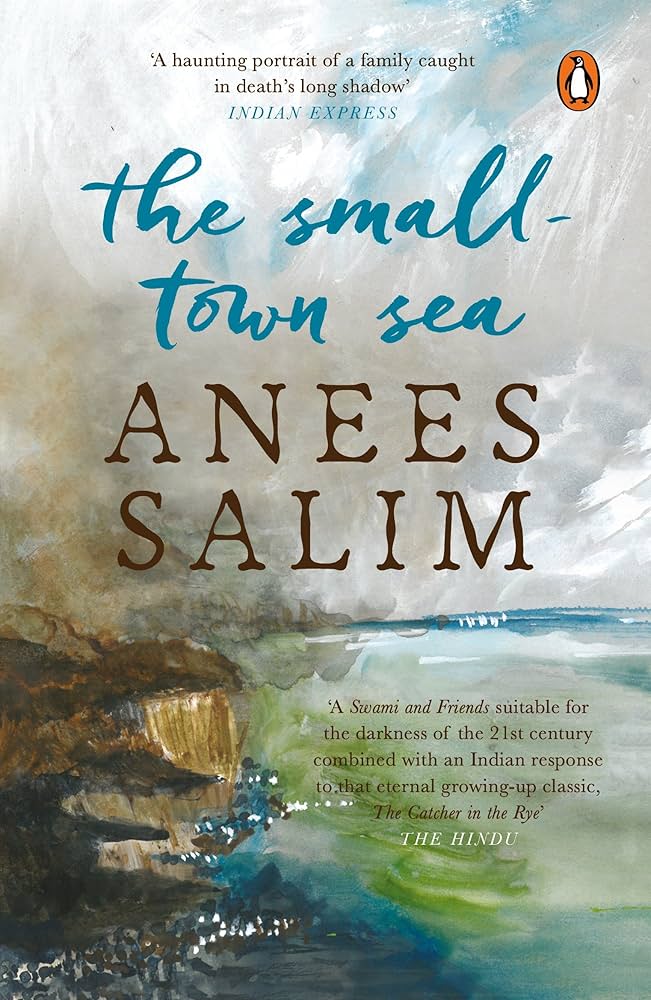
The Small-Town Sea by Anees Salim
Set in an unnamed small town where the sea is a living, breathing presence, The Small-Town Sea is narrated by an unnamed 13-year-old boy. The boy has moved to this “small, depressing town” from a “big, overcrowded city” to fulfil the wish of his dying father. This mofussil town thus becomes the space where he must draw the map of his many griefs, including the life he has left behind. Written in sparse prose in the form of a letter addressed to a literary agent who had rejected his father’s manuscripts, The Small-Town Sea captures the claustrophobic feeling of growing up surrounded by the anxieties of childhood.
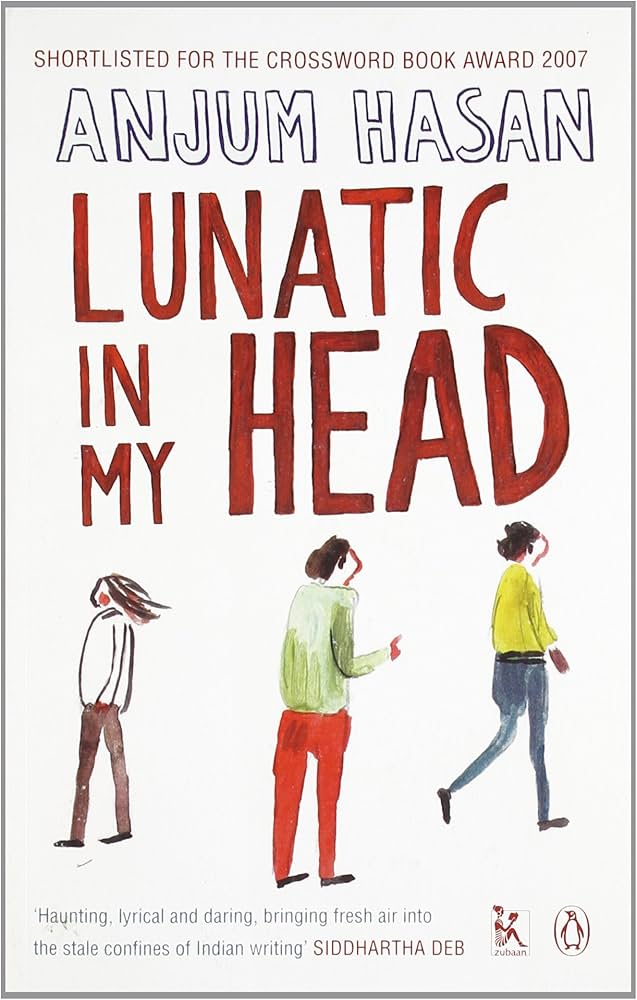
Lunatic in My Head by Anjum Hasan
Hasan’s Lunatic in My Head is set in ’90s Shillong and tells the story of three characters who live most of their lives in their heads. Eight-year-old Sophie Das, aspiring civil servant Aman Moondy, and college lecturer Firdaus Ansari are all “dkhars”—outsiders—whose identities become closely intertwined with their feelings for their city. Shillong, with its hilly terrain and rain-soaked streets where “pine trees dripped slow tears,” charms while also making the characters long to leave it all behind. That push-and-pull is at the heart of this novel in which nothing grand happens, nevertheless offering insight into a space that is irrevocably tangled with the lives of the people who inhabit it.
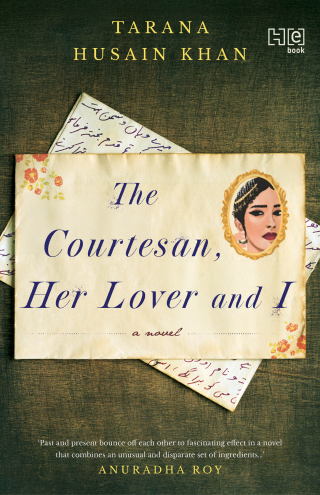
The Courtesan, Her Lover and I by Tarana Husain Khan
The Courtesan, Her Lover and I is set in Rampur and narrates the story of Rukmini, who returns to her hometown with her husband after a few years in Dubai. Unhappy with her teaching, she almost unwillingly begins researching the cultural history of Rampur, which leads her to the nineteenth century courtesan Munni Bai Hijab, a poet herself and muse of the famous Urdu poet Dagh Dehlvi. As we move in time, Rampur stays in the background as a powerful force. It’s a city in flux, a city where “the circle of life is transcribed within the mohallas,” but which is also turning into a “smart city” even as its men—however well-meaning—tend to define the trajectory of a woman’s ambition. This in-betweenness shapes the life of Rukmini, weaving Rampur closely into the stories of both women.
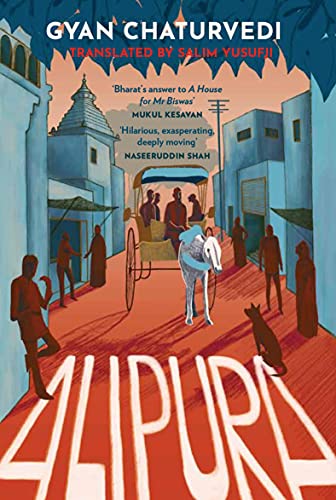
Alipura by Gyan Chaturvedi, translated by Salim Yusufji
I Was Never the Kind of Indian Girl That Indian Guys Liked
We were giddy with our luck at having found each other after years of meeting people who weren’t right
Gyan Chaturvedi’s Alipura is set in the Hindi heartland of the late 1960s. The novel takes readers to a typical village to meet the Dube family, who are low on money but high on dreams and struggling to fulfill their ambitions, however small. Chaturvedi uses humor and satire to bring out the bleak realities of life in a small village riddled with casteism, corruption, outdated beliefs, and a deeply patriarchal mindset. Alipura is a place where women are supposed to stay away from cosmetics because they tend to bring “dishonour to the family” while masculinity and muscle-power go hand-in-hand. A site of colorful characters with bleak futures, Alipura defines as well as confines its characters. It is a place where dreamers thrive but dreams refuse to come true.
The Folded Earth by Anuradha Roy
Set in Ranikhet, a small town in the foothills of Northern Himalayas, The Folded Earth is the story of Maya, a young widow. She has come in search of sanctuary, and The Folded Earth shows a small town becoming a safe haven. At the same time, it reveals the fragility of such peace and tranquillity when faced with powerful local forces that thrive on conflict. Roy gives local color in descriptions of this charming town as well as through characters like the aristocratic Diwan Sahib and the young Charu—people who can only be found in India’s mofussils. Never in a hurry to reach its destination, The Folded Earth moves at a languid pace, capturing the feeling of strolling along winding, hilly roads of the town it describes.
The post 7 Novels That Let India’s Smaller Towns Shine appeared first on Electric Literature.




 Bengali (Bangladesh) ·
  English (United States) ·