
 11 hours ago
8
11 hours ago
8 
We don’t choose our siblings, yet we spend most of our early lives with them. They’re our first intimate experience of the mystery of another person: Why are you like that? What are you thinking? These questions become more confusing when the world pits us against each other, when the questions turn back on us: Why are you not more like your brother, your sister? Why can’t you do what they do?
When we’re children, we’re thrust into a familial world whose history is opaque to us, and we have to figure out how to live in it. My own brother and I wandered side by side through this bewildering landscape, watching each other stumble over the rubble of our parents’ ambitions, each trying to be just like the other and trying to be the exact opposite. We could have helped each other more, is what I think now, if we hadn’t each been busy trying to prove that we were better at navigating this world than the other was. The tragedy of childhood is that such insights arrive only in retrospect. These two children, myself and my brother, each wanted to be understood and believed that no one could understand them. I want to tell them to listen to each other.
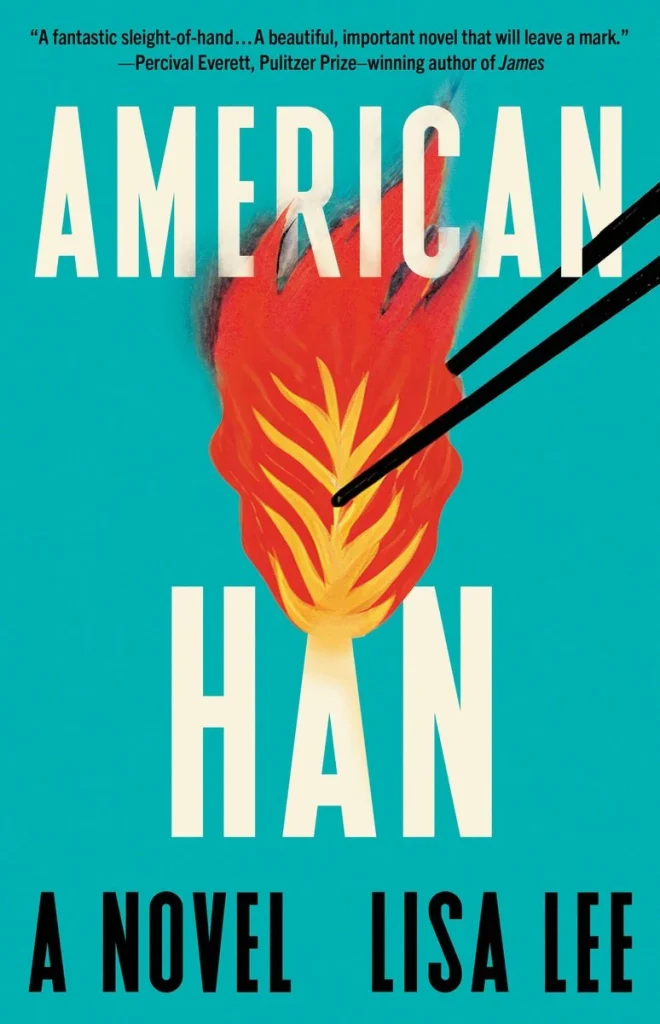
In my novel American Han, siblings Jane and Kevin Kim come of age in America feeling this same bewilderment and this same needless isolation, something Jane only begins to recognize long after it feels too late to change it. I wanted to explore this and the feeling that even though siblings don’t choose each other, we owe each other parts of ourselves and are implicated in each other’s actions.
The relationship between siblings has a literary history as long and varied as any other kind of relationship, though it seems to me that these stories are less noticed than the tragic romances and the endless stalemates between fathers and sons, mothers and daughters. In the seven books below, we see characters who look to their brothers and sisters with uncertainty, envy, and love, looking for clues as to who and how they should be.
East of Eden by John Steinbeck
East of Eden is a multigenerational saga set in California’s Salinas Valley. The story focuses on two pairs of brothers—Adam and Charles; Aron and Caleb—in two generations of the Trask family. The brothers are derived from the biblical story of Abel and Cain, in which Cain is so jealous of his brother that he kills him—the original murder, for which Cain is punished with a long life of utter solitude. In East of Eden, Charles frequently erupts in violent rage at his half-brother Adam, convinced that their father loves Adam more, just as Cain was convinced that God valued his brother above himself. In the next generation, Caleb Trask is so envious of the love his twin brother Aron seems to receive without effort that he drives his brother to certain death. Across generations, Charles and Caleb find themselves in the ancient predicament of Cain: unable to understand why they are not loved as their sibling is, and unable to accept it.
Housekeeping by Marilynne Robinson
Sisters Ruthie and Lucille Stone spend their childhoods moving among guardians after their mother dies. Eventually, their aunt Sylvie, a wanderer, moves back to the sisters’ tiny hometown of Fingerbone, Idaho and decides to raise them. Their home reflects Sylvie’s transient nature, full of stacks of old newspapers, cobwebs, and assorted debris. The sisters are inseparable, but soon Ruthie starts to take after her aunt, while Lucille longs for a different life, one that mirrors the aspirations of the people around them. Lucille tries to convince Ruthie to build a life around the values of respectability and cleanliness, but Ruthie feels bonded to their aunt. Ruthie has to choose between Sylvie’s itinerant freedom and the more conventional (and safer) life her sister pursues. While the clash between sisters is quiet, it offers a deep exploration of the sibling as a mirror of the self, as each sister looks to the other as a model of who they want (and don’t want) to be.
Erasure by Percival Everett
This hilarious satirical novel takes on a publishing industry whose narrow and condescending expectations of the Black experience limit the kinds of stories that are published and valued. In addition to the razor-sharp satire, I was drawn to the family story: Monk’s strained relationships with his parents, brother, and sister. Monk is the favored child, the one born naturally gifted, even though his sister, Lisa, is the responsible one—a successful doctor who looks after their mother as she struggles with Alzheimer’s disease. Like Aron Trask in East of Eden, Monk basks in parental adoration without doing much of anything to earn it, while Lisa does everything expected of her only to be ignored or taken for granted. Their relationship captures the sense of intractable and even incomprehensible unfairness that has been at the core of sibling rivalry at least since the story of Cain and Abel.
The Dutch House by Ann Patchett
Danny Conroy and his older sister Maeve are kicked out of their childhood home—a sprawling mansion on the outskirts of Philadelphia—by their stepmother after their father’s death. From the age of 10 until her death, Maeve is a mother figure to Danny, assuming all responsibility for raising him. Hellbent on getting revenge on their stepmother, who inherited everything except an educational trust set aside for the children, Maeve encourages Danny to attend an expensive boarding school, then Columbia, and eventually medical school. Danny does as Maeve wishes even though his interests lie elsewhere. Like nothing else I’ve read, this novel conveys the slow accretion of choices by which one sibling’s life, almost imperceptibly, can be subsumed by the other’s obsessions.
The Vanishing Half by Brit Bennett
Identical twins Desiree and Stella Vignes grow up in Mallard, Louisiana in the 1970s, in a Black community where light skin confers status and a modicum of protection from the virulent racism that surrounds the community. At age 16, the Vignes twins run away to New Orleans to chase their dreams. Over a decade later, their lives have completely diverged. Desiree is back in Mallard with her dark-skinned daughter after fleeing an abusive husband. Stella is passing as a white woman in California, where she lives with her businessman husband and their daughter. Stella chose to abandon her sister and give up her history and identity for a chance to claim the privilege that comes with whiteness. Desiree spends much of her life searching for her missing sister, who has vanished into whiteness as much as she has physically vanished from the sisters’ Louisiana home. In the divergent fates of Desiree and Stella, Bennett traces how race and racism shape the possibilities of life in America.
All-Night Pharmacy by Ruth Madievsky
There Is No Test Prep for Sibling Rivalry
“Useful Sister” by Weike Wang, recommended by Electric Literature

In this funny, deeply moving debut novel, a young woman’s life in Los Angeles begins to unravel when her toxic relationship with older sister, Debbie, implodes after a chaotic night of drugs and violence ends with Debbie’s disappearance. The unnamed narrator, cautious by nature, has always been drawn to the alluring and reckless Debbie, and has often emulated her against her own better judgment. Now, in Debbie’s absence, she spirals into addiction and a blurry relationship with Sasha, a Jewish refugee from the former Soviet Union who claims to be a psychic. Will she try to find her missing sister, or find a new freedom by keeping her in the past? As she wrestles with her conscience, she confronts the same question Cain asked of God: “Am I my [sister’s] keeper?”
The Original Daughter by Jemimah Wei
Another riveting debut, The Original Daughter explores family bonds and ambition in a rapidly changing 1990s and 2000s Singapore. The story follows Genevieve Yang, whose life is upended when her family takes in Genevieve’s long-lost cousin Arin. Genevieve and Arin grow up together in government-subsidized housing, navigating adolescence and precarious circumstances amid a hyper-competitive academic culture and an economic boom that only exacerbates inequality. The two grow close, forming a sisterly bond as they both give up having a social life in the quest for a successful future. A betrayal causes a rift between them, forcing Genevieve to choose what is important to her: personal ambitions or family bonds?
The post 7 Novels About Sibling Rivalries appeared first on Electric Literature.




 Bengali (Bangladesh) ·
  English (United States) ·