
 6 hours ago
2
6 hours ago
2 
I grew up with a surprising amount of family archives. Photographs, scrapbooks, and even my Japanese grandparents’ passports, once nestled in old fruit packing boxes in closets and basements, now occupy space in my own home. As a third-generation Japanese American, the fact that I have so many of my family members’ materials is both surprising and poignant. My father and his family were among the more than 125,000 Japanese Americans incarcerated during World War II. Like many, they were forced to burn most of their possessions that had Japanese writing, including my grandfather’s collection of books and most of the family baby pictures—anything that could tie them to the then-enemy nation of Japan.
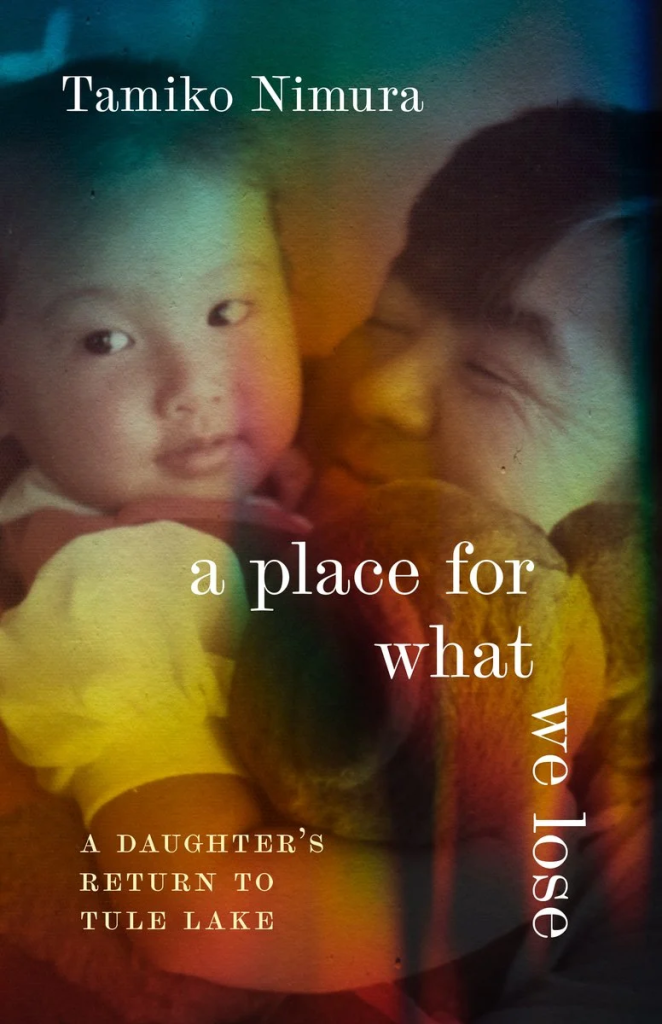
Among the archives is my father’s unpublished memoir, Daruma: The Indomitable Spirit, a chronicle of his imprisonment and release from Tule Lake, an incarceration camp in Northern California, where he spent nearly four years, from the age of 10 to 14. When I began to write my own memoir, A Place for What We Lose: A Daughter’s Return to Tule Lake, I knew that I needed to begin with my father’s words.
Building on the groundbreaking work of memoirists like Deborah Miranda (Bad Indians: A Tribal Memoir), I wanted an intergenerational, dialogic approach to writing about Japanese American incarceration. To accomplish this, I had to recontextualize, repurpose, and even contradict sections of my father’s book. Through this multivocal approach, I learned how to grieve, finally, the early loss of my dad and reckon with my family’s history.
In the books gathered below, authors unearth and incorporate family archives in creative, innovative, poetic, and genre-bending ways. By sharing their personal inheritances, they prevent history from becoming a faded-sepia matter of the past.
The Poet and the Silk Girl by Satsuki Ina
Psychotherapist Satsuki Ina is herself a survivor of Japanese American incarceration; she was born at Tule Lake, where my father and his family were incarcerated. Building on her documentary work, including Children of the Camps, her book is a painstaking compilation of her parents’ translated letters and poetry during their internment. But it is also a moving account of Ina’s reckoning with this legacy and her inspiring movement into cross-racial solidarity and activism.
The Unwritten Book by Samantha Hunt
The Unwritten Book is a hybrid literary memoir of essay and biography that deeply engages with Hunt’s father’s writing, found only after his death. Hunt includes part of his unfinished novel on the left-hand side with her annotations on the right-hand side. The resulting book is fascinated with haunting, hoarding, and the echoing significance of objects we leave behind after death.
The Grave on the Wall by Brandon Shimoda
The Grave on the Wall is an inventive, lyrical, and meditative journey in search of Shimoda’s Issei grandfather who was incarcerated during World War II, moving from California to Montana to Hiroshima, Japan. This essay collection uses photographs by and of the author’s grandfather as well as reminiscences from oral history interviews, emails from family members, and excerpts from his grandfather’s file in the National Archives. Shimoda’s work is thought-provoking and poignant, and this collection is no exception.
Mother Archive by Erika Morillo
Described as an “image-text memoir” and “a collage” by Julia Fierro, the Dominican American author Erika Morillo’s work includes not just family photographs and letters but also film stills and portraits, resembling Theresa Hak Kyung Cha’s book Dictee. Morillo was also a photographer before the publication of Mother Archive. “[There] was so much of my family history I had to come to terms with or at least understand,” she noted in a 2020 interview. “Making work about it gave me some agency over my own history.” Once the memoir was published in 2024, Morillo described the book as “a personal case against erasure” and her “attempt to create the bond and spaces for discussion” that she had longed for in her own mother-daughter relationship. A finalist for the National Book Critics Circle Award, Morillo’s memoir is a striking exploration of motherhood and historical amnesia.
Letters to Memory by Karen Tei Yamashita
Letters to Memory began with Yamashita’s discovery of two manila folders full of typed letters on onionskin paper from her Aunt Kay after her death. Piecing together the story of her Japanese American family’s incarceration, the author quickly expanded the letters into this book as well as a family project: the Yamashita Family Archives housed at the University of California Santa Cruz. Some family artifacts appear in the book as color reproductions, while others are found in the pages dividing each section—addressed as letters to larger concerns such as poverty, modernity, love, death, and laughter. It’s difficult to describe this inventive journey through family history, wartime incarceration and resettlement, but it’s poetic, funny, and deeply intelligent.
The Girl I Am, Was, And Will Never Be by Shannon Gibney
Our Family History, Packed in Mom’s Garage
“You’ll Be Honest, You’ll Be Brave” by Kelli Jo Ford, recommended by Erika T. Wurth
Gibney’s speculative memoir uses a sort of “sliding doors” approach to her life as a transracial adoptee. Who would she be if she had been able to stay with her birth mother? Who did she become as a result of being adopted, and transracially? Gibney’s book includes facsimiles of different family documents and photographs that provide vivid illustrations of these two different lives.
Seattle Samurai by Kelly Goto
Seattle Samurai is a loving and beautifully designed compilation of author Kelly Goto’s father Sam Goto’s comic strips, which he wrote and drew for The North American Post, a Japanese American community newspaper in Seattle. After his passing, Goto organized and selected her father’s comic strips and also took stock of his wider interests and collections, such as samurai swords, that provided historical and cultural context for his work. Kelly’s background in graphic design is evident in the photographs, the arrangements of the strips, and the white spaces which allow her father’s work to come to life off the page.
The post 7 Books That Use Family Archives to Break Generational Silence appeared first on Electric Literature.




 Bengali (Bangladesh) ·
  English (United States) ·