
 50 minutes ago
10


 Orthodox Christians in Ethiopia’s Arsi area, Oromia region, have faced repeated attacks. Photo: file/SM.
At least 60 Orthodox Christians were killed in two attacks in central Ethiopia’s Oromia region over the past week, according to the Ethiopian Orthodox Tewahedo Church. The church reported that 14 people were killed in Merti district on October 20 and another 46 in Shirka district on October 24. More than 20 people were seriously injured, and 20 homes were burned down.
Witnesses told Vatican News that attackers in Shirka went house to house, killing residents with guns and knives. The dead included children and elderly people. One church was damaged, while churches in neighboring villages sheltered survivors.
Both districts are in the Muslim-majority Arsi area. Ethiopia’s 2007 census put Arsi Zone’s population at about 58 percent Muslim, 40 percent Orthodox Christian, and 1.4 percent Protestant. Merti district was about 61 percent Muslim and 38 percent Orthodox. Nationally, figures cited by Religion News Service in 2021 put Christians at about 64 percent of Ethiopia’s population, including roughly 40 percent who were Orthodox.
Ethnically, Arsi Zone was about 83 percent Oromo and 15 percent Amhara in the census. Earlier victims included members of the predominantly Orthodox Christian Amhara community, according to the ECLJ, the European Centre for Law and Justice.
According to diocesan reports submitted to the Holy Synod, those killed in October came from rural farming communities. At its October 26 assembly in Addis Ababa, the Synod condemned the killings as a “reprehensible, inhumane deed” and urged authorities to prosecute the attackers and deploy security forces to protect vulnerable communities. It also said it would seek talks with senior government officials.
The bishops described the massacres as part of an escalating pattern of targeted violence against Orthodox Christians in Arsi and elsewhere in Ethiopia.
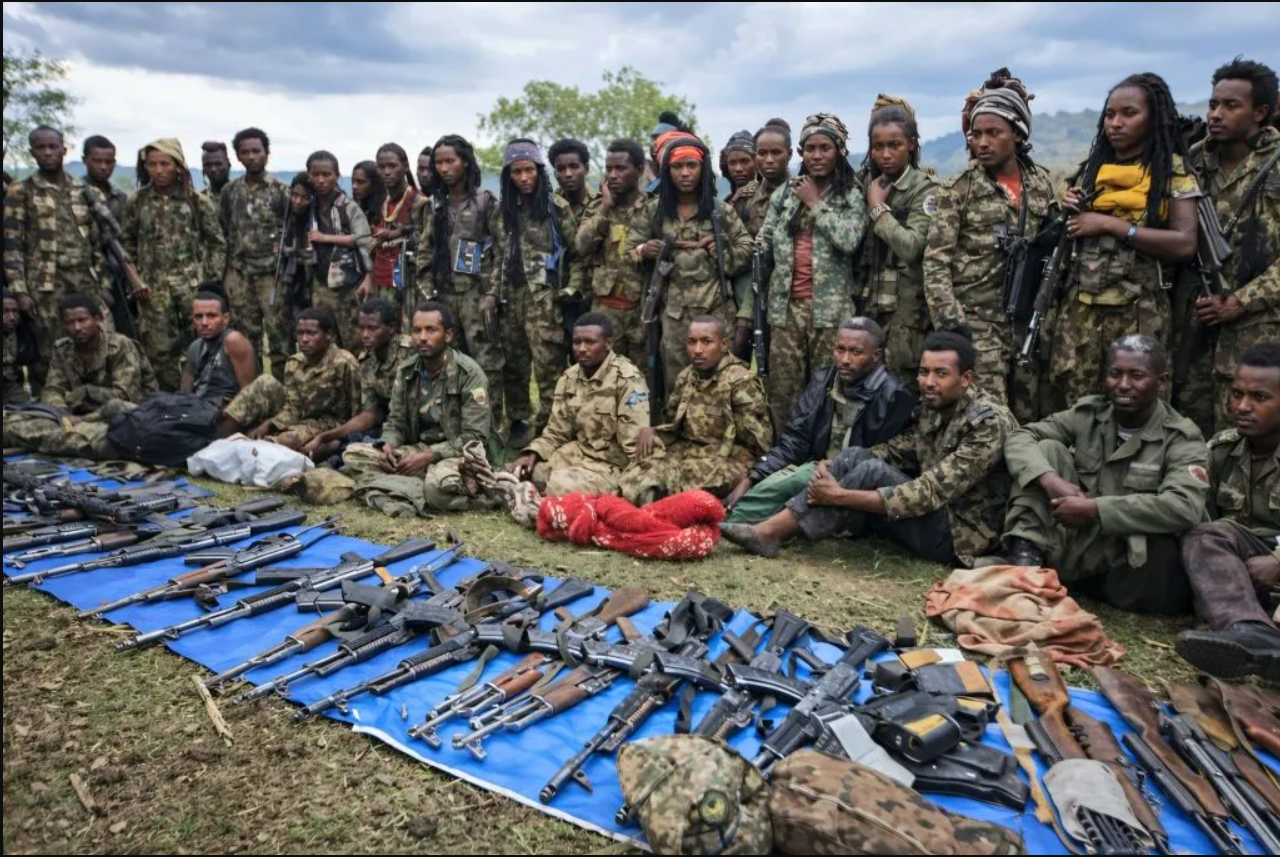
The Oromia regional government blamed the attacks on the Oromo Liberation Army (OLA), an ethnic-nationalist insurgent group seeking greater autonomy and recognition of Oromo identity. Formerly the armed wing of the Oromo Liberation Front, the OLA split from the political party in 2018 after refusing to disarm and has fought the government since then. Ethiopia’s parliament designated the group a terrorist organization in May 2021 under the name “Shene.”
Regional spokesperson Hailu Adugna accused the OLA and its allies of provoking ethnic and religious conflict to divert attention from military losses in northern Ethiopia. Its commander, Kumsa Diriba, known as Jaal Marroo, denied that his fighters target civilians in an Associated Press interview published in February.
In September, the OLA and six other opposition groups announced the Ethiopian Peoples’ Forces Coalition for Survival, seeking to remove Prime Minister Abiy Ahmed’s government and establish a transitional administration. Members include the Tigray People’s Liberation Front and the Amhara Fano National Movement.
The October massacres follow years of violence against Christian communities, with accusations directed at both insurgents and security forces. In February 2023, during a dispute over a breakaway Oromia synod, regional special forces were accused of firing on worshippers defending St. Michael Church in Shashamene. The Ethiopian Human Rights Commission later reported eight deaths.
After 36 people were killed in Shirka that November, regional authorities blamed the OLA, while its spokesman, Odaa Tarbii, blamed government forces. That December, the commission linked human rights violations in Arsi to OLA attacks.
Earlier this year, the commission warned that violence had escalated since October 2025. In March, the Vatican’s Fides news agency reported that 34 Orthodox Christians had recently been killed, including 26 in Shirka and four in Merti.
Following the February killings, Ethiopia’s Orthodox Church, Inter-Religious Council, and Islamic Affairs Supreme Council warned against attempts to incite religious or ethnic conflict. The OLA blamed “mercenaries” for deliberately targeting Orthodox civilians. Ethiopia’s Catholic bishops demanded government protection in March.
Catholic communities have also suffered attacks, including killings and destruction of property near a parish in Oromia in October 2025.
Coordinated attacks between May 30 and June 1 killed at least 37 more Orthodox Christians and burned churches, according to the ECLJ.
A broader investigation by the Ethiopian Human Rights Council (EHRCO), reported in July, documented at least 432 civilians and four local militia members killed across East Arsi between the Ethiopian calendar year corresponding to 2021–2022 and June 1, 2026. This was a cumulative count covering several years, rather than an additional death toll. The council said Orthodox Christians were the principal victims.
Relatives in Shirka described armed men entering villages at night and selecting Orthodox Christians for abduction. In Jeju, 182 captives were released after ransom payments. At the time of the report, 39 abductees from Shirka and two from Munisa remained missing, along with others elsewhere.
EHRCO also reported that attackers looted and burned the 101-year-old Teleta Chefa Saint Gabriel Church. The violence displaced 14,415 people, including 3,746 from Shirka and 1,036 from Merti. The council urged federal intervention if regional authorities could not restore security and protect civilians.
Across Oromia, civilians also face abuses by other armed groups, criminal gangs, and government forces. U.N. investigators have accused the OLA of killings, rapes, and kidnappings, while human rights monitors have documented indiscriminate drone strikes, extrajudicial killings, and disappearances by government forces.
The post 60 Christians Murdered in Ethiopia Amid Years of Targeted Attacks appeared first on The Gateway Pundit.




 Bengali (Bangladesh) ·
 English (United States) ·