
 4 hours ago
4

The post 22 Cleaning Schedules for Houses That Never Stay Clean appeared first on Penny Pinchin' Mom.
Every cleaning schedule you’ve tried was written for someone with a free Saturday and no interruptions. Yours never looks like that. The first one I ever used came out of the back of a magazine the fall my oldest started third grade, and I quit it on a Thursday. The next one did worse. I taped a color-coded zone chart to my fridge, followed it for four days, and spent the next month tripping over a laundry basket every time I walked past it.
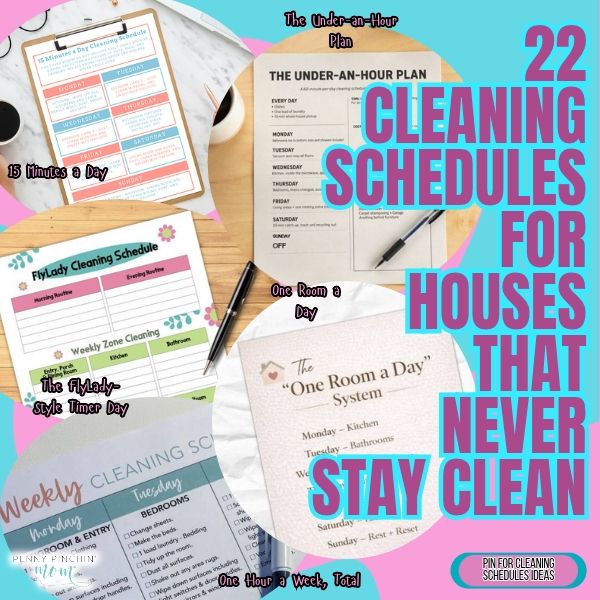
So this list skips the guilt and gets specific. The 15 Minutes a Day plan handles whatever’s left after everyone’s in bed. One Room a Day keeps the house moving without a big cleaning day, and One Hour a Week, Total is for the week that only has an hour in it. Each one tells you how long it really takes and what it quietly gives up. Every home cleaning schedule printable below is free.
By the Time You Have
1. 15 Minutes a Day
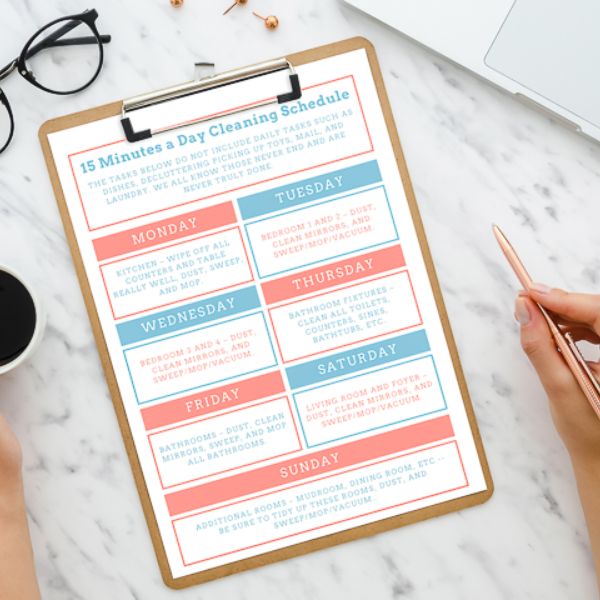
Fifteen minutes won’t get you a spotless house, but it stops the slow slide that turns Saturday into a punishment. One anchor task plus one rotating task, done whenever your window shows up. This is not the nightly wind-down, so if you want the before-bed version, that lives in [20 Cleaning Routines That Fit in the 15 Minutes Before Bed]. This one works at 7 am, at lunch, or while supper simmers.
Every day: dishes cleared, and one counter wiped Monday: bathroom sink and toilet Tuesday: vacuum the main traffic path Wednesday: kitchen table and chairs Thursday: one load of laundry start to finish Friday: clear every flat surfaceTime: 13 to 16 minutes in an average-size home, closer to 18 if the sink is full.
Cost: nothing really. A phone timer works, or a dedicated one runs about $5 at Walmart, and the free printable rounds out the setup.
What this one leaves undone: mopping, tubs and showers, bedding changes, dusting, and anything behind or under furniture.
2. The Under-an-Hour Plan
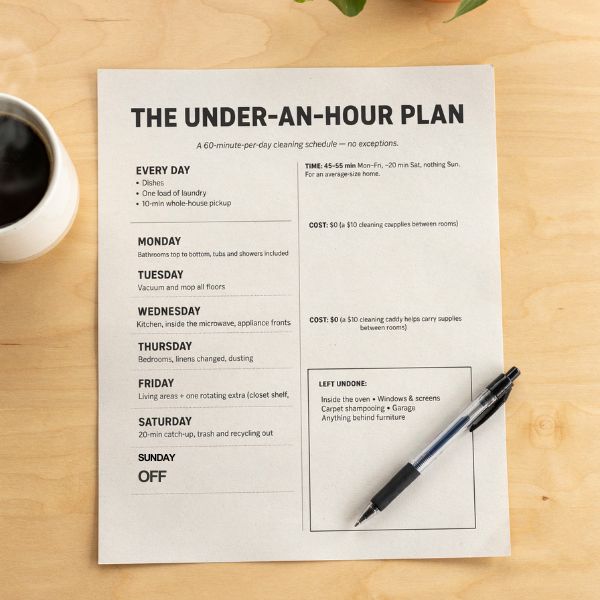
This is the most complete house cleaning schedule on the list, and it still never asks for more than 60 minutes on any single day. No exceptions, no “just this once” marathon day. Back when I was working as a Pension Plan Administrator with a full house waiting at home, I figured out that an hour was the honest ceiling. Anything past that got abandoned by Thursday, every time.
Every day: dishes, one load of laundry, 10-minute whole-house pickup Monday: bathrooms top to bottom, tubs and showers included Tuesday: vacuum and mop all floors Wednesday: kitchen, inside the microwave, appliance fronts Thursday: bedrooms, linens changed, dusting Friday: living areas plus one rotating extra (a closet shelf, light fixtures, baseboards in one room) Saturday: 20-minute catch-up, trash and recycling out Sunday: offTime: 45 to 55 minutes Monday through Friday, about 20 on Saturday, nothing Sunday. These are estimates for an average-size home.
Cost: no purchase required, though a $10 cleaning caddy makes carrying supplies between rooms easier.
What this one leaves undone: inside the oven, windows and screens, carpet shampooing, the garage, and anything stored behind furniture.
3. The FlyLady-Style Timer Day
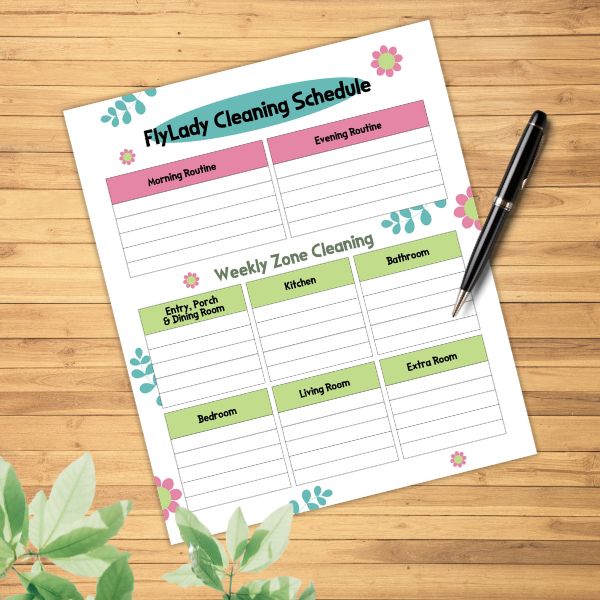
FlyLady popularized the idea of working one area of the house at a time rather than blitzing the whole thing, and the version I keep coming back to is the timer. You pick the area that’s up, set 25 minutes, and stop when it rings, even if you’re not finished. It picks up next time that area comes around. Back when we were paying off debt and every hour was spoken for, the timer was the only thing that kept me from sinking an entire evening into one hall closet.
Every day: dishes and a 2-minute surface sweep Then: 25 minutes on the timer in whichever area is up, then stopTime: about 27 to 30 minutes total, 25 of it on the clock.
Cost: free. Any kitchen timer or phone will do, though a dedicated one runs about $5 at Walmart.
What this one leaves undone: every area that isn’t up that day stays exactly as it is, including the bathrooms, until its turn comes back.
4. One Hour a Week, Total
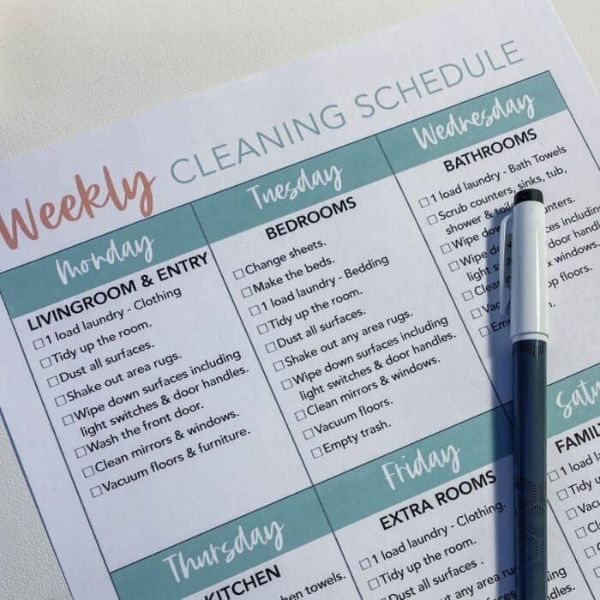
If the honest answer is that you have one free hour in the entire week, build around that instead of pretending otherwise. Pick a consistent day, work in timed segments so you don’t lose 40 minutes to the kitchen, and accept that this is maintenance, not progress. It’s a realistic cleaning schedule for a brutal season, and it beats the schedule you quit in February.
First 20 minutes: kitchen, dishes through the floor Next 15: bathrooms, sinks and toilets Next 15: vacuum main living areas Last 10: trash out, flat surfaces cleared, one load of laundry startedTime: 55 to 60 minutes once a week, nothing the other six days.
Cost: nothing, and the one-page printable fits in a planner or on the fridge, or a $5 dollar-store binder if you want one dedicated to it.
What this one leaves undone: bedrooms, dusting, mopping, bedding changes, laundry past that single load, and the whole back half of the house.
By Method
5. One Room a Day
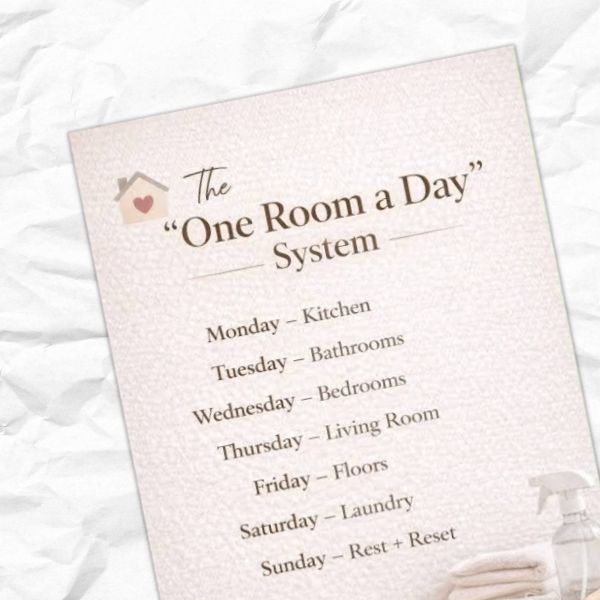
If the big weekend cleaning day has never once actually happened at your house, this method removes the need for it. You take a single room, finish it, and walk away. Nothing carries into tomorrow.
Monday: Kitchen Tuesday: Bathrooms Wednesday: Living room and entry Thursday: Bedrooms Friday: Laundry area and hallway Saturday and Sunday: OffTime per day: 20 to 30 minutes, closer to 35 on kitchen day, for an average-size home.
Cost: Nothing. You’re using what’s already under your sink, though a set of microfiber cloths runs about $6 if yours are worn out, and the printable version of this house cleaning schedule is free below.
One room is small enough to actually finish, and finishing one room beats half-doing four.
What this one leaves undone: Every room that isn’t today’s room, so Thursday’s bathroom is still running on Tuesday’s cleaning, and the garage, basement, and porch never make the rotation at all.
6. Zone Cleaning
Zone cleaning divides the house into a handful of areas and gives one area your attention for a full week before moving on. FlyLady popularized the approach, and the version here uses five zones so the rotation returns to the start every five weeks. It fits anyone who’d rather go deeper in one spot than skim the whole house daily.
Zone 1: Kitchen and eating area Zone 2: Bathrooms Zone 3: Living and family spaces Zone 4: Bedrooms Zone 5: Entry, laundry, hallwaysA zone day looks like 10 minutes of whole-house upkeep (dishes, one load of laundry, a quick floor pass), then 15 to 20 minutes inside that week’s zone.
Time per day: 25 to 35 minutes.
Cost: Free. Drawing your five zones on paper is the entire setup, or grab a $3 notebook from the dollar store if you’d rather keep it tidy.
What this one leaves undone: Four zones out of five get only the short daily upkeep pass, so the guest bath can wait a month for anything beyond a wipe-down.
7. Every Other Day
Light day, off day, light day, off day. The rhythm suits anyone who resents a daily obligation but can manage one every 48 hours, and it gives you four genuinely empty days a week without the house sliding too far.
Monday: Kitchen and floors Tuesday: Off Wednesday: Bathrooms and surfaces Thursday: Off Friday: Bedrooms, laundry, entry Weekend: OffTime per day: 30 to 40 minutes on the on days, about 5 minutes on off days for dishes and trash, which still happen no matter what the chart says.
Cost: No purchase involved at any point, though a basic mop runs about $15 if yours needs replacing.
Two days between passes is the whole bargain here, and it’s a fair one if nobody’s tracking mud through the kitchen.
What this one leaves undone: Floors go a full two days between cleanings, which shows fast in a house with pets or boots, and nothing in this plan touches bedding, closets, or the inside of the fridge.
8. Task-Type Days
Instead of cleaning a room, you clean a job. All the floors in one pass, all the bathrooms in one pass, all the laundry on one day. People who hate switching gears usually move faster this way, because you’re carrying one set of supplies around the house instead of five.
Monday: Laundry Tuesday: Floors Wednesday: Bathrooms Thursday: Dusting and surfaces Friday: Kitchen resetTime per day: 25 to 35 minutes, with floor day running longest in a house with more than one level.
Cost: Free, same as every schedule on this list, though a set of microfiber dusting cloths costs around $6 if you don’t already have some.
If you want the full seven-day grids rather than this short version, 19 Weekly Cleaning Schedules Built Around the Hours You Have has them laid out day by day.
What this one leaves undone: Each task type waits a full week for its turn, so Tuesday’s floors are seven days old by the time they come back around.
9. The Pick-Three Method
When the schedule itself turns into one more thing to fail at, stop assigning days. You keep a running cleaning chart of everything that needs doing, and each morning you choose three from it: one visible task, one that compounds if ignored (dishes or laundry), and one you’ve been avoiding.
A sample day might look like this:
Visible: Kitchen counters and table Compounding: One load of laundry, started but not folded Avoided: The pile on the stairsTime per day: 20 to 30 minutes for three average tasks.
Cost: Nothing to buy. A sheet of paper on the fridge is the whole system, or a notepad from Walmart for about $2 if you want one dedicated to it.
Circling the avoided task before you start is what keeps this honest, because otherwise the same five jobs get picked forever.
What this one leaves undone: Anything you never choose, which in most houses means baseboards, window tracks, and the inside of the microwave.
10. High-Traffic First
Clean by how hard a space gets used, not by what the calendar says. The kitchen, the main bathroom, and the entry absorb most of the daily mess in nearly every home, so those three get touched every single day, and everything else runs on a weekly pass.
Daily: Kitchen counters and sink, main bathroom, entry floor One weekday of your choosing: Bedrooms, living room, second bath Weekend: OffTime per day: 18 to 25 minutes on daily spots, plus 30 to 40 minutes on the weekly pass day.
Cost: Free, no supplies or planner purchase required, though a $5 dollar-store tray by the door helps keep the entry floor cleaner longer.
This is the most realistic cleaning schedule on the list for anyone whose house has to look presentable on short notice, since the three rooms visitors see are always current.
What this one leaves undone: Low-traffic spaces coast for weeks, so the guest room, the formal dining room, and the basement collect dust until you deliberately schedule them.
11. The Built-In Catch-Up Day
No week ever goes exactly as planned, no matter how many charts promise otherwise. Every schedule here assumes a week that behaves, so this one assumes the opposite and sets aside a day for whatever slipped.
Monday through Thursday: One light task set each day, around 20 to 25 minutes Friday: Catch-up day for anything missed, up to 45 minutes Weekend: OffTime per day: 20 to 25 minutes most days, 45 minutes on the outside on Friday.
Cost: None. If anything, this one costs less in guilt than the others, though a $7 dry-erase calendar helps if you like to see what rolled over.
If nothing slipped, Friday is yours. If three things slipped, you pick the two that bother you most.
What this one leaves undone: The third missed task, whatever it is, rolls to next Friday, and this plan never schedules anything beyond weekly upkeep.
By Who Lives There
12. Split Between Two Adults
When one person is quietly doing all of it, resentment shows up long before the laundry does. This schedule divides the week by task type rather than by day, so neither adult has to remember whose turn it is. Each person owns their jobs start to finish, which kills the “I thought you were getting that” problem.
| Who | What |
|—|—|
| Adult 1 | Kitchen and dishes, every day |
| Adult 2 | Floors, trash, and mail pile, every day |
| Adult 1 | Bathrooms, Tuesday and Friday |
| Adult 2 | Laundry, Wednesday and Saturday |
| Both | 10-minute whole-house reset, Sunday |
Time per day: 15 to 20 minutes each, closer to 30 on bathroom and laundry days. Average-size home, so adjust up or down.
Nothing to buy for this one, unless you want a $6 wall calendar to keep it visible. It costs you a ten-minute conversation about who takes what, and the free printable gives you a place to write it down so it’s not re-negotiated weekly.
What this one leaves undone: Windows, baseboards, inside the fridge, and the garage all wait for a day neither of you has scheduled.
13. With a Baby
Nap windows don’t care what time your schedule says. This one works in chunks sized to a nap instead of a clock, so a 40-minute stretch and a 15-minute stretch both count as a win. You’re not aiming for a clean house; you’re aiming for a kitchen you can stand to walk into at 6 pm.
First nap: dishes and kitchen counters Second nap: one load of laundry, start to fold Baby awake and happy: floor pass in the main living area One long nap a week: bathroom sink and toiletTime per day: 20 to 25 minutes total, split into 8 to 10-minute pieces. That’s an estimate for an average-size home.
There’s no purchase involved here, which matters in a season when everything else is costing you something, though a $10 caddy for carrying supplies room to room helps. Tape the printable inside a cabinet door so you can grab the next task without thinking.
What this one leaves undone: Dusting, bedrooms besides yours, and anything that needs two hands and a quiet house.
14. With Toddlers
I never had a clean time slot when my kids were small. I cleaned in whatever window I got, and the schedule that finally worked was the one built around supervision instead of around the hour hand. If a toddler is in the room, the task has to be one you can abandon mid-sentence.
Breakfast: dishes while they’re strapped in and eating Mid-morning: wipe one surface, that’s it Nap or quiet time: 15-minute reset of the room you live in most Before bed: toy pickup together, five minutes, turn it into a raceTime per day: 25 to 30 minutes, almost never in one piece. Estimates for an average-size home.
Free, with no supplies or charts to buy, though an $8 toy bin makes the pickup race more fun. The toy pickup line does double duty as the beginning of chore training.
What this one leaves undone: Mopping, closets, under the beds, and the car, because a toddler undoes a mopped floor in about twenty minutes anyway.
15. With School-Age Kids
Your own load drops by about a third once the kids own their rooms, their backpacks, and one shared job apiece. This schedule assumes they’re doing real work, not symbolic work, and that you’ve put it in writing somewhere they can see it. Ages six to eleven can handle every task on this list.
After school, kids, 10 min: bedroom, backpack, shoes, lunchbox You, 15 min: kitchen reset while homework happens Tuesday: bathrooms, kids wipe mirrors and counters Thursday: floors, one kid vacuums Saturday, 20 min: whole-family sweep of shared roomsTime per day: 20 to 25 minutes for you, 10 for each kid, in an average-size home.
No cost, though a sticker chart from Target runs about $5 if you want a physical one. If the assignments keep slipping, pair this with How to Make a Family Chore Chart That Actually Works for Busy Families and the Free Printable Chore Chart for Kids of All Ages, both free.
What this one leaves undone: Baseboards, light fixtures, behind the couch, and the inside of the oven.
16. With Teenagers
Teenagers will do more than you’d guess, just not on your timeline and rarely on your first ask. This schedule gives them ownership of a few things with a deadline instead of a time slot, which is the difference between a job getting done and a fight happening. You keep the daily kitchen; they keep everything else that’s theirs.
Teen: own room and own laundry, done by Sunday night, their choice of when Teen: trash out and one shared space tidied, 10 minutes nightly You: kitchen and counters daily, 15 minutes Weekend: bathrooms, alternate weeks between you and themTime per day: 15 to 20 minutes for you, 10 to 15 for each teen. Estimate for an average-size home.
Costs nothing but consistency. Chores for Teenagers: How to Encourage Your Teens to Help Around the House covers what to do when the deadline comes and goes.
What this one leaves undone: Whatever is behind their closed bedroom door until Sunday, plus dusting and windows year-round.
17. Working From Home
If your desk sits twelve feet from the kitchen sink, the mess stays in your line of sight for eight straight hours. The temptation is to clean in little bits all day, which wrecks your focus and your work. This schedule gives you exactly two resets, at lunch and at shutdown, and nothing in between.
Lunch, 10 min: dishes, wipe counters, start a load of laundry End of workday, 12 to 15 min: desk area, floor pass through main rooms, move the laundry Friday shutdown, add 15: bathroomTime per day: 22 to 28 minutes, in two blocks. Average-size home, and a cluttered week runs longer.
Nothing to buy here either, and the printable version is free, though a $10 desk caddy keeps work supplies separate from home ones. The end-of-day reset is what turns the house back into a house instead of an office you also sleep in.
What this one leaves undone: Bedrooms, dusting, the oven, and anything that would pull you away mid-meeting.
18. Multigenerational Household
Three generations under one roof means more hands, more dishes, and more opinions about where things belong. This schedule gives every adult their own space to maintain and rotates the shared rooms by week, so nobody becomes the default housekeeper by accident. It also works when an adult kid moves back home for a stretch.
Each adult: own bedroom and bathroom, on their own schedule Kitchen: rotates weekly, one person owns it Monday through Sunday Living areas: 10-minute nightly reset by whoever’s home Sunday, 20 min: shared spaces together, everyone at onceTime per day: 15 to 20 minutes per person, which is the whole point of having more people. Estimates for an average-size home.
Free to set up, or a $12 dry-erase board if you want something sturdier. Post the printable where everyone passes it, usually the fridge, so the kitchen rotation isn’t something you have to announce.
What this one leaves undone: Shared storage, the basement, the garage, and the hall closet nobody claims.
19. Empty Nest, Just the Two of You
The surprise of an empty house is how little it gets dirty and how fast you can still let it go anyway. With two adults and no kids at home, you don’t need daily everything; you need a short rotation that keeps you from waking up to a house that needs a whole Saturday. My husband and I run something close to this, with one flexible slot saved for the day the grandkids come over.
Monday and Thursday: kitchen wipe-down, 15 min Tuesday: bathrooms, 15 min Wednesday: floors, 20 min Friday: laundry and sheets, 20 min After company: 15-minute pickup, same dayTime per day: 15 to 20 minutes, no cost beyond the time, maybe $10 for a caddy to keep supplies together. Average-size home.
What this one leaves undone: The guest room between visits, high shelves, and the closets the kids left things in.
More Households, More Schedules
20. Working Outside the Home
You walk in the door at 6 pm, and the house looks exactly the way it did at 7:15 that morning, except the breakfast dishes have dried on. That’s the view most weeknights when the whole day got eaten by a job outside the house. So this one is built around short evenings and one longer weekend block, never around energy you already spent somewhere else.
Mon to Thu: kitchen reset plus one surface sweep after dinner Friday: off, on purpose Saturday: floors and bathrooms Sunday: laundry, folded while something’s onTime per day: about 20 minutes on weeknights, 35 to 40 on Saturday, for an average-size home. Nothing to buy, unless Saturday floor day wears out your mop head, which runs about $15 to replace.
PPM already has two complete versions of this, both free: [Realistic Cleaning Schedule for Working Moms (Free Printable)] and [A Realistic Cleaning Schedule Working Parents Can Stick To].
What this one leaves undone: the inside of the fridge, window tracks, and anything stored under a bed.
21. Shift Work or Rotating Hours
A plan built on Monday through Friday falls apart the week your shift flips. This house cleaning schedule ignores weekday names entirely and runs on where you are in your stretch, so it survives nights, swings, and the weeks your hours change twice. Rotating-hours households also tend to have someone sleeping while someone else is awake, which this one works around rather than against.
First day of a stretch: kitchen and one bathroom Middle days: 10-minute reset only, nothing noisy Last day of a stretch: floors First day off: laundry start to finish Second day off: one catch-up task of your choosingTime per day: 10 minutes on working days, 25 to 30 on days off. No supplies needed beyond what’s under your sink, though a $10 whiteboard calendar helps track where you are in the rotation.
What this one leaves undone: dusting, the microwave interior, and bathroom mirrors beyond a quick spot check.
22. Single Parent
One adult, one list, nobody to tag in at 8 pm. This is the leanest schedule here on purpose, built so that falling behind for two days doesn’t bury you. Everything is one task deep, and the week has slack built into it instead of a punishing catch-up day.
Mon: kitchen Tue: bathroom, the one everyone uses Wed: floors in the main living area Thu: laundry Fri: nothing Weekend: one 30-minute block, whenever it shows upTime per day: 15 to 20 minutes on weekdays, one 30-minute weekend block. Free, no planner needed, though a $2 notepad on the fridge works if you want one.
If kids are old enough to carry one task, hand over laundry transfers. It’s the one that costs you the least to supervise and saves the most.
What this one leaves undone: the second bathroom, baseboards, and the closet floors nobody sees.
A Cleaner Home Starts Now
That color-coded chart on my fridge wasn’t the problem. It just wasn’t built for a life with laundry baskets in the hallway and plans that change by 9 a.m. Your house doesn’t need a system from someone else’s life. It needs one that bends when yours does.
Start with 15 Minutes a Day if your house only gets attention after bedtime, try One Room a Day if you need momentum without a big cleaning day hanging over you, or go with Split Between Two Adults if you’re tired of carrying it alone. Pick the one that matches your actual life this week. That’s the one that’ll stick.
The post 22 Cleaning Schedules for Houses That Never Stay Clean appeared first on Penny Pinchin' Mom.





 Bengali (Bangladesh) ·
 English (United States) ·